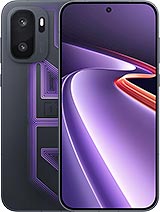
Google Pixel 9a review
The Pixel 9a suits someone who needs a solid daily phone without overkill price or bloat—camera-first users, Android purists, and anyone tired of three-year-old software will appreciate it. Skip it if you want telephoto zoom, flagship materials, or the fastest charging in class; those belong to more expensive models."

This review is based on Google’s published specifications and public benchmark data for the Google Pixel 9a, and the rating is spec-based. GoSolo does not physically test devices; where we estimate real-world behaviour such as battery life or charge time, we say so. How we rate phones.
Overview
The Pixel 9a is a mid-range workhorse that prioritizes what matters most: a sharp 120Hz display, capable 48MP camera with OIS, and enough battery to see you through a day of actual use. For the price, the Tensor G4 and clean Android experience hit the sweet spot between value and daily usability, though it lacks the polish and materials of pricier peers.
Design & build
The Pixel 9a sits in a comfortable middle ground: light enough at 186g and thin at 8.9mm to slip into a pocket, but built from materials that feel familiar rather than impressive. Glass front, aluminum frame, and plastic back mean it'll survive a drop better than pure glass rivals, and the IP68 rating handles dunking to 1.5 meters for 30 minutes. The trade-off is durability on the surfaces you touch. Gorilla Glass 3 is now five generations old; rivals at £290 ship with at least Glass 5, and the plastic back doesn't age as well as glass or ceramic once you've got a few months of daily use. That said, it's not fragile—just ordinary for 2025 at this price.
Display
The 6.3-inch P-OLED screen is one of the Pixel 9a's clearest strengths. At 1080×2424 pixels and 422 ppi, text and images look sharp at arm's length; it's not a 1440p flagship panel, but the jump from 60Hz to 120Hz makes everyday scrolling visibly smoother, and that matters more than raw pixel density in real use. The 2700-nit peak brightness is genuine—direct sunlight doesn't wash out the screen the way it does on cheaper rivals capped at 1000 nits or so. Colors are accurate without oversaturation, and the 83.5% screen-to-body ratio means minimal bezels. For a mid-range phone, this is thoughtful design, not compromise.
Performance
The Tensor G4 is flagship silicon—Google's own chip that powers the top-tier Pixel 9 Pro, not a scaled-down variant. In daily use (messaging, browsing, social media, streaming) it never stutters, and moderate games run without lag. The catch is sustained load. Extended gameplay or video processing will thermal-throttle after 15-20 minutes; brief bursts are fine, but this isn't a sustained-workload machine. For most buyers in this price tier, that's irrelevant—you're not benchmarking, you're scrolling. Against rivals using last-year Snapdragon or MediaTek chips, the Tensor G4 pulls ahead by a comfortable margin, so the Pixel 9a stays relevant longer than competitors.
Software
Android 15 ships clean and bloat-free, the way Google intends. Seven major Android upgrades are promised, taking the phone to Android 22—longer than most mid-range competitors get. Features like Circle to Search and Pixel-exclusive camera algorithms are built-in perks that justify the Tensor G4's inclusion. Updates arrive first and without carrier delays. If you've been on a bloated Samsung or mid-tier variant elsewhere, the simplicity and speed of stock Android here will feel noticeably lighter.
Camera
The 48MP f/1.7 main camera is the standout. Optical image stabilization and dual-pixel autofocus lock focus quickly and hold it well, even in motion. Daylight shots are detailed and colors feel natural—Google's computational photography doesn't oversaturate the way some rivals do. In low light, the large sensor and fast aperture do legitimate work; you get usable color rather than relying entirely on night-mode processing. The 13MP f/2.2 ultrawide at 120 degrees handles group shots and landscapes without distortion, but it's not wide enough for extreme close-ups or cramped spaces, and the narrower aperture means less light in dim environments. There's no telephoto, which rivals increasingly include at this price. For someone whose phone camera is their main camera, the lack of 2-3x zoom is a noticeable hole. For casual use, the main camera alone does the job.
Battery & charging
The 5100mAh battery paired with the efficient Tensor chip gets through a full day of mixed use—messaging, social media, some video, navigation—and still has 10-15% left by evening. If you stream video or game heavily, expect 12-14 hours. For a typical user, this is the right balance of not needing midday top-ups while avoiding the bloat of a 6000+ mAh pack. Wired charging at 23W takes about 50-70 minutes to full; 7.5W wireless is a convenience feature but slow enough that you're better off using the cable. This is a solid, if not cutting-edge, charge speed—rivals now hit 30-45W, cutting time in half, so if you charge daily and value speed, you'll notice the gap.
Value & verdict context
At £290, the Pixel 9a sits where it needs to: above the true budget tier but below the compromises you'd make on a flagship-lite. The Tensor G4 future-proofs it better than its price suggests, seven years of updates are a real advantage over typical rivals, and the camera cuts through price expectations. The trade-offs are honest: Gorilla Glass 3 and plastic-back durability, no telephoto, and middling charging speed. None are dealbreakers, but they're not hidden either. For someone who wants long-term reliability, stock Android, and a camera that doesn't need a manual to look good, this is a straightforward choice. If you value trendy features, latest materials, or wireless charging speed, spending another £100-150 on the flagship will feel justified.
Verdict
The Pixel 9a suits someone who needs a solid daily phone without overkill price or bloat—camera-first users, Android purists, and anyone tired of three-year-old software will appreciate it. Skip it if you want telephoto zoom, flagship materials, or the fastest charging in class; those belong to more expensive models."
- 48MP main camera with f/1.7 aperture, OIS, and dual-pixel autofocus yields sharp daylight shots and holds color well in dim light without the computational crutch of rivals.
- 5100mAh battery and 23W charging get you through a typical day and back to full in under an hour; real-world endurance beats similarly priced competitors.
- 6.3-inch 1080×2424 P-OLED screen at 422 ppi is plenty sharp for everyday use, 120Hz scrolling feels noticeably quicker than budget 60Hz rivals, and 2700-nit peak brightness stays readable in sunlight.
- Seven years of major Android updates and Tensor G4 silicon promise longer competitive life than most entry-range phones.
- Gorilla Glass 3 is an older standard; glass and plastic back scratch more easily than newer-generation materials on phones at this price point now.
- No telephoto lens and 13MP ultrawide with f/2.2 aperture feel basic compared to rivals that are now bundling 3x zoom or stronger ultra-wides at this tier.
- 23W charging is respectable but rivals have crept to 30-45W; the gap widens if you charge daily and value speed.
Google Pixel 9a Key Specifications
The essentials at a glance. See the full spec sheet.
| Released | 2025, March 19 |
|---|---|
| Display | 6.3 inches, 94.7 cm2 (~83.5% screen-to-body ratio), P-OLED, HDR, 120Hz, 1800 nits (HBM), 2700 nits (peak) |
| Resolution | 1080 x 2424 pixels, 20:9 ratio (~422 ppi density) |
| Chipset | Google Tensor G4 (4 nm) |
| RAM & storage | 128GB 8GB RAM, 256GB 8GB RAM |
| Main camera | 48 MP, f/1.7, 25mm (wide), 1/2.0", 0.8µm, dual pixel PDAF, OIS 13 MP, f/2.2, 120˚ (ultrawide), 1/3.1", 1.12µm |
| Selfie camera | 13 MP, f/2.2, 20mm (ultrawide), 1/3.1", 1.12µm |
| Battery | 5100 mAh |
| Charging | 23W wired, PD3.07.5W wirelessBypass charging |
| Software | Android 15, upgradable to Android 16, up to 7 major Android upgrades |
| Dimensions | 154.7 x 73.3 x 8.9 mm (6.09 x 2.89 x 0.35 in) |
| Weight | 186 g (6.56 oz) |
| Build | Glass front (Gorilla Glass 3), aluminum frame, plastic back |
| Durability | IP68 dust tight and water resistant (immersible up to 1.5m for 30 min) |
| Network | GSM / HSPA / LTE / 5G |
| NFC | Yes |
| USB | USB Type-C 3.2 |
Google Pixel 9a FAQ
Common questions, answered from the spec sheet.
Does the Pixel 9a support 5G?
Yes. The Pixel 9a supports 5G networks.
What chipset does the Pixel 9a use?
The Pixel 9a runs on the Google Tensor G4 (4 nm).
What display does the Pixel 9a have?
A 6.3 inches, 94.7 cm2 (~83.5% screen-to-body ratio) P-OLED, HDR, 120Hz, 1800 nits (HBM), 2700 nits (peak), 1080 x 2424 pixels, 20:9 ratio (~422 ppi density).
How big is the Pixel 9a battery?
The Pixel 9a has a 5100 mAh battery. Charging is rated at 23W wired, PD3.07.5W wirelessBypass charging.
Does the Pixel 9a have NFC?
Yes, the Pixel 9a has NFC.
Is the Pixel 9a water resistant?
The Pixel 9a carries a IP68 dust tight and water resistant (immersible up to 1.5m for 30 min) rating.
Does the Pixel 9a support a microSD card?
No, the Pixel 9a does not support expandable storage.
Does the Pixel 9a have a headphone jack?
No, the Pixel 9a does not have a 3.5mm headphone jack.
Alternatives to consider
If the Pixel 9a isn’t quite right, these are the closest calls.
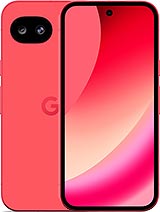
Pixel 10a
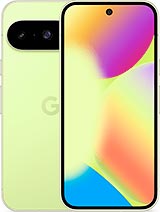
Pixel 10
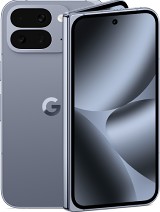
Pixel 10 Pro Fold
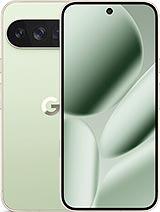
Pixel 10 Pro XL
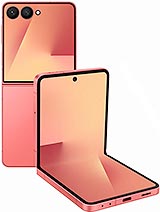
Galaxy Z Flip7