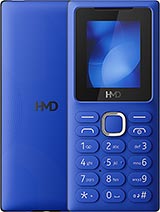
HMD 101 4G review
This phone is built for people who actively reject smartphones and have access to charging. It suits workers in remote areas, people managing two phone numbers, and anyone who values calling and battery life over connectivity and apps. Anyone who reads, navigates, or uses data should not look twice.
This review is based on HMD’s published specifications and public benchmark data for the HMD 101 4G, and the rating is spec-based. GoSolo does not physically test devices; where we estimate real-world behaviour such as battery life or charge time, we say so. How we rate phones.
Overview
The HMD 101 is a basic 4G feature phone that trades any computational ability for calling, texting, and FM radio in places where charging is sparse. At €10, it makes sense only for people who explicitly do not want a smartphone and have reliable 4G coverage where they live.
Design & Build
At 73 grams and 14.3mm thick, this is the physical opposite of today's phones: light, flat, pocketable, built to survive being dropped or rained on without anxiety. Dual Mini-SIM slots mean you can run two numbers at once, which matters for people juggling work and personal lines or those crossing borders often. The removable 1000 mAh battery is not a feature for convenience—it is a statement that the phone is designed to be used until the battery genuinely wears out, at which point you buy a new one for a euro or two rather than replacing the whole device. This is how phones worked before planned obsolescence became standard. There is a 3.5mm jack and an actual FM radio, which feels archaic until you lose data coverage and realise FM still works everywhere.
Display
The 1.77-inch, 128x160 pixel TFT screen is not a compromise; it is the entire specification. You can read a number, see a text message, maybe squint at a menu. Anything else—web browsing, reading, photos—is not happening. The 17.3% screen-to-body ratio is an artifact of an era when bezels were not a design sin, and frankly, on a phone this size, large bezels do not matter. This device is not for people who want to scroll; it is for people who want to make calls and will not miss scrolling because they do not expect it.
Performance
The Unisoc 6533G chipset is built to handle calls, SMS, MP3 playback, and FM radio. Modern social media, apps, browsers, maps: all of these will choke or fail. This is not a limitation; it is the design. The phone has no Wi-Fi, no Bluetooth, no GPS, and only 4MB of onboard storage, so there is simply no use case for running modern software. If you try to force a mobile OS onto this hardware, the phone would take a minute to unlock. Instead, it boots into a simple menu system that expects you to use physical keys and maybe a stylus. For the stated purpose—calling and texting—the performance is instant and irrelevant; latency is not a concern when you are dialling a number.
Battery & Charging
A 1000 mAh battery in 2025 sounds like a typo, but it is honest. With standby and light calling, you might stretch this to two days. Any actual use—longer calls, FM radio, texts—eats it in a day. Charging time is not specified, but over microUSB it will be measured in minutes, not hours. The real win is removability: when the battery degrades after two years of daily use, you swap it out for a fresh one instead of binning the whole phone. This is the inverse of modern smartphones, where the battery is sealed, degradation is inevitable and accelerating, and replacement means a repair fee or a new device.
Connectivity
LTE and dual SIM are the selling points here. You get 4G data where available, no bottleneck to 3G, and the freedom to switch between two numbers without juggling two phones. The absence of Wi-Fi and GPS is not an oversight; it is intentional weight and cost reduction. No Bluetooth means no wireless earbuds, but there is a 3.5mm jack and an FM radio, so audio is covered. In markets with poor coverage or high data costs, this is freeing: you can make calls and send texts over LTE without a data plan that drains your wallet, and if you need navigation, you learn to ask or consult a map beforehand.
Value & Verdict Context
At €10, this phone costs less than a tank of petrol or a casual meal. It is not cheap because corners were cut; it is cheap because the device has no unnecessary parts. There are no cameras, no sensors, no system overhead. A modern €100 budget phone comes with a touchscreen, a mediocre camera, poor battery life, and an OS that requires constant updates and will slow down within two years. This phone comes with none of those promises or problems. It is a tool for calling, texting, and listening to radio in areas where electricity and 4G exist. For a construction worker, a farmer, someone with a second line, or anyone who has grown tired of the smartphone trap, this is the answer. For everyone else—anyone who reads email, uses maps, or scrolls social media—it is a museum piece.
Verdict
This phone is built for people who actively reject smartphones and have access to charging. It suits workers in remote areas, people managing two phone numbers, and anyone who values calling and battery life over connectivity and apps. Anyone who reads, navigates, or uses data should not look twice.
- Dual SIM with LTE, so you can switch carriers or numbers without swapping hardware
- Removable battery that users can replace when it wears out, extending the phone's life
- Dust and splash resistant enough for light weather and work environments
- Weighs 73g and fits a pocket; genuinely portable in a way no current smartphone is
- 1.77-inch TFT screen is barely usable for anything beyond reading a number on the caller ID
- 1000 mAh battery dies within a day of moderate use (calling, texts, FM radio), despite minimal processing load
- Essentially no internal storage (4 MB) means no room for apps, photos, or meaningful data—this is a voice device only
HMD 101 4G Key Specifications
The essentials at a glance. See the full spec sheet.
| Released | 2025, December |
|---|---|
| Display | 1.77 inches, 9.9 cm2 (~17.3% screen-to-body ratio), TFT |
| Resolution | 128 x 160 pixels (~116 ppi density) |
| Chipset | Unisoc 6533G |
| RAM & storage | 4MB |
| Battery | 1000 mAh |
| Software | Android |
| Dimensions | 114.3 x 50 x 14.3 mm (4.5 x 1.97 x 0.56 in) |
| Weight | 73 g (2.57 oz) |
| Durability | Dust protected and splash resistant |
| Network | GSM |
| NFC | No |
| USB | microUSB |
HMD 101 4G FAQ
Common questions, answered from the spec sheet.
Does the 101 4G support 5G?
No. The 101 4G tops out at GSM, without 5G.
What chipset does the 101 4G use?
The 101 4G runs on the Unisoc 6533G.
What display does the 101 4G have?
A 1.77 inches, 9.9 cm2 (~17.3% screen-to-body ratio) TFT, 128 x 160 pixels (~116 ppi density).
How big is the 101 4G battery?
The 101 4G has a 1000 mAh battery.
Does the 101 4G have NFC?
No, the 101 4G does not list NFC support.
Is the 101 4G water resistant?
The 101 4G carries a Dust protected and splash resistant rating.
Does the 101 4G support a microSD card?
Yes, the 101 4G supports expandable storage (microSDHC).
Does the 101 4G have a headphone jack?
Yes, the 101 4G has a 3.5mm headphone jack.
Alternatives to consider
If the 101 4G isn’t quite right, these are the closest calls.
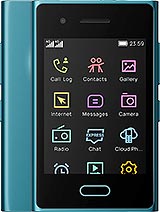
Touch 4G
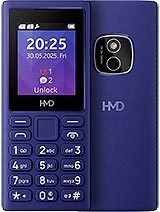
102 4G
Aura 2
106
Play20C