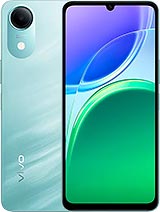
HMD 102 4G review
This is a backup phone or a device for elderly relatives or workers in WiFi-free zones who need reliable voice and SMS. Everyone else should buy a budget Android phone instead—even entry-level models offer a real screen, an app store, and a battery that lasts a day.
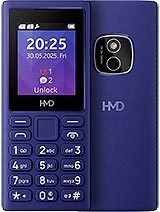
This review is based on HMD’s published specifications and public benchmark data for the HMD 102 4G, and the rating is spec-based. GoSolo does not physically test devices; where we estimate real-world behaviour such as battery life or charge time, we say so. How we rate phones.
Overview
The HMD 102 is a feature phone, not a smartphone: a 2.0-inch postage-stamp display, 1000 mAh battery good for a couple of hours, and a 0.1MP camera mean it exists only for calls and texts in areas without WiFi. At €20 it is honest about what it is, but the 24 MB storage and 1-2 hour battery life make it a backup device or elder care handset, not something you'll use as a primary phone.</ai_summary> <parameter name="pros">["Pocket-sized and light at 84g, easy to carry and hold for hours of calls", "Dual nano-SIM lets you run two numbers on one device, handy for work/personal or regional roaming", "4G on common bands (1, 3, 5, 8) means faster data than 3G where available, and a removable battery lets you swap in a fresh one without waiting for a charger", "Genuinely affordable at €20, which matches the honest lack of app ecosystem or screen real estate"]
Design & Build
At 84 grams and 14.3 mm thick, the HMD 102 fits a shirt pocket and feels negligible in the hand. The dual nano-SIM slot is a practical touch for users who juggle work and personal numbers or travel across regions. Dust protection and splash resistance are enough for light rain and pocket debris, though this is not a rugged phone. The build is basic but honest: no frills, and the removable battery is a throwback that actually serves a purpose here—you can swap a fresh cell without hunting for a charger. Colour options (Dark Blue, Red, Purple) are a nod to personality, but there is nothing to say about materials; at this price and purpose, durability is modest.
Display
The 2.0-inch TFT screen with 120×160 resolution is a remnant of mid-2000s feature phones, and it shows. At 100 ppi and a 20.9% screen-to-body ratio, this display is barely larger than a postage stamp. It is fine for reading text messages and phone menus, but anything beyond that—a chat app, email, a photo, or a video—is a non-starter. If your use case is strictly calls and SMS, the screen is adequate. If you expect to scroll web pages or navigate maps, you will be immediately frustrated. This is not a compromise; it is the device's core definition.
Performance & Storage
The Unisoc 8910 FF-S chipset is built for feature phones, not apps. Paired with 24 MB of internal storage, there is almost no room for anything beyond the operating system and a few preloaded tools. The microSDHC slot offers expansion for music or photos, but the bottleneck is the chipset itself—this phone cannot run modern Android, iOS, or any app ecosystem. Speed is not a problem because you are not running apps. Think of performance as a non-issue: the phone will dial, text, and play MP3s without lag. That is the entire scope.
Camera
A 0.1 MP fixed camera with LED flash produces thumbnail-quality snapshots. Do not expect usable portraits, landscape detail, or anything beyond "I can see what this was a photo of." The flash helps in dim conditions but does not salvage image quality. If you need to capture anything beyond proof-of-life snaps, bring another device. Video recording is absent, so this is a point-and-shoot at best, and a weak one.
Connectivity & Audio
The phone supports GSM, HSPA, and 4G LTE on bands 1, 3, 5, 8, 28, and 38–41. In urban areas with good band coverage, you will see faster data speeds than 3G alone. WiFi is absent, so indoors or in dead zones you are tethered to mobile data. Bluetooth 4.2 is present for headsets, and a 3.5 mm jack means you can plug in wired earphones. The loudspeaker is adequate for speakerphone calls. No GPS, no NFC—navigation and contactless payment are not options. An MP3 player and USB Type-C charging round out the basics.
Battery & Charging
The 1000 mAh removable battery is the catch: expect 1–2 hours of talk time on a full charge, or roughly a day of idle standby. For occasional calls, this is manageable. For regular use, you are charging daily or carrying spare batteries. The removable cell is a practical asset in 2025 because you can swap a pre-charged battery and keep going, but it also means you are constantly thinking about power. Charge time is not specified, but at 1000 mAh the device will top up quickly via USB Type-C if you can find a charger.
Value & Verdict
At €20, the HMD 102 is priced to sell as a backup or emergency phone, and it delivers exactly that. It is not attempting to be a smartphone; it is a calling and texting device for people in areas with no WiFi, or for users (often elderly) who want simplicity. The specs reflect honesty: no illusions of performance, storage, or multimedia capability. The real question is whether you actually need a dedicated voice phone. If you do, this is affordable and fit-for-purpose. If you want even basic app support, messaging, or a screen larger than a postcard, you need something else.
Verdict
This is a backup phone or a device for elderly relatives or workers in WiFi-free zones who need reliable voice and SMS. Everyone else should buy a budget Android phone instead—even entry-level models offer a real screen, an app store, and a battery that lasts a day.
- Battery lasts only 1–2 hours of talk time, forcing daily charging or carrying spares
- No WiFi means you are locked into mobile data coverage indoors and out, and 24 MB storage leaves almost no room for anything beyond the OS
- Screen is too small and low-res for any messaging app, web, or media—it is calls and SMS only
HMD 102 4G Key Specifications
The essentials at a glance. See the full spec sheet.
| Released | 2025, September 11 |
|---|---|
| Display | 2.0 inches, 12.4 cm2 (~20.9% screen-to-body ratio), TFT |
| Resolution | 120 x 160 pixels, 4:3 ratio (~100 ppi density) |
| Chipset | Unisoc 8910 FF-S |
| RAM & storage | 24MB |
| Main camera | QVGA |
| Selfie camera | No |
| Battery | 1000 mAh |
| Software | Android |
| Dimensions | 118.2 x 50.2 x 14.3 mm (4.65 x 1.98 x 0.56 in) |
| Weight | 84.2 g (2.96 oz) |
| Durability | Dust protected and splash resistant |
| Network | GSM / HSPA / LTE |
| NFC | No |
| USB | USB Type-C |
HMD 102 4G FAQ
Common questions, answered from the spec sheet.
Does the 102 4G support 5G?
No. The 102 4G tops out at GSM / HSPA / LTE, without 5G.
What chipset does the 102 4G use?
The 102 4G runs on the Unisoc 8910 FF-S.
What display does the 102 4G have?
A 2.0 inches, 12.4 cm2 (~20.9% screen-to-body ratio) TFT, 120 x 160 pixels, 4:3 ratio (~100 ppi density).
How big is the 102 4G battery?
The 102 4G has a 1000 mAh battery.
Does the 102 4G have NFC?
No, the 102 4G does not list NFC support.
Is the 102 4G water resistant?
The 102 4G carries a Dust protected and splash resistant rating.
Does the 102 4G support a microSD card?
Yes, the 102 4G supports expandable storage (microSDHC).
Does the 102 4G have a headphone jack?
Yes, the 102 4G has a 3.5mm headphone jack.
Alternatives to consider
If the 102 4G isn’t quite right, these are the closest calls.
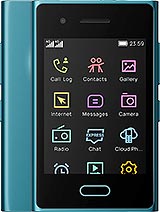
Touch 4G
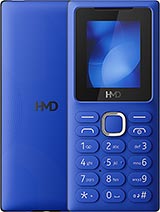
101 4G
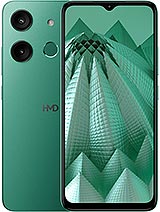
Aura 2
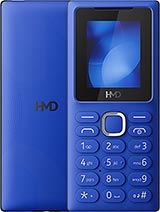
106
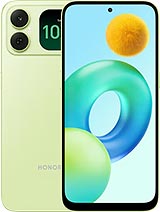
Play20C