HMD 106 review
The HMD 106 is for people who need a phone to make calls and send texts, and nothing more—older adults, backup emergencies, or anyone in a region where 2G networks are still the standard. Everyone else should buy literally any modern entry-level smartphone.
This review is based on HMD’s published specifications and public benchmark data for the HMD 106, and the rating is spec-based. GoSolo does not physically test devices; where we estimate real-world behaviour such as battery life or charge time, we say so. How we rate phones.
Overview
The HMD 106 is a bare-bones GSM feature phone for calls, texts, FM radio, and MP3s—a relic device in 2026, but at 10 EUR it exists purely as a throwaway emergency backup or for markets where connectivity is all that matters. Do not buy this expecting anything beyond 20-year-old phone basics.
Design & build
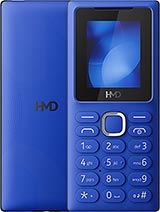
The HMD 106 is a brick. At 73 grams and 14.3 mm thick, it is heavier and chunkier than most modern phones, but that is not a drawback here—it is the point. Solid, pocketable, and built like a phone from 2005. Dual Mini-SIM slots give you the flexibility to run two numbers, useful in markets where carriers fragment traffic or where you need to switch between networks. The removable Li-Ion battery is a practical touch that modern flagships have abandoned; here it matters because a dead 1000 mAh pack is not a death sentence—you just swap it. Three muted colors (Gray, Blue, Teal) offer nothing distinctive, but nobody is buying this for style.
Display
A 1.77-inch TFT screen with 128 x 160 pixel resolution is essentially a 2000s-era phone display. At 116 ppi, text is blocky, colors are muddy, and viewing angles are poor—but for a feature phone, the display exists solely to show caller ID, text messages, and menu navigation, and it does that job. The 17.3 percent screen-to-body ratio means thick bezels, which is fine; you are not watching video here.
Performance
The Unisoc 6533G chipset is entry-level silicon designed to run GSM 2G networks and feature-phone firmware. It is not powerful—it is adequate for calls, texts, and an MP3 player. Do not expect to run any app, any browser, or anything that demands processing power. This is not a complaint about the HMD 106; it is the entire reason for its existence. Lag and slowness are non-issues because there is nothing to lag.
Storage & connectivity
Here is where the HMD 106 breaks down. With only 4MB of internal storage, you are almost entirely dependent on the microSDHC slot—and even then, a single voice memo or a few downloaded songs will eat up what little space remains. No WiFi, no Bluetooth, no NFC, no GPS, and no cellular data (2G GSM voice and SMS only) means you cannot browse, email, message online, use maps, or do anything that assumes internet access. The microUSB port is for charging and file transfer only. For a phone in 2026, this is not a trade-off; it is a statement. You get calls, texts, FM radio, and MP3s. Nothing else.
Battery & charging
The 1000 mAh battery is small by any modern standard, and charge time over microUSB will stretch past an hour for a full top-up. Real-world battery life depends entirely on whether you are just sitting by the phone or actively using it—but since the HMD 106 can only do calls, texts, and radio, and has no power-hungry display, a full charge will likely last 2 to 4 days of light use or 1 to 2 days if you are on frequent calls. The removable battery is the saving grace; carry a spare and you have continuous runtime.
Value & verdict-context
At 10 EUR, the HMD 106 is not a phone; it is insurance. It is the device you hand to a child for emergencies, keep in a glove compartment as a backup, or use in markets where GSM 2G networks still dominate and smartphones are overkill or unaffordable. The storage is laughably low, the screen is primitive, and the complete absence of data connectivity is not quirky—it is the entire business model. In 2026, when even entry-level smartphones offer WiFi, 4G, and gigabytes of storage for twice the price, the HMD 106 is not competing on features. It is competing on durability, longevity, and the sheer fact that a 73-gram feature phone with a removable battery will outlast many smartphones if you actually care for it. This is not a device to *use*; it is a device to *have*.
Verdict
The HMD 106 is for people who need a phone to make calls and send texts, and nothing more—older adults, backup emergencies, or anyone in a region where 2G networks are still the standard. Everyone else should buy literally any modern entry-level smartphone.
- Removable battery means you can swap a dead pack without tossing the phone
- Genuinely cheap at 10 EUR, so the financial loss if it breaks is negligible
- Dual SIM support for juggling two networks or numbers
- FM radio and MP3 player for audio on the go without internet dependency
- 4MB of internal storage is absurdly tight—the microSDHC slot barely helps if the OS itself claims most of that space
- 1000 mAh battery will need daily charging for moderate use, and charge time over microUSB will be slow
- No data connectivity at all: no WiFi, no 3G, no 4G, no Bluetooth, no GPS. You are locked to 2G GSM voice and SMS only
HMD 106 Key Specifications
The essentials at a glance. See the full spec sheet.
| Released | 2026, September |
|---|---|
| Display | 1.77 inches, 9.9 cm2 (~17.3% screen-to-body ratio), TFT |
| Resolution | 128 x 160 pixels (~116 ppi density) |
| Chipset | Unisoc 6533G |
| RAM & storage | 4MB |
| Battery | 1000 mAh |
| Software | Android |
| Dimensions | 114.3 x 50 x 14.3 mm (4.5 x 1.97 x 0.56 in) |
| Weight | 73 g (2.57 oz) |
| Network | GSM |
| NFC | No |
| USB | microUSB |
HMD 106 FAQ
Common questions, answered from the spec sheet.
Does the 106 support 5G?
No. The 106 tops out at GSM, without 5G.
What chipset does the 106 use?
The 106 runs on the Unisoc 6533G.
What display does the 106 have?
A 1.77 inches, 9.9 cm2 (~17.3% screen-to-body ratio) TFT, 128 x 160 pixels (~116 ppi density).
How big is the 106 battery?
The 106 has a 1000 mAh battery.
Does the 106 have NFC?
No, the 106 does not list NFC support.
Does the 106 support a microSD card?
Yes, the 106 supports expandable storage (microSDHC).
Alternatives to consider
If the 106 isn’t quite right, these are the closest calls.
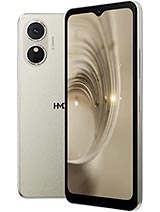
Arc 2
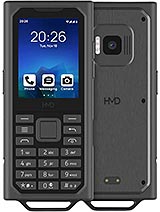
Terra M
Luma
Asha 305 Lite
Play20C