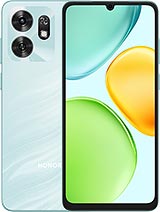
HMD Aura review
The Aura is honest about what it is: a no-frills phone for calls, texts, and light tasks, with a few old-school creature comforts. It suits people in tight economies who value all-day battery and a jack over snappy performance. Anyone who games, multitasks, or spends time in bright sunlight will find it frustrating very quickly.
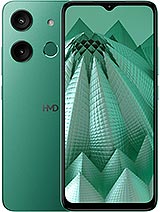
This review is based on HMD’s published specifications and public benchmark data for the HMD Aura, and the rating is spec-based. GoSolo does not physically test devices; where we estimate real-world behaviour such as battery life or charge time, we say so. How we rate phones.
Overview
The HMD Aura is a bare-bones Android phone designed for people who need calls, texts, and light apps on a tight budget. At roughly €110, it delivers a passable display, all-day battery, and a 3.5mm jack, but sluggish performance and dim brightness in sunlight are real limits.
Design & Build
At 175 grams and 8.9 mm thick, the Aura feels light and pocketable—a genuine strength for a phone this large. The dimensions are sensible for a 6.56-inch display, and the dual nano-SIM layout gives flexibility for work and personal numbers. Build quality is not specified, but the frame-and-back design is standard issue for entry-level phones and should survive everyday handling without drama. What you do not get—water resistance, fancy materials, eye-catching styling—is par for the price.
Display
The 6.56-inch IPS LCD is genuinely useful for reading, messages, and video calls, but the weaknesses are plain. 720p resolution (268 ppi) means text and photo edges are noticeably soft compared to phones with 1080p or higher, and spending extended time reading fine print will tire your eyes. The 480 nits peak brightness handles indoor use fine, but step into direct sunlight and the screen washes out fast, making it hard to see what is on screen without tilting and shading. For a budget device, this is a workable trade-off, but it is not a strong point.
Performance
The Unisoc SC9863A is an entry-level octa-core chip paired with 4 GB of RAM. It is built for basic work: calling, texting, light web browsing, simple apps. YouTube, Gmail, WhatsApp, and casual photo viewing run without visible stutter. The moment you layer on modern games, heavy multitasking, or a large number of background apps, the system slows visibly. Switching between a dozen open apps becomes sluggish, gaming is out of the question, and even some newer social media apps will lag. If your day is messaging and occasional browsing, it is fine. If you plan to do anything demanding, look elsewhere.
Software
Android 13 is two years behind the current version, which means you are missing recent security patches and features. HMD's track record on timely updates is middling at best; this phone is unlikely to see Android 14 or 15, so you are locked into a two-year-old software baseline. There is no custom UI bloat reported, which is a mercy, but the overall software experience is dated and slow to receive fixes.
Camera
The 13 MP main sensor with LED flash and autofocus is adequate for bright daylight snapshots and video calls, but struggles elsewhere. Low-light shots are noisy and soft, distant subjects lack detail, and the 1080p video at 30 fps is functional but uninspiring. The 5 MP front camera is purely for video calls and selfies; don't expect print-quality results. For a phone at this price, the camera does what it promises—casual documentation—but it is not a reason to buy this phone over a rival.
Battery & Charging
The 5000 mAh battery is generous and matches the low power draw of the Unisoc chip well. Expect about 1.5 to 2 days of light use (messaging, calls, some browsing) on a single charge, or a full day if you are more active. That is solid for the price. The 10W charger is the weak link: reaching 100% takes roughly 2.5 to 3.5 hours, so you will need to charge overnight or find a desk for a long session. By 2024 standards, even budget phones are hitting 30W or higher, so the Aura's slow charging is a real inconvenience.
Value & Verdict
At roughly €110, the Aura competes in a narrow lane: phones for people who need a working device but have little to spend. In that lane, it delivers the basics—calling, texting, light apps, and a big screen that is easy on the eyes. The 3.5mm jack and microSDXC slot are genuine bonuses in 2024, when most brands have ditched them. The all-day battery without fuss is another real win. But the slow charging, dim screen in sunlight, and sluggish performance are not cosmetic quibbles; they are genuine friction points you will notice every day. A buyer should think hard about whether the jack and card slot are worth living with a phone that lags under any real pressure and needs overnight charging. For those working on a razor-thin budget and doing only the essentials, it is a rational choice. For anyone with a bit more headroom, a used flagship or a newer mid-range phone will deliver much better daily experience.
Verdict
The Aura is honest about what it is: a no-frills phone for calls, texts, and light tasks, with a few old-school creature comforts. It suits people in tight economies who value all-day battery and a jack over snappy performance. Anyone who games, multitasks, or spends time in bright sunlight will find it frustrating very quickly.
- 5000 mAh battery gets through a full day of basic use without midday charging
- 3.5mm headphone jack and microSDXC slot are still here—rare in new phones at any price
- Large 6.56-inch screen is comfortable for reading and video calls, even if resolution is low
- Compact and light at 175g, easy to pocket and carry all day
- 10W charging crawls to a full charge in roughly 2.5 to 3.5 hours, so overnight plugging is mandatory
- 720p resolution on a 6.56-inch screen produces visible pixelation up close; 480 nits brightness dims noticeably in direct sun
- Unisoc SC9863A chipset chokes on modern games, heavy multitasking, and even some app-switching; basic web browsing and messaging work, but don't expect smooth performance
HMD Aura Key Specifications
The essentials at a glance. See the full spec sheet.
| Released | 2024, May 23 |
|---|---|
| Display | 6.56 inches, 101.4 cm2 (~82.0% screen-to-body ratio), IPS LCD, 480 nits (typ) |
| Resolution | 720 x 1612 pixels (~268 ppi density) |
| Chipset | Unisoc SC9863A1 (22 nm) |
| RAM & storage | 64GB 4GB RAM, 128GB 4GB RAM |
| Main camera | 13 MP, (wide), AF Auxiliary lens |
| Selfie camera | 5 MP |
| Battery | 5000 mAh |
| Charging | 10W wired |
| Software | Android 13 |
| Dimensions | 163.9 x 75.5 x 8.9 mm (6.45 x 2.97 x 0.35 in) |
| Weight | 175 g (6.17 oz) |
| Network | GSM / HSPA / LTE |
| NFC | No |
| USB | USB Type-C 2.0, OTG |
HMD Aura FAQ
Common questions, answered from the spec sheet.
Does the Aura support 5G?
No. The Aura tops out at GSM / HSPA / LTE, without 5G.
What chipset does the Aura use?
The Aura runs on the Unisoc SC9863A1 (22 nm).
What display does the Aura have?
A 6.56 inches, 101.4 cm2 (~82.0% screen-to-body ratio) IPS LCD, 480 nits (typ), 720 x 1612 pixels (~268 ppi density).
How big is the Aura battery?
The Aura has a 5000 mAh battery. Charging is rated at 10W wired.
Does the Aura have NFC?
No, the Aura does not list NFC support.
Does the Aura support a microSD card?
Yes, the Aura supports expandable storage (microSDXC (uses shared SIM slot)).
Does the Aura have a headphone jack?
Yes, the Aura has a 3.5mm headphone jack.
Alternatives to consider
If the Aura isn’t quite right, these are the closest calls.
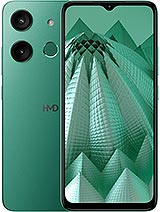
Aura 2
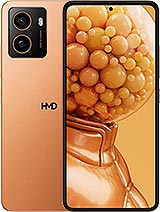
Pulse+
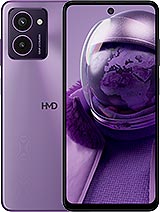
Pulse Pro
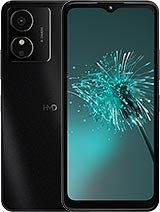
Arc
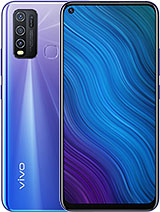
Y50 5G