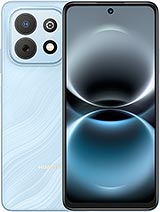
HMD Terra M review
Get this if you work on a job site, need a truly bulletproof backup, or operate in harsh climates where durability trumps screen size and speed. Pass if you want a smartphone that happens to be tough; the display and processor will wear on you fast.
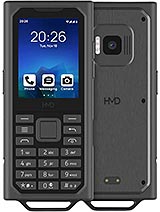
This review is written with AI assistance from HMD’s published specifications and public benchmark data for the HMD Terra M, and the rating is spec-based. GoSolo does not physically test devices; where we estimate real-world behaviour such as battery life or charge time, we say so. How we rate phones.
Overview
The HMD Terra M is a rugged feature phone built for harsh conditions and emergencies, not a daily driver—it survives drops, dust, and water but its tiny 2.8-inch screen, 2GB RAM, and 8MP camera mean it's not trying to compete on experience. The durability and dedicated emergency features justify it only if you need a backup or work site device, not if you want a smartphone.
Design & Build
This is where the Terra M earns its place. At 210g and 14.5mm thick, it's lithe for what it claims to be—a phone that survives MIL-STD-810H stress testing, IP68/IP69K immersion up to 1.5 metres for half an hour, and 1.8-metre drops. The Gorilla Glass 3 front and mechanical build feel deliberate; the red LED torch and two user-programmable keys signal purpose. It's not an industrial brick, but it's not pretending to be a normal phone either. The magnetic accessory connector hints at expanding capability via ruggedized attachments. This is kit, not a lifestyle object.
Display
The 2.8-inch TFT LCD is the starkest trade-off here. At 480 x 640 pixels and 286 ppi, the image is sharp enough, but the physical size puts it in the same league as phones from 2010. Reading email, browsing, or watching anything is an exercise in compromise. The 550-nit brightness helps in sunlight, which is the only real win. For a phone branded as rugged, the small display makes sense—less screen real estate means less to protect and less power to drain—but it confirms this is not a device for someone who wants a smartphone experience. It's a survival tool wearing a phone's form factor.
Performance
The Qualcomm Dragonwing QCM2290 is a low-power chip aimed at feature phones and IoT, not smartphones. Pairing it with 2GB RAM means app load times stretch, switching between apps stutters, and anything browser-heavy will feel sluggish. This is intentional: the Terra M is not designed for gaming, social media binge sessions, or heavy productivity. It handles calls, texts, GPS, and basic MP3 playback without fuss. For emergency communication or field work—the actual use case—it is fit. For anyone expecting smartphone-class responsiveness, this will frustrate after a few hours.
Camera
An 8MP wide camera with f/2.0 aperture and autofocus is present but uninspiring. There is no ultrawide, no depth sensor, no second lens. Daylight shots are serviceable; low light is grainy. The LED flash helps but does not transform performance. No selfie camera simplifies durability. This is a documentation tool, not a photography platform. A rugged action cam would serve you better if image quality matters; the Terra M's camera is adequate only if you need to log or share quick evidence and durability is non-negotiable.
Battery & Charging
The 2510 mAh battery is tight. Moderate use (calls, texts, light GPS) might stretch to a full day; heavier use shortens it to 12 hours or less. There is no fast charging mentioned, and no figures on charger wattage are provided, so assume standard micro-pace. For a phone intended to work in the field, the small capacity is a weakness. Rugged solar chargers or extended power banks are likely necessary if you work off-grid. If you rely on this phone in emergencies, battery anxiety will be constant.
Value & Verdict
The Terra M exists in a niche: industrial supply chains, emergency responders, remote workers, and people who need a genuine backup phone. At the intersection of durability and affordability, it makes sense. For a casual buyer—someone who wants a second phone or a lightweight travel device—the compromised display, laggy processor, and weak camera make it frustrating despite the rugged build. Rivals in the rugged space (Caterpillar, Motorola Defy) offer similar durability, sometimes with larger screens and faster chips, though often heavier and pricier. The Terra M wins on slim profile and price, but only if ruggedness is your first priority, not an afterthought.
Verdict
Get this if you work on a job site, need a truly bulletproof backup, or operate in harsh climates where durability trumps screen size and speed. Pass if you want a smartphone that happens to be tough; the display and processor will wear on you fast.
- Extreme durability: MIL-STD-810H rated, IP68/IP69K certified, survives 1.8m drops and 1.5m submersion for 30 minutes
- Dedicated emergency hardware: red LED torch and two programmable keys plus robust placement for field workers
- Slim and light despite ruggedness: 14.5mm thick and 210g, easier to pocket than typical industrial phones
- Dual SIM plus eSIM and good GNSS coverage for offline navigation and remote work
- Tiny 2.8-inch display with low resolution makes any app or media viewing a squint; at 286 ppi it looks crisp but the physical size is a dealbreaker for daily use
- Underpowered processor and 2GB RAM mean apps lag and multitasking stalls; this is not a fast phone even by feature-phone standards
- 2510 mAh battery is cramped and daily charging is unavoidable even with modest use
HMD Terra M Key Specifications
The essentials at a glance. See the full spec sheet.
| Released | 2026, February 10 |
|---|---|
| Display | 2.8 inches, 24.3 cm2 (~25.1% screen-to-body ratio), TFT LCD, 550 nits |
| Resolution | 480 x 640 pixels, 4:3 ratio (~286 ppi density) |
| Chipset | Qualcomm Dragonwing QCM2290 (11 nm) |
| RAM & storage | 32GB 2GB RAM |
| Main camera | 8 MP, f/2.0 (wide), 1/4.0", 1.12µm, AF |
| Selfie camera | No |
| Battery | 2510 mAh |
| Software | Smart OS 14 |
| Dimensions | 146.5 x 66 x 14.5 mm (5.77 x 2.60 x 0.57 in) |
| Weight | 210 g (7.41 oz) |
| Durability | IP68/IP69K dust tight and water resistant (high pressure water jets; immersible up to 1.5m for 30 min) MIL-STD-810H compliant Drop resistant up to 1.8m Dedicated red LED torch Two programmable keys |
| Network | GSM / HSPA / LTE |
| NFC | Yes |
| USB | USB Type-C, magnetic accessory connector pins |
HMD Terra M FAQ
Common questions, answered from the spec sheet.
Does the Terra M support 5G?
No. The Terra M tops out at GSM / HSPA / LTE, without 5G.
What chipset does the Terra M use?
The Terra M runs on the Qualcomm Dragonwing QCM2290 (11 nm).
What display does the Terra M have?
A 2.8 inches, 24.3 cm2 (~25.1% screen-to-body ratio) TFT LCD, 550 nits, 480 x 640 pixels, 4:3 ratio (~286 ppi density).
How big is the Terra M battery?
The Terra M has a 2510 mAh battery.
Does the Terra M have NFC?
Yes, the Terra M has NFC.
Is the Terra M water resistant?
The Terra M carries a IP68/IP69K dust tight and water resistant (high pressure water jets; immersible up to 1.5m for 30 min) MIL-STD-810H compliant Drop resistant up to 1.8m Dedicated red LED torch Two programmable keys rating.
Does the Terra M support a microSD card?
Yes, the Terra M supports expandable storage (Unspecified).
Alternatives to consider
If the Terra M isn’t quite right, these are the closest calls.
Arc 2
Luma
Vibe2
Vibe2 Pro
Galaxy XCover 7 Pro