HMD Touch 4G review
This phone suits people who prioritize battery life, reliability, and simplicity over apps and screen quality—particularly in areas where power and connectivity are inconsistent. Anyone expecting a modern smartphone experience, even a budget one, should spend a bit more on an entry-level Android and accept shorter battery life as the trade-off.
This review is based on HMD’s published specifications and public benchmark data for the HMD Touch 4G, and the rating is spec-based. GoSolo does not physically test devices; where we estimate real-world behaviour such as battery life or charge time, we say so. How we rate phones.
Overview
The HMD Touch 4G is a practical voice phone for people who need reliable calls and LTE in areas where connectivity is spotty, with a battery that actually lasts multiple days. It is not a smartphone in the modern sense—it's a feature phone disguised as a budget Android device, and that is exactly what it should be at this price.
Design & Build
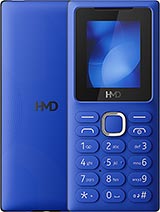
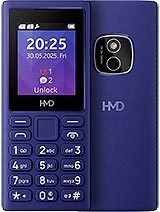
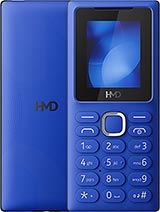
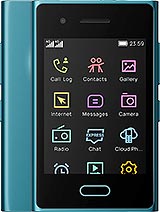
At 100g and 10.9mm thick, the Touch 4G feels like carrying a bar of soap. The phone fits genuinely in one hand and won't tire your wrist during long calls—a real win for people who make a lot of voice calls. Splash resistance is a sensible touch for a device aimed at outdoor or rural users, though it is not waterproof, so dunking it will still end it. The Quick-Call button is a throwback to earlier Nokia feature phones, a physical shortcut to a contact. Dual Nano-SIM slots mean you can juggle two networks or plans, useful in areas where coverage gaps are common. The industrial feel is honest: this is not trying to be a flagship or a style statement; it is a tool built to be pocketed and used.
Display
The 3.2-inch, 240×320 LCD screen is the phone's biggest compromise. At 125 ppi, text and images look visibly pixelated compared to anything made in the last decade. Reading longer messages or web pages becomes a squint-and-scroll affair. Brightness and color accuracy are not standout either. For basic SMS, calls, and radio—the intended uses—it is passable. Anything beyond that is frustrating. The 4:3 aspect ratio is dated, and the tiny screen real estate leaves little room for comfortable button layouts. If you spend time staring at the display, this phone will irritate you; if you mostly answer calls and check headlines, you will forget about it quickly.
Performance
The Unisoc T127 is a low-end processor from 2024, designed for voice and light messaging rather than app performance. With only 128 MB of RAM, the phone struggles to hold more than one or two apps in memory at once. Switching between an app and the home screen involves visible loading pauses. Web browsing is slow. The MP3 player and FM radio work fine, but download a few games or try to run a GPS app alongside something else, and the phone chokes. This is not a device for Instagram, TikTok, or heavy productivity. It is built for calls, texts, music, and navigation—and it handles those adequately once you accept that you cannot do much simultaneously. Do not buy this expecting smartphone performance; buy it expecting a phone that makes calls without fuss.
Software
The phone runs RTOS Touch, a custom real-time operating system, not Android. This means no Google Play Store, no mainstream app ecosystem, and no app updates in the way you know them. HMD has included an Express Chat app for messaging and an MP3 player for audio. The OS is minimal and responsive for its hardware, with no bloat. If you are used to Android or iOS, the interface will feel alien and limiting. For the target buyer—someone in a low-connectivity region who needs calls, texts, and radio—the simplicity is a feature, not a bug. There is no vector for malware, no forced updates, and no telemetry. But it also means the phone is not part of the modern internet ecosystem, and it will not improve significantly over time.
Camera
The 2 MP main camera with LED flash is adequate for quick snapshots and document scanning. In daylight, you will get usable, if soft and low-detail, photos of everyday scenes. The LED flash helps in indoor shots, but do not expect punchy colors or sharpness even with it. The 0.3 MP selfie camera is basically decorative. Video recording exists but is grainy and low-resolution. For a phone this cheap, the camera is honest: it does what a phone camera from 2010 would do, and that is enough if you just need to capture a receipt or proof of something. Anyone wanting actual photography should look elsewhere, but for this price and use case, asking for more would be unreasonable.
Battery & Charging
The 1950 mAh cell is the phone's genuine strength. With light use—mostly calls, texts, and radio—expect a solid 2 to 3 days between charges. Heavier usage (video calls, frequent browsing, always-on screen) will drain it in a day, but light users will rarely plug in more than once or twice a week. There is no fast charging mentioned in the specs, so charging takes several hours, but the small battery means waiting is not a crisis. The upside: you forget about the charger cable far more than with a modern phone. The FM radio and MP3 player run for extended periods without draining much power, making this a practical device for extended trips or areas without reliable power. Battery longevity is a major reason someone would choose this phone over a low-end Android despite the hardware limitations.
Value & Verdict Context
At ₹3,799 in India (roughly $45 USD), the Touch 4G is cheaper than most budget Android phones and competes with used or refurbished older smartphones. The trade-off is clear: you get exceptional battery life, a headphone jack, FM radio, LTE, and reliability, but you sacrifice modern software, app access, and a usable display. For someone in a developing or rural market who needs a phone that works without fuss and lasts days, this is sensible. For anyone in an urban area with 5G coverage and app expectations, it will feel like stepping backward. The phone is not broken or pointless; it is simply narrowly designed. HMD is not pretending this is a smartphone; it is a call-and-message device with some extras. Judge it on that basis, and it is honest.
Verdict
This phone suits people who prioritize battery life, reliability, and simplicity over apps and screen quality—particularly in areas where power and connectivity are inconsistent. Anyone expecting a modern smartphone experience, even a budget one, should spend a bit more on an entry-level Android and accept shorter battery life as the trade-off.
- LTE and dual SIM for reliable coverage in rural or developing markets
- Genuine multi-day battery life from a 1950 mAh cell for light to moderate use
- Headphone jack and FM radio built in, making it genuinely useful offline
- Featherweight at 100g and splash resistant, designed to survive daily life
- 64–128 MB RAM is crippling even by 2025 feature-phone standards; expect serious lag and no multitasking
- Display is dim, pixelated, and tiny at 3.2 inches and 125 ppi—reading is tiring, web browsing is painful
- 2 MP camera captures functional snapshots only; any attempt at zoom or low-light work is pointless
HMD Touch 4G Key Specifications
The essentials at a glance. See the full spec sheet.
| Released | 2025, October 07 |
|---|---|
| Display | 3.2 inches, 31.7 cm2 (~50.1% screen-to-body ratio), TFT LCD |
| Resolution | 240 x 320 pixels, 4:3 ratio (~125 ppi density) |
| Chipset | Unisoc T127 |
| RAM & storage | 64MB 128MB RAM |
| Main camera | 2 MP |
| Selfie camera | 0.3 MP |
| Battery | 1950 mAh |
| Software | RTOS Touch |
| Dimensions | 102.3 x 61.9 x 10.9 mm (4.03 x 2.44 x 0.43 in) |
| Weight | 100 g (3.53 oz) |
| Durability | Splash resistant Quick-Call button |
| Network | GSM / HSPA / LTE |
| NFC | No |
| USB | USB Type-C |
HMD Touch 4G FAQ
Common questions, answered from the spec sheet.
Does the Touch 4G support 5G?
No. The Touch 4G tops out at GSM / HSPA / LTE, without 5G.
What chipset does the Touch 4G use?
The Touch 4G runs on the Unisoc T127.
What display does the Touch 4G have?
A 3.2 inches, 31.7 cm2 (~50.1% screen-to-body ratio) TFT LCD, 240 x 320 pixels, 4:3 ratio (~125 ppi density).
How big is the Touch 4G battery?
The Touch 4G has a 1950 mAh battery.
Does the Touch 4G have NFC?
No, the Touch 4G does not list NFC support.
Is the Touch 4G water resistant?
The Touch 4G carries a Splash resistant Quick-Call button rating.
Does the Touch 4G support a microSD card?
Yes, the Touch 4G supports expandable storage (microSDHC).
Does the Touch 4G have a headphone jack?
Yes, the Touch 4G has a 3.5mm headphone jack.