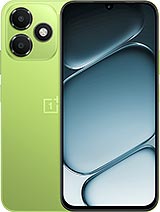
HMD Vibe2 review
The Vibe2 suits buyers who prioritize maximum screen and battery over everything else and use their phone mainly for video, messaging, and light browsing. Anyone who cares about display sharpness, performance, or photo quality should look for a more balanced option at a slightly higher price point.
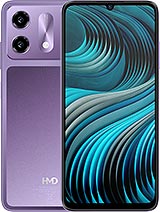
This review is written with AI assistance from HMD’s published specifications and public benchmark data for the HMD Vibe2, and the rating is spec-based. GoSolo does not physically test devices; where we estimate real-world behaviour such as battery life or charge time, we say so. How we rate phones.
Overview
The HMD Vibe2 is a sprawling budget phone that prioritizes screen size and battery capacity over performance or camera quality. At 80 EUR it's not unreasonable for the spec list, but a 260 ppi display and entry-level Unisoc chip mean you're paying for bulk rather than refinement.
Design & build
The Vibe2 is a thin, lightweight phone that doesn't feel cheap in hand thanks to its glass front and solid plastic frame. At 210 g and 8.6 mm it's easy to carry and manage despite the 6.75-inch frame—a sensible choice for a large-screen budget phone. The plastic back and frame are honest materials at this price point, and the side-mounted fingerprint sensor is placed logically. Dual nano-SIM slots without a dedicated microSD tray means a hybrid slot, a minor inconvenience but par for the course at 80 EUR.
Display
The 6.75-inch IPS LCD is the Vibe2's headline feature, and at first glance it feels spacious for watching video or reading. The 20:9 aspect ratio and 120Hz refresh rate are real wins for scrolling fluidity. The problem is the 720p resolution: at 260 ppi density on a screen this large, text is visibly jagged and images lack sharpness. For comparison, rivals in this price tier now commonly hit 1080p on similarly sized screens, making this feel like a deliberate cost-cut rather than an oversight. If you're mostly watching YouTube or Netflix at distance, it's passable; anything requiring legibility at arm's length will disappoint.
Performance
The Unisoc T8200 is a modest entry-level chip that handles everyday tasks—messaging, calls, basic browsing, social media—without lag. The octa-core setup and Mali-G57 GPU can manage light gaming and app switching, but anything demanding will slow to a crawl. Expect frame drops and loading delays in newer games or multitasking-heavy workflows. By 2026 standards, even budget rivals from Mediatek or Qualcomm punch harder for the same money. The 4GB base RAM doesn't help, though the 6GB option offers marginally better headroom. This is a phone for basic users; power users and gamers should look elsewhere.
Software
Android 16 is current for 2026, and HMD's minimal bloat is welcome. No spamware or pre-installed junk means the OS feels cleaner than many rivals. The side-mounted fingerprint sensor works reliably, and the basic sensor suite (accelerometer, proximity) handles what it needs to. Updates and long-term support are not guaranteed at this price; budget phones from HMD have historically received 2–3 years of patches, which is adequate but not generous.
Camera
The 50MP main sensor is a spec-sheet bump that fails to translate to real-world quality. The photos are soft and lack fine detail, with muddy colors in low light and overblown highlights in bright conditions. The LED flash is weak, and HDR processing is basic. The 8MP selfie camera is purely functional. 1080p video at 30 fps is no longer a selling point at this price—it's simply the floor. For a phone positioned as budget, the camera feels like the area where HMD cut corners hardest. If photography matters at all, this is a significant weakness.
Battery & charging
The 6000 mAh battery is genuinely useful, delivering 1.5 to 2 days of mixed use on a single charge, depending on screen brightness and app load. That's the Vibe2's strongest practical asset. The charging is unspecified in the official data, but budget hints at 18W, which is slow by modern standards—expect 60–90 minutes to a full charge. No wireless charging, as expected. The large battery is a real differentiator at this price and partly justifies the size.
Value & verdict
At 80 EUR, the HMD Vibe2 is affordable, and the battery and screen size appeal to buyers who prioritize screen real estate and endurance over performance or camera quality. However, the 720p display is a poor choice on a 6.75-inch phone, the Unisoc chip is underpowered even for budget use, and the camera is genuinely weak. You're paying for size and capacity, not refinement. If you want a simple, long-lasting phone for basic tasks and can live with low-res text and photos, this works. If you need decent performance, a sharp display, or decent photos, spend a bit more—rivals at 100–120 EUR offer substantially better all-around value.
Verdict
The Vibe2 suits buyers who prioritize maximum screen and battery over everything else and use their phone mainly for video, messaging, and light browsing. Anyone who cares about display sharpness, performance, or photo quality should look for a more balanced option at a slightly higher price point.
- 6000 mAh battery and 6.75-inch display give genuine day-to-day appeal for the price
- Unisoc T8200 is efficient enough for modest multitasking and media, and the 120Hz refresh helps in scrolling
- Expandable storage via microSDXC and dual SIM offer practical flexibility
- Thin at 8.6 mm and light enough at 210 g despite the large footprint
- 720p display at this screen size results in noticeably coarse text and images compared to even mid-range rivals
- Unisoc T8200 is genuinely underpowered for anything beyond light use—gaming and demanding apps will struggle
- 50MP camera delivers soft, mediocre stills with minimal detail; 1080p video is now table stakes at this price, not a selling point
HMD Vibe2 Key Specifications
The essentials at a glance. See the full spec sheet.
| Released | 2026, May 21 |
|---|---|
| Display | 6.75 inches, 110.0 cm2 (~84.3% screen-to-body ratio), IPS LCD, 120Hz |
| Resolution | 720 x 1600 pixels, 20:9 ratio (~260 ppi density) |
| Chipset | Unisoc T8200 (6 nm) |
| RAM & storage | 64GB 4GB RAM, 128GB 4GB RAM, 128GB 6GB RAM |
| Main camera | 50 MP, (wide) Auxiliary lens |
| Selfie camera | 8 MP |
| Battery | 6000 mAh |
| Software | Android 16 |
| Dimensions | 168 x 77.7 x 8.6 mm (6.61 x 3.06 x 0.34 in) |
| Weight | 210 g (7.41 oz) |
| Build | Glass front, plastic frame, plastic back |
| Network | GSM / HSPA / LTE / 5G |
| NFC | No |
| USB | USB Type-C 2.0 |
HMD Vibe2 FAQ
Common questions, answered from the spec sheet.
Does the Vibe2 support 5G?
Yes. The Vibe2 supports 5G networks.
What chipset does the Vibe2 use?
The Vibe2 runs on the Unisoc T8200 (6 nm).
What display does the Vibe2 have?
A 6.75 inches, 110.0 cm2 (~84.3% screen-to-body ratio) IPS LCD, 120Hz, 720 x 1600 pixels, 20:9 ratio (~260 ppi density).
How big is the Vibe2 battery?
The Vibe2 has a 6000 mAh battery.
Does the Vibe2 have NFC?
No, the Vibe2 does not list NFC support.
Does the Vibe2 support a microSD card?
Yes, the Vibe2 supports expandable storage (microSDXC).
Alternatives to consider
If the Vibe2 isn’t quite right, these are the closest calls.
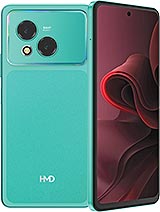
Vibe2 Pro
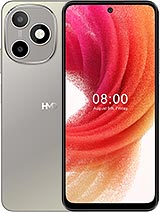
Luma
Vibe
Terra M
Galaxy M17e