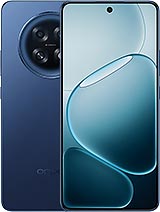
Honor 400 review
The Honor 400 suits anyone after a daily driver with a genuinely good screen, solid cameras, and fast charging without the flagship price tag. Buyers who game seriously or demand Gorilla Glass durability should step up to a higher-tier phone.

This review is written with AI assistance from Honor’s published specifications and public benchmark data for the Honor 400, and the rating is spec-based. GoSolo does not physically test devices; where we estimate real-world behaviour such as battery life or charge time, we say so. How we rate phones.
Overview
The Honor 400 pairs a bright, smooth 120Hz AMOLED screen with fast 66W charging and a capable mid-range chip, making it a sensible pick for everyday use and media. The Snapdragon 7 Gen 3 and Mohs 4 glass are honest trade-offs at this price, and the 200MP camera benefits more from stabilization than raw megapixel count.
Design & build
At 7.3mm and 184g, the Honor 400 is slim and light enough to pocket comfortably. The mix of glass front, plastic frame, and plastic back is standard for the price, but it reads cheaper than glass-sandwich rivals. The Mohs 4 glass on the display scratches more easily than Gorilla Glass Victus; Honor should have matched competitors here. IP65 (Europe) or IP66 (other regions) is solid for splashes and rain, though not submersion-proof. You get a decent case in the box, which the display will appreciate.
Display
The 6.55-inch AMOLED with 120Hz refresh and 5000-nit peak brightness is this phone's best feature. Scrolling feels fluid, and outdoor readability in sunlight is genuinely good—no squinting at maps or messages. The 1264×2736 resolution gives 460 ppi, which is sharp enough for text and photos at normal viewing distance. The 19.5:9 ratio is narrow, making the phone easier to handle than squarer phones this size. Colors are vibrant without the flatness of lower-tier OLEDs. For streaming video and social media, this screen punches above its price tier.
Performance
The Snapdragon 7 Gen 3 is a capable mid-range chip that handles email, messaging, video, and casual browsing without lag. Gaming is mixed: PUBG Mobile and Fortnite run at medium settings with steady frames, but demanding titles like Genshin Impact choke at high quality. The AnTuTu score of 864K and 8GB/12GB RAM options are typical for upper-midrange phones in 2025. Apps launch quickly and you will not feel bottlenecked for everyday work. This is not a phone for mobile gaming enthusiasts, but it will not disappoint casual users.
Software
Android 15 with MagicOS 10 runs Honor's customizations over Google's base. The overlay adds useful features like multi-window splits and gesture controls, though it does add bloat compared to stock Android. Honor's promise of 6 major Android updates to Android 20 is competitive for the price. Out of the box, MagicOS behaves well without aggressive battery drain, though some may prefer a cleaner interface. Security updates should be regular.
Camera
The 200MP main sensor is flagship-adjacent on paper, but the real strength is the f/1.9 aperture and optical image stabilization. Low-light photos are bright and handheld video is steady without gimbal jitter. The 12MP ultrawide at 112° is useful for landscapes but struggles with edge distortion. The 50MP selfie is serviceable for video calls and daylight selfies. The 200MP pixel count does matter for cropping in post, but do not expect revolutionary results. Night mode and HDR are solid without being cutting-edge. For social media and WhatsApp, this camera more than suffices.
Battery & charging
The European 5300 mAh (or 6000 mAh ROW) combines with moderate efficiency for roughly 12–13 hours of mixed use with moderate screen-on time. Light users may stretch to a full day; heavy users will need an evening charge. The 66W wired charger is fast: 44% in 15 minutes, 100% in about 46 minutes. There is no wireless charging or reverse wired charging of note. The charging speed is faster than many rivals at this price, which is rare and welcome. Battery health should hold up well given the Si/C chemistry.
Value & verdict
At €340–350 (or US $348), the Honor 400 sits in a crowded middle where you are choosing between bright displays, fast charging, or performance prowess. This phone prioritizes screen quality and charging speed over raw power or flagship materials. It is cheaper than comparable mid-range phones with less bright screens, and the AMOLED is a tangible win over cheaper LCD rivals. The plastic back and Mohs 4 glass are real cost-cuts, and the Snapdragon 7 Gen 3 is not the fastest chip. Buyers upgrading from older phones will see the benefits. Those shopping for gaming or demanding photo work should look at pricier alternatives with flagship chips or camera systems.
Verdict
The Honor 400 suits anyone after a daily driver with a genuinely good screen, solid cameras, and fast charging without the flagship price tag. Buyers who game seriously or demand Gorilla Glass durability should step up to a higher-tier phone.
- 120Hz AMOLED with 5000-nit peak brightness cuts glare in direct sun and makes video smooth
- 66W wired charging reaches 100% in about 46 minutes; 44% in 15 minutes covers a working day top-up
- 200MP main sensor with f/1.9 aperture and OIS delivers sharp handheld shots and steady video
- IP65/IP66 rating handles rain and splashes without the fussiness of sealed flagships
- Snapdragon 7 Gen 3 runs everyday apps smoothly but struggles with demanding games at high settings
- Mohs 4 glass scratches more easily than modern Gorilla Glass; rivals at this price often have tougher protection
- Plastic back and frame feel less solid than glass rivals, though weight stays reasonable at 184g
Honor 400 Key Specifications
The essentials at a glance. See the full spec sheet.
| Released | 2025, May 22 |
|---|---|
| Display | 6.55 inches, 105.4 cm2 (~90.3% screen-to-body ratio), AMOLED, 1B colors, 120Hz, 3840Hz PWM, HDR, 5000 nits (peak) |
| Resolution | 1264 x 2736 pixels, 19.5:9 ratio (~460 ppi density) |
| Chipset | Qualcomm SM7550-AB Snapdragon 7 Gen 3 (4 nm) |
| RAM & storage | 256GB 8GB RAM, 256GB 12GB RAM, 512GB 8GB RAM, 512GB 12GB RAM |
| Main camera | 200 MP, f/1.9, (wide), 1/1.4", 0.56µm, PDAF, OIS 12 MP, f/2.2, 112˚ (ultrawide), AF |
| Selfie camera | 50 MP, f/2.0, (wide), 0.64µm |
| Battery | 6000 mAh |
| Charging | 66W wired (for 5300 mAh), 44% in 15 min, 100% in 46 min80W wired (for 6000 mAh), 40% in 15 min5W reverse wired |
| Software | Android 15, up to 6 major Android upgrades, MagicOS 10 |
| Dimensions | 156.5 x 74.6 x 7.3 mm (6.16 x 2.94 x 0.29 in) |
| Weight | 184 g (6.49 oz) |
| Build | Glass front, plastic frame, plastic back |
| Durability | IP65 dust tight and water resistant (low pressure water jets) IP66 dust tight and water resistant (high pressure water jets) * market/region dependent availability |
| Network | GSM / HSPA / LTE / 5G |
| NFC | Yes |
| USB | USB Type-C 2.0, OTG |
Honor 400 FAQ
Common questions, answered from the spec sheet.
Does the 400 support 5G?
Yes. The 400 supports 5G networks.
What chipset does the 400 use?
The 400 runs on the Qualcomm SM7550-AB Snapdragon 7 Gen 3 (4 nm).
What display does the 400 have?
A 6.55 inches, 105.4 cm2 (~90.3% screen-to-body ratio) AMOLED, 1B colors, 120Hz, 3840Hz PWM, HDR, 5000 nits (peak), 1264 x 2736 pixels, 19.5:9 ratio (~460 ppi density).
How big is the 400 battery?
The 400 has a 6000 mAh battery. Charging is rated at 66W wired (for 5300 mAh), 44% in 15 min, 100% in 46 min80W wired (for 6000 mAh), 40% in 15 min5W reverse wired.
Does the 400 have NFC?
Yes, the 400 has NFC.
Is the 400 water resistant?
The 400 carries a IP65 dust tight and water resistant (low pressure water jets) IP66 dust tight and water resistant (high pressure water jets) * market/region dependent availability rating.
Does the 400 support a microSD card?
No, the 400 does not support expandable storage.
Does the 400 have a headphone jack?
No, the 400 does not have a 3.5mm headphone jack.
Alternatives to consider
If the 400 isn’t quite right, these are the closest calls.
X70

Magic7 Lite
X8d
MagicPad 3 Pro
Galaxy A56