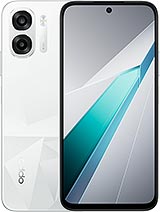
Honor Choice T20 review
The T20 suits buyers in price-sensitive markets who prioritize battery endurance and screen real estate over pace and camera range, and who are content with basic performance for essential tasks. Anyone expecting snappy multitasking, modern display sharpness, or versatile imaging should save a little more for a phone with a mid-range chip and higher resolution panel.
This review is based on Honor’s published specifications and public benchmark data for the Honor Choice T20, and the rating is spec-based. GoSolo does not physically test devices; where we estimate real-world behaviour such as battery life or charge time, we say so. How we rate phones.
Overview
The Honor Choice T20 is a budget Android phone built for markets that prize battery life and basic durability over pace. At €130 with a 7000 mAh battery and a large 6.78-inch screen, it delivers all-day stamina and enough screen real estate to justify its size, but the 256 ppi display and entry-level Unisoc chip make it feel dated even for a 2026 budget phone.
Design & build
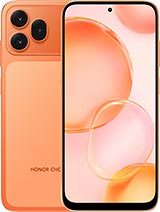
The T20 is an honest budget phone: glass front, plastic back and frame, dual nano-SIM, microSD slot that shares the tray with one SIM. At 213 g and 8.8 mm thick, it is slim and light relative to its 6.78-inch footprint, which means the large frame does not feel gratuitously heavy. The engineering is straightforward and durable, not trendy. For markets where phones are dropped, dropped again, and kept for years, this utilitarian approach makes sense. The side-mounted fingerprint sensor works, and the choice of colors (black, silver, orange) is practical.
Display
A 6.78-inch IPS LCD at 720 x 1576 pixels yields 256 ppi—visibly lower density than any mainstream phone in 2026. Text and icons have a soft edge, and fine detail is blurry at normal viewing distance. The 90 Hz refresh is there, which helps scrolling feel smoother than a 60 Hz panel, but it cannot hide the resolution shortcoming. Where the display earns its keep is brightness: 600 nits is respectable for an IPS LCD and makes outdoor use legible. The 85.1% screen-to-body ratio is decent, so you are not drowning in bezels. For a phone aimed at markets where you are consuming video, reading texts, and checking maps, it suffices, but anyone coming from even a mid-range phone will notice the pixellation.
Performance
The Unisoc T615 is entry-level silicon, pitched at the absolute bottom of the market. It has eight cores (two 1.8 GHz A75, six 1.6 GHz A55) and a Mali-G57 MP1 GPU, running on 4 GB RAM and eMMC 5.1 storage. This combination handles light tasks—messaging, calling, email, basic web browsing—without obvious lag, but multitasking is sluggish. Opening a second app while one is still loading will stall. Gaming is out. Video playback and social media scroll with visible frame drops. Android 16 (Go edition) is leaner than the full OS, which helps, but it cannot transform entry-level hardware into something snappy. Performance is the T20's clearest limitation: for €130, you are trading speed for endurance and screen size.
Software
Android 16 Go is a streamlined fork designed for low-RAM devices. It pre-installs Google apps in lite versions (Maps Go, YouTube Go, Gmail Go), which consume less memory and data than their full counterparts. This is pragmatic for markets with limited bandwidth and storage. The tradeoff is that some features are stripped out or neutered compared to full Android. Updates depend on Honor's whim; budget phones typically get one or two years of OS bumps. No surprises here, but the Go edition is functional for the use case: light computing in areas where connectivity and storage are constraints rather than luxuries.
Camera
A single 13 MP rear camera with autofocus and LED flash is adequate for a budget phone in 2026, but no more. It captures acceptable daylight stills in good light, but shadow areas and night scenes will disappoint. The 5 MP selfie is functional for video calls but not for ambitious self-portraits. Video is capped at 1080p@30fps on both cameras, which is a minimum-viable spec. The absence of an ultra-wide or macro lens means you have no alternative framing if the main sensor does not deliver. For markets where the phone camera is a secondary tool—not the main one—this simplicity is fine. For anyone expecting versatility, it is thin.
Battery & charging
The 7000 mAh battery is the T20's headline strength. With the modest Unisoc T615 and sparse display, it should deliver 1.5 to 2 days on mixed use, or two-plus days on light use. This is genuine endurance, not marketing spin. The spec sheet does not detail charging wattage directly, but historical data for the Go lineup suggests around 10–15W charging, which means a full charge takes 1.5 to 2 hours. That is slow by modern standards, but the capacity is so large that you rarely need to top up daily. The lack of wireless charging is unremarkable at this price.
Value & verdict-context
At €130, the T20 targets buyers in emerging markets who value battery life, screen size, and ruggedness over responsiveness and camera sophistication. It is a restock phone: you buy it, it works for two years without drama, and when you replace it, you sell it to someone who wants the same reliability. The pixel density and performance are below the curve for 2026 budget rivals, but the large battery and thin profile are genuine differentiators. For office work, navigation, media consumption, and casual communication, it works. For anything that taxes the chip or demands detail on screen, it falters. The microSD slot and FM radio preserve utility in regions where cloud storage and streaming are not givens. This is not a phone designed to impress; it is designed to endure.
Verdict
The T20 suits buyers in price-sensitive markets who prioritize battery endurance and screen real estate over pace and camera range, and who are content with basic performance for essential tasks. Anyone expecting snappy multitasking, modern display sharpness, or versatile imaging should save a little more for a phone with a mid-range chip and higher resolution panel.
- 7000 mAh battery should easily last two days of moderate use, with enough reserve for occasional heavy days
- 6.78-inch IPS LCD with 90Hz refresh and decent brightness (600 nits) makes the large frame feel purposeful rather than wasteful
- Expandable storage and FM radio preserve practical appeal in emerging markets where these still matter
- Thin at 8.8 mm and light at 213 g for its screen size, so the bulk does not feel overwhelming in hand
- 256 ppi pixel density looks grainy and dated; rivals in this price band now push 300+ ppi as a standard
- Unisoc T615 is an entry-level chip that will struggle with multitasking and any app above basic utility—no gaming, no smooth social media scrolling
- 13 MP camera with no ultra-wide and 1080p video cap leaves you with no real backup if the main shot fails
Honor Choice T20 Key Specifications
The essentials at a glance. See the full spec sheet.
| Released | 2026, November 25 |
|---|---|
| Display | 6.78 inches, 112.1 cm2 (~85.1% screen-to-body ratio), IPS LCD, 90Hz, 600 nits |
| Resolution | 720 x 1576 pixels, 19.5:9 ratio (~256 ppi density) |
| Chipset | Unisoc T615 (12 nm) |
| RAM & storage | 64GB 4GB RAM |
| Main camera | 13 MP, AF |
| Selfie camera | 5 MP |
| Battery | 7000 mAh |
| Software | Android 16 (Go edition) |
| Dimensions | 168.3 x 78.3 x 8.8 mm (6.63 x 3.08 x 0.35 in) |
| Weight | 213 g (7.51 oz) |
| Build | Glass front, plastic back, plastic frame |
| Network | GSM / HSPA / LTE |
| NFC | No |
| USB | USB Type-C 2.0, OTG |
Honor Choice T20 FAQ
Common questions, answered from the spec sheet.
Does the Choice T20 support 5G?
No. The Choice T20 tops out at GSM / HSPA / LTE, without 5G.
What chipset does the Choice T20 use?
The Choice T20 runs on the Unisoc T615 (12 nm).
What display does the Choice T20 have?
A 6.78 inches, 112.1 cm2 (~85.1% screen-to-body ratio) IPS LCD, 90Hz, 600 nits, 720 x 1576 pixels, 19.5:9 ratio (~256 ppi density).
How big is the Choice T20 battery?
The Choice T20 has a 7000 mAh battery.
Does the Choice T20 have NFC?
No, the Choice T20 does not list NFC support.
Does the Choice T20 support a microSD card?
Yes, the Choice T20 supports expandable storage (microSDXC (uses shared SIM slot)).
Alternatives to consider
If the Choice T20 isn’t quite right, these are the closest calls.
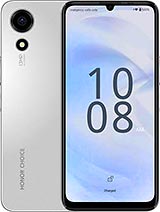
Choice T10
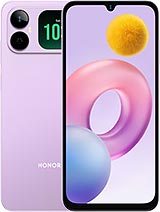
Play20A
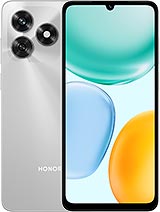
Play 70C
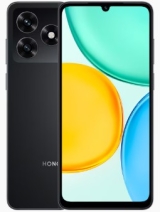
X5d
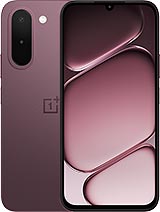
N6x