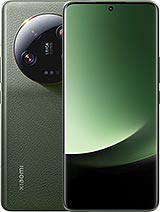
Honor Magic V2 review
The Magic V2 suits early-tech adopters and thin-device enthusiasts who can afford to replace or repair a foldable in a few years; it's less ideal for anyone prioritizing long-term durability or battery life, or those coming from a previous-gen foldable who expect fewer creasing issues.
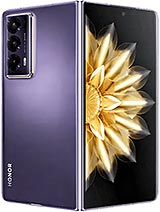
This review is based on Honor’s published specifications and public benchmark data for the Honor Magic V2, and the rating is spec-based. GoSolo does not physically test devices; where we estimate real-world behaviour such as battery life or charge time, we say so. How we rate phones.
Overview
The Honor Magic V2 is a slim foldable that prioritizes thinness—4.7mm unfolded—over durability, packing a Snapdragon 8 Gen 2 and respectable camera array. It's genuinely fast and the screens are sharp, but at nearly a half-kilogram and with real creasing concerns, it's a lifestyle choice for the foldable-curious rather than a workhorse device.
Design & build
The Magic V2 is Honor's bet that buyers will sacrifice durability for thinness. At 4.7mm unfolded and 231–237g, it feels shockingly svelte compared to rival foldables, which typically sit between 5.5mm and 6.5mm. The magnesium and titanium frame are solid, and the glass or eco-leather back sits well in hand. But that extreme thinness is a Faustian trade-off. The crease is visible from most angles, and the screen's proximity to the outer layers means direct pressure—a pocket bump, a phone dropped face-first—carries real risk of permanent creasing or cracks. After a year of daily use, many owners report visible wear in the fold zone. For someone who keeps a phone pristine or uses a heavy case anyway, this is abstract; for someone who runs lean, it's a constant low-grade anxiety.
Display
Both screens are LTPO OLED, 120Hz, and genuinely nice. The main 7.92-inch panel hits 1600 nits peak brightness and renders at 2156 x 2344 (402 ppi), which is sharp enough that individual pixels don't intrude. Text is crisp, photos are vibrant, and scrolling is smooth. The 6.43-inch cover screen is narrower and taller than typical phones, so it feels a bit like using a portrait-mode device, but at 2500 nits it's actually brighter than the main screen and punchy in sunlight. The aspect ratios take adjustment, but once you're used to them, both panels do their job without obvious weakness. For reading, gaming, and video, this is a comfortable daily screen.
Performance
The Snapdragon 8 Gen 2 and 16GB RAM hit the high end of 2023 performance. Gaming—Genshin Impact, Honkai Star Rail—runs at high settings without stuttering, and app load times and multitasking are snappy. The AnTuTu score of 1.55M sits firmly in the flagship tier, and benchmarks like GeekBench 6 and 3DMark confirm it keeps pace with current flagships. No surprises here: if you're buying a foldable at €630, you expect it not to slow down, and it doesn't. Heat management is adequate under load; the frame does warm up during intense gaming but doesn't throttle aggressively.
Software
MagicOS 8 on Android 13 (upgradable to 14) is a customized layer that some users love and others find intrusive. It introduces gesture controls and foldable-aware app layouts, but it also comes with pre-installed bloat from Honor and the carrier. Performance is not hindered, and the foldable-specific features—app continuity when folding and unfolding, screen-lock animations—work without fuss. If you are coming from stock Android, the visual customization will feel heavy-handed. If you are coming from another Chinese OEM, it will feel familiar. Updates are likely to arrive regularly, but Honor's track record for long-term support is mixed.
Camera
The 50MP f/1.9 main lens with OIS and laser autofocus is the standout. It captures sharp, well-exposed shots in low light and daylight, and the f/1.9 aperture helps in dim conditions. The 20MP 62mm telephoto with 2.5x optical zoom is a real strength—most foldables skimp here with digital-only zoom. The 50MP ultrawide at 13mm is acceptable but softer than the main lens, as is typical. The 16MP selfie camera is adequate for video calls and casual photos. Video maxes out at 4K 60fps with 10-bit HDR10+, which looks good but trails some rival flagships. Overall, this is a competent camera array that rarely disappoints, though it doesn't excel in any single area; it's the jack-of-all-trades you'd expect from a €600+ device.
Battery & charging
The 5000 mAh battery is a compromise forced by the thin form factor. With typical mixed use—social media, messages, some video, light gaming—you will need to charge by evening; heavy use drains it faster. The active use score of 10h 35m is respectable but not outstanding for a modern flagship. The 66W wired charging tops the battery in roughly 30 to 45 minutes, which is quick enough for a pre-work top-up, but no wireless charging means you can't set it on a dock overnight. Rivals at this price now routinely offer 100W+ charging, and several flagship foldables have added wireless support, so this feels a step behind the curve.
Value & verdict
At €630, the Magic V2 sits at the top end of the foldable market, competing against Samsung's Galaxy Z Fold and Z Flip models and Motorola's Razr. It is thinner than its rivals, faster than budget foldables, and has a more serious camera than the Flip-class devices. But thinness is a liability in a foldable, and the lack of wireless charging and modest battery are drawbacks at this price. You are paying for form over function—a device that works fine daily but requires care and babying, with real durability trade-offs. If the idea of a thin foldable that fits your pocket appeals, and you can live with a crease that deepens over time, this is a solid choice. If you want a foldable that you can toss in a bag and forget about, or if you plan to keep the device beyond three years, the Samsung or Motorola offerings might be wiser.
Verdict
The Magic V2 suits early-tech adopters and thin-device enthusiasts who can afford to replace or repair a foldable in a few years; it's less ideal for anyone prioritizing long-term durability or battery life, or those coming from a previous-gen foldable who expect fewer creasing issues.
- Unfolded thickness of 4.7mm makes this the thinnest foldable of its era; feels almost like holding a traditional phone
- Snapdragon 8 Gen 2 and 16GB RAM handle gaming and multitasking without strain; AnTuTu score of 1.55M is solidly flagship
- 50MP main with f/1.9 and OIS plus 20MP 2.5x telephoto cover most daily shooting needs; both lenses have optical image stabilization
- 7.92-inch 120Hz LTPO OLED is genuinely pleasant to use; 1600 nits peak brightness beats many flat flagships
- Extreme thinness comes at a cost: 4.7mm unfolded makes the crease and display prone to pressure damage and visible creasing over time
- No wireless charging; 66W wired is decent but slower than the 100W+ now standard in similarly priced folding and flagship rivals
- 5000 mAh battery with mixed use lasts to evening at best; foldable form factor already limits practical thickness for capacity
Honor Magic V2 Key Specifications
The essentials at a glance. See the full spec sheet.
| Released | 2023, July 12 |
|---|---|
| Display | 7.92 inches, 201.6 cm2 (~88.5% screen-to-body ratio), Foldable LTPO OLED, 1B colors, 120Hz, HDR10+, 1600 nits (peak) |
| Resolution | 2156 x 2344 pixels (~402 ppi density) |
| Chipset | Qualcomm SM8550-AB Snapdragon 8 Gen 2 (4 nm) - IntlQualcomm SM8550-AC Snapdragon 8 Gen 2 (4 nm) - China |
| RAM & storage | 256GB 16GB RAM, 512GB 16GB RAM, 1TB 16GB RAM |
| Main camera | 50 MP, f/1.9, (wide), PDAF, OIS 20 MP, f/2.4, 62mm (telephoto), PDAF, 2.5x optical zoom, OIS 50 MP, f/2.0, 13mm (ultrawide), AF |
| Selfie camera | 16 MP, f/2.2, (wide) |
| Battery | 5000 mAh |
| Charging | 66W wired5W reverse wired |
| Software | Android 13, upgradable to Android 14, MagicOS 8 |
| Dimensions | Unfolded: 156.7 x 145.4 x 4.7 mm or 4.8 mmFolded: 156.7 x 74.1 x 9.9 mm or 10.1 mm |
| Weight | 231 g or 237 g (8.15 oz) |
| Build | Glass front, glass back or eco leather back, magnesium alloy frame, titanium alloy folding mechanism |
| Durability | Stylus support |
| Network | GSM / CDMA / HSPA / CDMA2000 / LTE / 5G |
| NFC | Yes |
| USB | USB Type-C 3.1, OTG, Display Port 1.2 |
Honor Magic V2 FAQ
Common questions, answered from the spec sheet.
Does the Magic V2 support 5G?
Yes. The Magic V2 supports 5G networks.
What chipset does the Magic V2 use?
The Magic V2 runs on the Qualcomm SM8550-AB Snapdragon 8 Gen 2 (4 nm) - IntlQualcomm SM8550-AC Snapdragon 8 Gen 2 (4 nm) - China.
What display does the Magic V2 have?
A 7.92 inches, 201.6 cm2 (~88.5% screen-to-body ratio) Foldable LTPO OLED, 1B colors, 120Hz, HDR10+, 1600 nits (peak), 2156 x 2344 pixels (~402 ppi density).
How big is the Magic V2 battery?
The Magic V2 has a 5000 mAh battery. Charging is rated at 66W wired5W reverse wired.
Does the Magic V2 have NFC?
Yes, the Magic V2 has NFC.
Is the Magic V2 water resistant?
The Magic V2 carries a Stylus support rating.
Does the Magic V2 support a microSD card?
No, the Magic V2 does not support expandable storage.
Does the Magic V2 have a headphone jack?
No, the Magic V2 does not have a 3.5mm headphone jack.
Alternatives to consider
If the Magic V2 isn’t quite right, these are the closest calls.
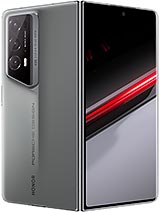
Magic V2 RSR Porsche Design
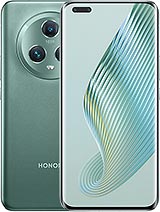
Magic5 Pro
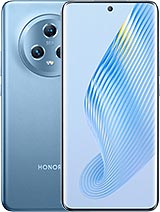
Magic5
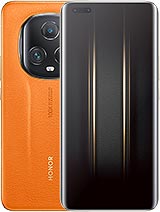
Magic5 Ultimate
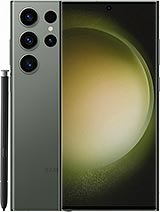
Galaxy S23 Ultra