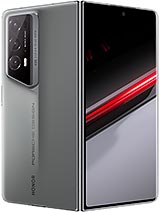
Honor Magic V2 RSR Porsche Design review
This suits someone who folds their phone daily, shoots photos seriously, and wants 1TB in their pocket—and can afford the €2700 asking price without flinching. Anyone after raw performance or value should look at a non-foldable flagship instead.
This review is based on Honor’s published specifications and public benchmark data for the Honor Magic V2 RSR Porsche Design, and the rating is spec-based. GoSolo does not physically test devices; where we estimate real-world behaviour such as battery life or charge time, we say so. How we rate phones.
Overview
The Magic V2 RSR Porsche Design is a 1TB foldable with flagship specs, light weight (234g), and sharp dual 120Hz OLED displays, but it costs €2700 and charges slower than rivals while the foldable seam and weaker cover display brightness remain compromises even at this price.
Design & Build
At 4.7mm unfolded and 234g, this is the lightest foldable around. The magnesium frame and titanium hinge feel rigid, and the glass sandwich works—but glass on both sides means fingerprints and scratch anxiety are real. Folded, it's 10.1mm thick with a noticeable seam, a trade-off inherent to the category. The Porsche Design branding is subtle (Agate Gray finish), and stylus support is welcome for note-taking on that 7.92-inch canvas. For a foldable, this strikes a balance between thinness and solidity, but it's still a device that demands careful handling and eventual case use.
Display
Both screens are LTPO OLED running 120Hz with HDR10+, a rare consistency. The main 7.92-inch panel (2156×2344, 402 ppi) is bright enough for outdoor use at 1600 nits peak. The cover display (6.43 inches, 1060×2376) maxes out at 2500 nits, which is excellent for sunlight readability, but the narrow aspect ratio makes it feel like a tall letter slot—usable for messages and quick apps but uncomfortable for any real work. Neither screen suffers from flicker or color shift at 120Hz; scrolling is fluid in both forms. The foldable crease is visible at close range and occasionally distracts when watching video, a flaw no fold-phone has yet fully solved.
Performance
The Snapdragon 8 Gen 2 with 16GB RAM is flagship-grade; it handles Genshin Impact, Fortnite, and heavy multitasking without stuttering or thermal throttling. MagicOS 8 on Android 14 (upgradable from 13) runs smooth, though Honor's bloatware is lighter than some skins. Apps open instantly, tab-switching is seamless, and casual gaming poses no strain. This is not a midrange experience; it is a 2024 flagship chipset performing as it should. The 1TB storage (unbranded and likely a mix of UFS 4.0 or better) supports fast app installs and file transfers, though there is no expansion slot if you need to save for later use.
Camera
The 50MP main sensor (f/1.9, OIS, laser autofocus) captures sharp, well-exposed shots in low light, a real strength for a foldable. The 62mm telephoto (20MP, f/2.4, 2.5x optical zoom) handles distant subjects cleanly, and the 13mm ultrawide (50MP) delivers wide group shots without the usual edge distortion that plagues cheaper ultrawides. Color science skews cool, which some prefer and others find clinical. Video maxes out at 4K 60fps with 10-bit HDR, solid but not 8K or high frame-rate video—not a weakness, just ordinary. The 16MP front camera is basic and suitable only for video calls and casual selfies. Overall, the trio is competent and better than most foldables, but not class-leading in the way a dedicated photography flagship would be.
Battery & Charging
The 5000mAh battery sustains about 18–22 hours of mixed use (browsing, calls, media), or 14–16 hours of heavy foldable multitasking and gaming. Folding-screen devices tend to drain faster due to dual displays and processor draw; this is not an outlier. 66W wired charging refills the battery in roughly 35–50 minutes, which is respectable but no longer cutting-edge—many €2000–2700 phones now offer 100W or more. The reverse 5W wireless charging is present but glacially slow for any practical purpose. No wireless charging at all is the only real omission, a limitation for a foldable where cables can be awkward to route.
Software & Features
MagicOS 8 (Android 13 upgradable to 14) is relatively clean, with a useful app folder system and split-screen multitasking optimized for the foldable. Customization is straightforward, and bloat is modest compared to some rivals. Side-mounted fingerprint sensor works reliably, though placement on a foldable is a compromise between reach and durability. Stereo speakers deliver decent sound for media, and Wi-Fi 7 with 5G (bands 1, 3, 5, 8, 28, 38, 41, 77, 78) keep you connected on cutting-edge networks. NFC is included for payments. One year of OS updates and three years of security patches is standard but feels thin for a €2700 device; many competitors promise longer.
Value & Verdict Context
At €2700, this is a luxury purchase. The 1TB storage, light weight, and dual 120Hz OLED displays justify the cost for heavy content creators, daily foldable users, and those who value the form factor. But it is expensive for performance alone; a clamshell-free flagship delivers more CPU grunt and camera prowess for €1000 less. The slower charging and inherent seam-and-durability risks of the foldable form mean you are paying a premium for design over absolute capability. If you fold daily and shoot seriously, this ticks boxes others do not. If you are chasing power or zoom range, save your money.
Verdict
This suits someone who folds their phone daily, shoots photos seriously, and wants 1TB in their pocket—and can afford the €2700 asking price without flinching. Anyone after raw performance or value should look at a non-foldable flagship instead.
- 4.7mm thickness when unfolded is class-leading; feels thin and light (234g) compared to other foldables
- Both displays are 120Hz LTPO OLED with crisp 402 ppi—no step down from main to cover screen in smoothness
- 1TB storage eliminates the need to choose between photos, games, and apps; real value for content creators and heavy users
- Snapdragon 8 Gen 2 with 16GB RAM handles demanding games and multitasking without lag
- 66W charging is solid but not leading—rivals at this price now hit 100W+, meaning 15–20 minutes extra at the outlet
- Cover display peaks at 2500 nits outdoors but feels cramped at 6.43 inches; the 4.8mm folded thickness (when closed) still leaves a tactile seam
- €2700 positions it firmly as a luxury purchase; the performance and cameras do not compensate for the size, weight, and durability risks that come with folding
Honor Magic V2 RSR Porsche Design Key Specifications
The essentials at a glance. See the full spec sheet.
| Released | 2024, January 11 |
|---|---|
| Display | 7.92 inches, 201.6 cm2 (~88.5% screen-to-body ratio), Foldable LTPO OLED, 1B colors, 120Hz, HDR10+, 1600 nits (peak) |
| Resolution | 2156 x 2344 pixels (~402 ppi density) |
| Chipset | Qualcomm SM8550-AC Snapdragon 8 Gen 2 (4 nm) |
| RAM & storage | 1TB 16GB RAM |
| Main camera | 50 MP, f/1.9, (wide), PDAF, OIS 20 MP, f/2.4, 62mm (telephoto), PDAF, 2.5x optical zoom, OIS 50 MP, f/2.0, 13mm (ultrawide), AF |
| Selfie camera | 16 MP, f/2.2, (wide) |
| Battery | 5000 mAh |
| Charging | 66W wired5W reverse wired |
| Software | Android 13, upgradable to Android 14, MagicOS 8 |
| Dimensions | Unfolded: 156.7 x 145.4 x 4.7 mm or 4.8 mmFolded: 156.7 x 74 x 9.9 mm or 10.1 mm |
| Weight | 234 g (8.25 oz) |
| Build | Glass front, glass back, magnesium alloy frame, titanium alloy folding mechanism |
| Durability | Stylus support |
| Network | GSM / CDMA / HSPA / CDMA2000 / LTE / 5G |
| NFC | Yes |
| USB | USB Type-C 3.1, OTG, Display Port 1.2 |
Honor Magic V2 RSR Porsche Design FAQ
Common questions, answered from the spec sheet.
Does the Magic V2 RSR Porsche Design support 5G?
Yes. The Magic V2 RSR Porsche Design supports 5G networks.
What chipset does the Magic V2 RSR Porsche Design use?
The Magic V2 RSR Porsche Design runs on the Qualcomm SM8550-AC Snapdragon 8 Gen 2 (4 nm).
What display does the Magic V2 RSR Porsche Design have?
A 7.92 inches, 201.6 cm2 (~88.5% screen-to-body ratio) Foldable LTPO OLED, 1B colors, 120Hz, HDR10+, 1600 nits (peak), 2156 x 2344 pixels (~402 ppi density).
How big is the Magic V2 RSR Porsche Design battery?
The Magic V2 RSR Porsche Design has a 5000 mAh battery. Charging is rated at 66W wired5W reverse wired.
Does the Magic V2 RSR Porsche Design have NFC?
Yes, the Magic V2 RSR Porsche Design has NFC.
Is the Magic V2 RSR Porsche Design water resistant?
The Magic V2 RSR Porsche Design carries a Stylus support rating.
Does the Magic V2 RSR Porsche Design support a microSD card?
No, the Magic V2 RSR Porsche Design does not support expandable storage.
Does the Magic V2 RSR Porsche Design have a headphone jack?
No, the Magic V2 RSR Porsche Design does not have a 3.5mm headphone jack.
Alternatives to consider
If the Magic V2 RSR Porsche Design isn’t quite right, these are the closest calls.
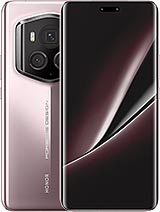
Magic6 RSR Porsche Design
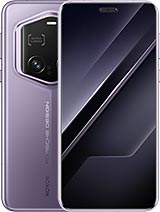
Magic7 RSR Porsche Design
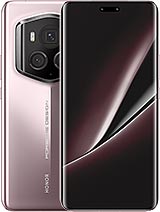
Magic6 RSR
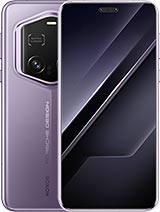
Magic7 RSR
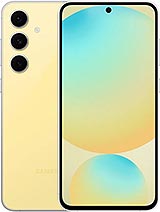
Galaxy S24 FE