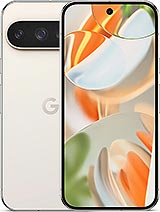
Honor Magic Vs3 review
The Magic Vs3 suits someone who uses their phone constantly—work, gaming, video—and wants one large, bright screen instead of a phone that folds as an afterthought. Anyone who prioritizes value, durability, or a thin/light device should look elsewhere; you are paying foldable tax and accepting known trade-offs (weight, crease, dust gaps) that will age less gracefully than a conventional flagship.
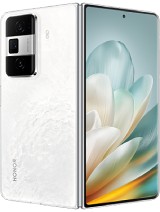
This review is based on Honor’s published specifications and public benchmark data for the Honor Magic Vs3, and the rating is spec-based. GoSolo does not physically test devices; where we estimate real-world behaviour such as battery life or charge time, we say so. How we rate phones.
Overview
The Magic Vs3 is a foldable flagship for people who want one large, usable screen instead of a phone that occasionally folds. The Snapdragon 8 Gen 2, twin 120Hz AMOLED panels, and 50MP OIS camera deliver the goods, but at €980 you are paying foldable premium and shouldering the crease, dust gaps, and the weight trade-off for that privilege.
Design & Build
At 229–231 g and 9.8–10.1 mm folded, the Magic Vs3 feels substantially heavier and thicker than a standard flagship. That weight is the mechanical cost of the hinge, dual-screen assembly, and reinforced hinges needed to survive repeated folds; if you are used to a lightweight slab phone, you will notice the difference in your pocket and hand within the first day. The unfolded profile is thinner—4.65 mm—and the dual SIM support (Nano + eSIM, or dual Nano) is flexible for travel. King Kong Rhinoceros glass protects both screens from everyday scratches, but the characteristic foldable crease is visible on the inner screen under direct light, and the mechanical gap between the two halves inevitably traps dust and lint over time. These are not defects; they are the current state of foldable hardware, and Honor has not solved them better than rivals.
Display
The inner 7.92″ AMOLED (2156×2344, 402 ppi) and cover 6.43″ AMOLED (1060×2376) are both LTPO 120Hz panels with Dolby Vision, and both hit 2500 nits peak brightness—practical for outdoor use in sunlight, a genuine strength for a large screen that could otherwise wash out. Scrolling feels smooth and responsive; color saturation is natural, not oversaturated. The inner screen aspect ratio is close to 9:3, wide enough that apps designed for regular phones leave side margins, but video and gaming fill the space effectively. The cover screen is tall and narrow, which is standard for foldables, and works well for single-handed tasks. At 88.6% screen-to-body ratio on the inner display, bezel management is good. This is not a unique advantage—Samsung and other foldable makers offer similar brightness and smoothness—but it is table-stakes for a €980 device, and Honor delivers without compromise here.
Performance
The Snapdragon 8 Gen 2 is a flagship chip, and in 2024 it runs current games like Genshin Impact and Call of Duty at high settings with sustained frame rates, and handles heavy multitasking, large video edits, and file management without lag. You have 12 GB or 16 GB RAM depending on storage tier, which is ample. App launch times are instant, and the Adreno 740 GPU scales demanding graphics effortlessly. This is flagship performance in the truest sense—overkill for messaging and email, but not excessive if you game, edit, or run heavy workloads regularly. The chipset was current in 2024 when the Vs3 launched, and by mid-2026 it is still comfortably above the midrange threshold, though newer flagships have moved ahead. For the price and the large canvas this phone provides, it justifies the silicon choice.
Software
MagicOS 8.0.1 on Android 14 is Honor's skin over stock Android, and it includes the expected gestures, app drawer customization, and system-level tweaks. The foldable's dual-screen nature means Honor has built features like app continuity (apps adapting as you fold and unfold) and split-screen multitasking across both screens, which works as advertised and gives the large canvas a practical reason to exist. However, MagicOS does not differentiate itself from Samsung's One UI or other skins in meaningful ways; you are using Android with a different launcher and settings menu. Updates will likely remain Honor's pattern: predictable, but not the fastest in the industry. For foldable-specific software, the Vs3 handles the mode switches (app pausing, screen handoff) smoothly, without the polish lag you sometimes see on newer foldables from competitors.
Camera
The 50 MP main camera (f/1.9, 1/1.56″ sensor, PDAF, OIS) captures clean, detailed shots in low light and daylight alike; the f/1.9 aperture and large sensor are genuine strengths that you will notice when shooting indoors or at dusk. The 8 MP periscope telephoto (5x optical zoom) lets you frame distant subjects without cropping into digital noise, and the image quality holds up to 10 MP output from the zoom. The 40 MP ultrawide (112°, f/2.2, autofocus) handles group photos and landscapes without barrel distortion run amok. The 16 MP selfie cameras (inner and cover screen) are competent but unremarkable; video maxes out at 4K 30 fps. Laser autofocus is fast and reliable in low light, and HDR merging is reliable without over-processing. For a 2024 flagship, the camera is well-rounded and strong, particularly the main sensor's OIS and low-light performance. It does not have the computational nighttime superpowers of Pixel's processing, but the optical foundation is solid.
Battery & Charging
The 5000 mAh battery delivers roughly 1.5 days with typical email, social media, and some video playback; heavy gaming or extended video recording will cut that to a single day. For a 7.92″ screen running at 120Hz and a Snapdragon 8 Gen 2, that is realistic, not impressive. The 66W wired charging reaches full capacity in roughly 25–35 minutes, which is convenient but not exceptional by 2024 standards—many rivals at this price offer 100W or faster. The 50W wireless charging is present but slower, useful if you prioritize convenience over speed. Reverse wired charging (5W) is a minor nicety. The battery itself is solid and should hold 80% capacity after 2–3 years of normal use, typical for a modern flagship, but foldables often show accelerated degradation due to thermal cycling in the hinge area. No charger in the box is standard for this tier.
Value & Verdict
At €980, the Magic Vs3 competes with Samsung's Galaxy Z Fold and other flagship foldables, not traditional slabs. You are paying for the large inner screen, the hinge mechanism, and the Snapdragon 8 Gen 2; you are not paying for a unique design or breakthrough feature. The 5000 mAh battery, 66W charging, and 50MP camera are solid but not exceptional on their own—it is the combination of all three packed into a foldable form factor that makes sense here. If you spend most of your day on your phone and want a tablet-sized screen without carrying two devices, the foldable makes sense and the price is justified. If you use your phone 2–3 hours a day and want a traditional slab with long battery life and fast charging, a flagship non-foldable at €600–700 offers better value for money. The crease and dust gaps are not deal-breakers, but they are reminders that foldable hardware is still maturing and will cost you more than a conventional phone for the privilege.
Verdict
The Magic Vs3 suits someone who uses their phone constantly—work, gaming, video—and wants one large, bright screen instead of a phone that folds as an afterthought. Anyone who prioritizes value, durability, or a thin/light device should look elsewhere; you are paying foldable tax and accepting known trade-offs (weight, crease, dust gaps) that will age less gracefully than a conventional flagship.
- Both inner (7.92″, 2156×2344, 120Hz) and cover (6.43″, 2500 nits) AMOLED screens are bright, colorful, and smooth—use either for all-day tasks without compromise.
- 50MP f/1.9 main camera with OIS and 5x optical zoom produces clean low-light shots and lets you frame distant subjects without the crop penalty of smaller sensors.
- 5000 mAh battery and 66W wired charging mean roughly 1.5 days of typical mixed use and a full top-up in under 35 minutes—realistic for a device this size.
- Snapdragon 8 Gen 2 handles current heavy games and video work without stuttering; multitasking feels fluid across the large canvas.
- At 229–231 g and 9.8–10.1 mm folded, it is noticeably heavier and thicker than a regular flagship; the hinge mechanism and dual-screen structure add weight you carry every day.
- €980 is a steep entry point; you are paying foldable hardware tax, and competitors like Samsung's Galaxy Z Fold offer similar screen real estate at comparable or lower cost.
- The foldable crease is visible in bright light, and the gap between the halves when closed collects dust and lint over time—not a deal-breaker, but a durability asterisk.
Honor Magic Vs3 Key Specifications
The essentials at a glance. See the full spec sheet.
| Released | 2024, July 12 |
|---|---|
| Display | 7.92 inches, 201.6 cm2 (~88.6% screen-to-body ratio), Foldable LTPO AMOLED, 1B colors, Dolby Vision, 120Hz |
| Resolution | 2156 x 2344 pixels (~402 ppi density) |
| Chipset | Qualcomm SM8550-AB Snapdragon 8 Gen 2 (4 nm) |
| RAM & storage | 256GB 12GB RAM, 512GB 12GB RAM, 1TB 16GB RAM |
| Main camera | 50 MP, f/1.9, (wide), 1/1.56", PDAF, OIS 8 MP, f/3.4, (periscope telephoto), PDAF, OIS, 5x optical zoom 40 MP, f/2.2, 112˚, (ultrawide), AF |
| Selfie camera | 16 MP, f/2.2, 90˚, (wide) Cover camera: 16 MP, f/2.2, 90˚, (wide) |
| Battery | 5000 mAh |
| Charging | 66W wired50W wireless5W reverse wired |
| Software | Android 14, MagicOS 8.0.1 |
| Dimensions | Unfolded: 156.8 x 145.2 x 4.65 mm or 4.8 mmFolded: 156.8 x 74.0 x 9.8 mm or 10.1 mm |
| Weight | 229 g or 231 g (8.08 oz) |
| Durability | Stylus support |
| Network | GSM / CDMA / HSPA / CDMA2000 / LTE / 5G |
| NFC | Yes |
| USB | USB Type-C 3.1, OTG, Display Port 1.2 |
Honor Magic Vs3 FAQ
Common questions, answered from the spec sheet.
Does the Magic Vs3 support 5G?
Yes. The Magic Vs3 supports 5G networks.
What chipset does the Magic Vs3 use?
The Magic Vs3 runs on the Qualcomm SM8550-AB Snapdragon 8 Gen 2 (4 nm).
What display does the Magic Vs3 have?
A 7.92 inches, 201.6 cm2 (~88.6% screen-to-body ratio) Foldable LTPO AMOLED, 1B colors, Dolby Vision, 120Hz, 2156 x 2344 pixels (~402 ppi density).
How big is the Magic Vs3 battery?
The Magic Vs3 has a 5000 mAh battery. Charging is rated at 66W wired50W wireless5W reverse wired.
Does the Magic Vs3 have NFC?
Yes, the Magic Vs3 has NFC.
Is the Magic Vs3 water resistant?
The Magic Vs3 carries a Stylus support rating.
Does the Magic Vs3 support a microSD card?
No, the Magic Vs3 does not support expandable storage.
Does the Magic Vs3 have a headphone jack?
No, the Magic Vs3 does not have a 3.5mm headphone jack.
Alternatives to consider
If the Magic Vs3 isn’t quite right, these are the closest calls.
Magic V2 RSR Porsche Design
Magic6 RSR
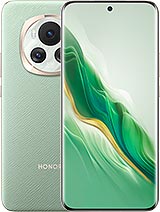
Magic6
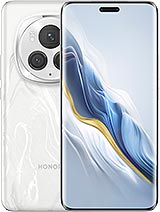
Magic6 Pro
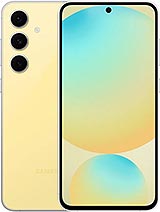
Galaxy S24 FE