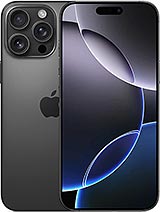
Honor Magic6 RSR review
The Magic6 RSR suits someone who prioritizes maximum processing power, storage space, and screen brightness over battery endurance and fast charging—or someone already invested in Honor's ecosystem. If you value long battery life, rapid charging, or seamless Google integration, look at competitors like Xiaomi or wait for a revised Honor with larger battery and faster charging."
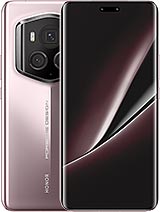
This review is based on Honor’s published specifications and public benchmark data for the Honor Magic6 RSR, and the rating is spec-based. GoSolo does not physically test devices; where we estimate real-world behaviour such as battery life or charge time, we say so. How we rate phones.
Overview
The Honor Magic6 RSR is a tall 6.8-inch flagship built around a Snapdragon 8 Gen 3 and 1TB storage, landing at around €450. It offers flagship performance and a bright OLED screen in a slim, light frame, but the modest battery, charging speeds that lag rivals, and a software experience tied to Huawei's ecosystem raise questions about real-world value for the price.
Design & build
The Magic6 RSR is deliberately thin and light—8.9mm and 237g—which sounds like an obvious strength until you pick up a competing 6.8-inch phone and feel the heft difference. Titanium frame, glass front and back with NanoCrystal Shield, and IP68 dust and water resistance to 1.5 meters make it robust enough for daily life. The narrow 19.5:9 aspect ratio means the phone is taller than typical flagships, which most people either love or find awkward; there is no middle ground. Build quality feels solid, though the all-glass design means it will pick up fingerprints and demands a case if durability matters to you.
Display
The 6.8-inch LTPO OLED screen is the phone's calling card. 5000 nits peak brightness is among the highest available, and the 1800 nits high brightness mode is genuinely enough to read comfortably in harsh sunlight without squinting. The 453 ppi density is plenty sharp for text and video at normal viewing distance, and the 120Hz refresh keeps scrolling smooth. Color accuracy sits somewhere between punchy oversaturation and clinical neutrality; Honor's calibration favors vivid without being egregiously wrong. Dolby Vision and HDR support are standard for this tier. The screen-to-body ratio of 91.6% means minimal bezels, and the tall proportions actually suit video consumption well.
Performance
The Snapdragon 8 Gen 3 paired with 24GB RAM is flagship-class silicon for 2024, handling Genshin Impact at high settings, real-time rendering apps, and heavy multitasking without lag. Everyday tasks—email, messaging, social media, light gaming—show no stutters or delays. The Adreno 750 GPU is competent, though not visibly different from last year's 8 Gen 2 in real-world frame rates unless you are chasing the highest benchmarks. UFS 4.0 storage is fast enough that file operations feel instant. The 1TB capacity is genuinely useful; most competitors max out at 512GB at this price. This is the one area where the Magic6 RSR does not compromise.
Software
MagicOS 8 is built on Android 14 and is functional but not exceptional. Honor's customizations feel heavier and more fragmented than MIUI or stock Android; animations are smooth but the interface feels busier than it needs to be. Google Play Services integration works, but Google apps sometimes feel like afterthoughts compared to Honor's own equivalents. Software updates on Honor phones have historically been slower than Samsung or Xiaomi, and long-term support is less assured. If you rely on Google's ecosystem or expect regular security patches, this phone will irritate you. If you are comfortable in China-centric software or simply tolerate bloat, it is fine.
Camera
The triple camera array is well-rounded. The main 50MP f/1.4-2.0 sensor with OIS and LiDAR autofocus captures detailed daylight shots with accurate colors and quick focus in low light. The 180MP periscope telephoto—while spec-sheet impressive—delivers mostly usable 2.5x optical zoom; beyond that, it relies on crop and digital tricks, losing detail as you zoom further. The 50MP ultrawide at 122° covers wide landscapes well but shows edge distortion at the widest angles, which is expected. The selfie camera at 50MP is fine for video calls and portraits. Low-light performance is competent but not exceptional; rivals at this price handle shadows and noise better. Video recording at 4K/60fps with OIS and 10-bit codec is solid, though not class-leading.
Battery & charging
The 5600 mAh battery is where compromises show. In light use—email, messaging, social media—expect about 1.5 days before hunting for a charger. Heavy use (gaming, video streaming, navigation) cuts that to a single full day. The specs suggest about 14 hours of active use, which is merely adequate for a 2024 flagship; rivals at this price offer 16+ hours. The 80W wired charging fills the battery in roughly 30-40 minutes, which sounds quick but is now behind category standard. Competitors offer 100W+ wired and often faster wireless charging. The 66W wireless charging is available but slower than wired, and the lack of reverse wireless charging—expected at this price point—is a minor omission. If you travel or miss chargers often, this battery will test your patience.
Value & verdict-context
At around €450, the Magic6 RSR occupies uncomfortable middle ground. It costs as much as some MIUI flagships (Xiaomi 14 series) with similar chipsets and larger batteries, yet offers weaker software support and slower charging. Against Samsung's Galaxy S24+, it trades processing power for a narrower screen and smaller battery, but also costs less. The 1TB storage is genuinely useful and a genuine differentiator, and the performance is flawless. However, the modest battery, charging speeds that feel last-generation, and MagicOS's friction with Google services add up to a phone that feels more specialized—and less adaptable—than its price suggests. The Porsche Design branding (RSR) is more aesthetic than functional; you are paying for a phone that works, not one that excels across the board.
Verdict
The Magic6 RSR suits someone who prioritizes maximum processing power, storage space, and screen brightness over battery endurance and fast charging—or someone already invested in Honor's ecosystem. If you value long battery life, rapid charging, or seamless Google integration, look at competitors like Xiaomi or wait for a revised Honor with larger battery and faster charging."
- Snapdragon 8 Gen 3 with 24GB RAM handles demanding games and multitasking without hesitation, backed by 1TB internal storage—enough for thousands of apps and videos without hunting for space
- Bright LTPO AMOLED display with 5000 nits peak brightness and 120Hz refresh, making it genuinely readable in direct sunlight and smooth for scrolling; the 19.5:9 ratio is narrow but responsive for video and games
- Slim and light at 8.9mm and 237g with titanium frame, making a 6.8-inch phone feel less unwieldy in the pocket than you'd expect
- Periscope telephoto with 2.5x optical zoom and a capable 50MP ultrawide cover zoom range well; the LiDAR AF and color spectrum sensor add optical refinement
- 5600 mAh battery is modest for this screen size and year; expect around 1.5 days of light use, fewer with heavier workloads—rivals at this price often push 6000 mAh or more
- 80W wired charging is no longer fast by 2024 standards; competitors now offer 100W+ at similar prices, and 30-40 minutes full is slower than the category norm
- MagicOS 8 and Honor's app ecosystem lag MIUI and stock Android in polish, with fewer Google services integration than rivals; software updates on Honor devices historically lag behind peers
Honor Magic6 RSR Key Specifications
The essentials at a glance. See the full spec sheet.
| Released | 2024, March 18 |
|---|---|
| Display | 6.8 inches, 112.8 cm2 (~91.6% screen-to-body ratio), LTPO OLED, 1B colors, 120Hz, Dolby Vision, HDR, 1800 nits (HBM), 5000 nits (peak) |
| Resolution | 1280 x 2800 pixels, 19.5:9 ratio (~453 ppi density) |
| Chipset | Qualcomm SM8650-AB Snapdragon 8 Gen 3 (4 nm) |
| RAM & storage | 1TB 24GB RAM |
| Main camera | 50 MP, f/1.4-2.0, 23mm (wide), 1/1.3", LiDAR AF, PDAF, OIS 180 MP, f/2.6, (periscope telephoto), 1/1.49", 0.56µm, PDAF, OIS, 2.5x optical zoom 50 MP, f/2.0, 13mm, 122˚ (ultrawide), 1/2.88", AF |
| Selfie camera | 50 MP, f/2.0, 22mm (wide), 1/2.93", AF TOF 3D, (depth/biometrics sensor) |
| Battery | 5600 mAh |
| Charging | SuperCharge up to 80 W, Wireless: Charger power 66 W |
| Software | Android 14, MagicOS 8 |
| Dimensions | 162.5 x 75.8 x 8.9 mm (6.40 x 2.98 x 0.35 in) |
| Weight | 237 g (8.36 oz) |
| Build | Glass front (NanoCrystal Shield), glass back (NanoCrystal Shield), titanium frame |
| Durability | IP68 dust tight and water resistant (immersible up to 1.5m for 30 min) |
| Network | GSM / CDMA / HSPA / CDMA2000 / LTE / 5G |
| NFC | Yes |
| USB | USB Type-C 3.2, DisplayPort 1.2, OTG |
Honor Magic6 RSR FAQ
Common questions, answered from the spec sheet.
Does the Magic6 RSR support 5G?
Yes. The Magic6 RSR supports 5G networks.
What chipset does the Magic6 RSR use?
The Magic6 RSR runs on the Qualcomm SM8650-AB Snapdragon 8 Gen 3 (4 nm).
What display does the Magic6 RSR have?
A 6.8 inches, 112.8 cm2 (~91.6% screen-to-body ratio) LTPO OLED, 1B colors, 120Hz, Dolby Vision, HDR, 1800 nits (HBM), 5000 nits (peak), 1280 x 2800 pixels, 19.5:9 ratio (~453 ppi density).
How big is the Magic6 RSR battery?
The Magic6 RSR has a 5600 mAh battery. Charging is rated at SuperCharge up to 80 W, Wireless: Charger power 66 W.
Does the Magic6 RSR have NFC?
Yes, the Magic6 RSR has NFC.
Is the Magic6 RSR water resistant?
The Magic6 RSR carries a IP68 dust tight and water resistant (immersible up to 1.5m for 30 min) rating.
Does the Magic6 RSR support a microSD card?
No, the Magic6 RSR does not support expandable storage.
Alternatives to consider
If the Magic6 RSR isn’t quite right, these are the closest calls.
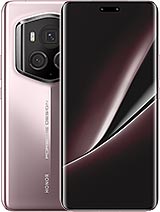
Magic6 RSR Porsche Design
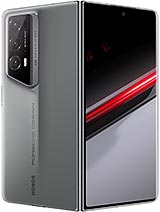
Magic V2 RSR Porsche Design
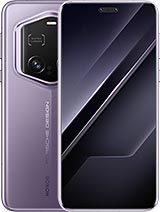
Magic7 RSR
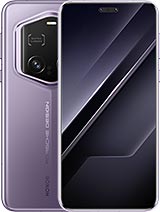
Magic7 RSR Porsche Design
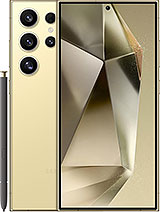
Galaxy S24 Ultra