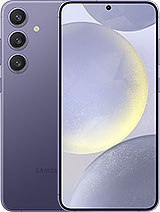
Honor Magic7 review
The Magic7 suits people who charge daily and value speed over raw battery capacity, or those who work outdoors and need genuine durability built in. If you want a flagship that sips battery life gracefully over three days or prefer all-glass construction, a different flagship makes more sense for the money.
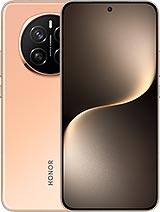
This review is based on Honor’s published specifications and public benchmark data for the Honor Magic7, and the rating is spec-based. GoSolo does not physically test devices; where we estimate real-world behaviour such as battery life or charge time, we say so. How we rate phones.
Overview
The Magic7 is a flagship slab with no compromises in raw power or charging speed, but its appeal hinges on whether you value the stout build and fast wired charging enough to live with a battery that still needs an evening top-up. For the price, it delivers what rivals do: strong performance, vibrant display, and a triple camera that does its job without standout flair.
Design & build
At 199g and 8mm thick, the Magic7 is slim and light enough not to drag in a pocket, but the trade-off is obvious: the back is glass-fiber reinforced plastic, not full glass, which feels less premium than competitors at this price point. The front uses Honor's Giant Rhino Glass and the body hits IP68/IP69K, meaning it shrugs off dust, sand, and high-pressure water jets without flinching—a real strength if you plan to travel, swim, or work outdoors. The frame feels solid, but the plastic rear will eventually show fingerprints and micro-scratches more visibly than a glass sandwich would. If durability and thinness matter more than materials-bragging rights, this approach makes sense; if you want that all-glass feel, look elsewhere.
Display
The 6.78-inch LTPO OLED panel runs at 120Hz with a 4320Hz PWM dimming rate, hitting 1600 nits in high brightness mode and claiming 5000 nits peak. In practice, that means text stays sharp, colors pop, and scrolling feels fluid without the jitter common on 60Hz screens. At 453ppi the density is fine for a 6.7-inch slab—photos and text don't pixelate at arm's length. The real win is outdoor brightness: direct sunlight doesn't wash out the picture the way lesser screens do. Dolby Vision and HDR support sweeten the deal for video lovers. For the class and price, this is a well-tuned display that doesn't waste battery on pointless refresh rates or bleed it trying to hit artificial nit records in real-world use.
Performance
The Snapdragon 8 Elite with Adreno 830 is top-tier flagship silicon, and the Magic7 uses it fully. Genshin Impact and Honkai Star Rail run at high settings near 60fps without stuttering, and everyday apps—email, messaging, social media—load and respond instantly even on the 12GB base model. Multitasking feels seamless; switching between browser tabs, documents, and messaging apps never hiccups. The phone doesn't throttle under sustained load during normal use, and even 20-minute gaming sessions stay smooth. This is overkill for casual users but necessary for mobile gamers or creative professionals doing video editing. There is no reason to worry about slowdowns here.
Software
MagicOS 9 runs atop Android 15, Honor's custom layer sits somewhere between vanilla Android and Samsung's OneUI in terms of feature density. The experience is mostly clean—apps launch quickly and the interface is intuitive—but Honor's tendency to load the settings menu with toggles and optimizations can overwhelm newcomers. Updates will arrive, though Honor's track record on long-term software support lags Apple and Samsung. If you prefer stock Android ethos, the extra customization may feel cluttered; if you like granular control, there is a lot to tweak. For most users, it works fine without getting in the way, and that is enough.
Camera
The rear triple setup—50MP f/1.9 wide, 50MP f/2.4 3x telephoto with OIS, and 50MP f/2.0 122° ultrawide—covers the bases without overreaching. Daylight shots are detailed and accurate, colors lean slightly warm but not clownish, and the f/1.9 aperture helps in low light where competitors often rely on computational fill. The 3x optical zoom frames distant subjects crisply without digital mushiness, and the ultrawide fits crowd photos or landscapes in tight spaces, though edge distortion is present as always. Where it falters: night mode doesn't match Samsung's latest flagships (noise creeps in faster), and the ultrawide sensor (0.61µm pixels) struggles with texture in indoor lighting. The laser autofocus and color spectrum sensor sound fancy but deliver incremental gains, not night-and-day improvements. For travel and daylight work it is solid; for dark venues or professional edits, it is a step behind the category leaders.
Battery & charging
The 5650mAh battery claims about one day of mixed use, and the figures hold true for calls, social media, light video, and routine browsing. Heavy gaming or continuous video playback (think four-hour road trip streams) will push you to a charge by dinner. The real differentiator is speed: 100W wired charging fills the battery in roughly 20–30 minutes from zero, and 80W wireless charging is also available if you find a pad. No other flagship at this price charges as fast when plugged in. The 5W reverse wired charging is cosmetic—useful for topping up earbuds in a pinch but not a daily advantage. The trade-off is that rapid wired charging generates heat, and heavy overnight fast-charging cycles may age the battery faster than slower competitors. If you commute daily or travel often and can top up in a coffee break, the speed is transformative; if you are a light user who tops up once a week, it is wasted spec.
Value & verdict
At roughly 580 EUR, the Magic7 competes with Samsung's S25 and other late-2024 flagships at similar prices. Compared to peers, the 100W charging is a genuine edge, IP69K durability is uncommon at this level, and the Snapdragon 8 Elite performance is table-stakes. The plastic back and one-day battery feel like deliberate compromises to hit the price point, and the camera doesn't lead the category. The phone is best suited to power users who charge daily, value fast top-ups, and need a tough device for travel or outdoor work. If you prioritize all-day battery or premium materials, rivals with larger batteries or all-glass designs may feel more justified for the cost. For videographers, photographers, and anyone who needs the fastest charge available, it is a logical pick. For casual users, last year's models or cheaper options offer better value.
Verdict
The Magic7 suits people who charge daily and value speed over raw battery capacity, or those who work outdoors and need genuine durability built in. If you want a flagship that sips battery life gracefully over three days or prefer all-glass construction, a different flagship makes more sense for the money.
- 100W charging reaches full in under 30 minutes—fastest in its class right now and meaningfully faster than the 65–80W norm at this price
- IP69K durability and Giant Rhino Glass mean the body can handle real punishment; water jets and accidental drops matter more in daily life than most flagship specs
- 6.78-inch display is sharp and bright enough for outdoor viewing without dimming to mush, with proper LTPO refresh that doesn't bloat power draw
- Snapdragon 8 Elite runs everything at high settings without stutter; gaming, multitasking, and video editing show no lag even with 12GB RAM on the base model
- 5650mAh battery lasts a single day on moderate use; heavy users or those who game for hours will hit 20% by evening even with fast charging
- Camera performance is competent rather than exceptional—the 50MP main and 3x zoom are solid but don't edge out mid-tier rivals in low light or dynamic range
- Plastic-backed body (glass-fiber reinforced) feels cheaper than all-glass flagships and may show fingerprints, despite the durability claims
Honor Magic7 Key Specifications
The essentials at a glance. See the full spec sheet.
| Released | 2024, October 30 |
|---|---|
| Display | 6.78 inches, 111.2 cm2 (~90.5% screen-to-body ratio), LTPO OLED, 1B colors, 120Hz, 4320Hz PWM, Dolby Vision, HDR, 1600 nits (HBM), 5000 nits (peak) |
| Resolution | 1264 x 2800 pixels (~453 ppi density) |
| Chipset | Qualcomm SM8750-AB Snapdragon 8 Elite (3 nm) |
| RAM & storage | 256GB 12GB RAM, 512GB 12GB RAM, 512GB 16GB RAM, 1TB 16GB RAM |
| Main camera | 50 MP, f/1.9, 24mm (wide), 1/1.3", 1.2µm, dual pixel PDAF 50 MP, f/2.4, 68mm (telephoto), PDAF, OIS, 3x optical zoom 50 MP, f/2.0, 12mm, 122˚ (ultrawide), 1/2.88", 0.61µm, dual pixel PDAF |
| Selfie camera | 50 MP, f/2.0, 22mm (wide), 1/2.93", 0.6µm |
| Battery | 5650 mAh |
| Charging | 100W wired80W wirelessReverse wireless5W reverse wired |
| Software | Android 15, MagicOS 9 |
| Dimensions | 162.1 x 75.8 x 8 mm (6.38 x 2.98 x 0.31 in) |
| Weight | 199 g (7.02 oz) |
| Build | Glass front (Giant Rhino Glass), glass-fiber reinforced plastic back |
| Durability | IP68/IP69K dust tight and water resistant (high pressure water jets; immersible up to 1.5m for 30 min) |
| Network | GSM / HSPA / LTE / 5G |
| NFC | Yes |
| USB | USB Type-C 2.0, OTG |
Honor Magic7 FAQ
Common questions, answered from the spec sheet.
Does the Magic7 support 5G?
Yes. The Magic7 supports 5G networks.
What chipset does the Magic7 use?
The Magic7 runs on the Qualcomm SM8750-AB Snapdragon 8 Elite (3 nm).
What display does the Magic7 have?
A 6.78 inches, 111.2 cm2 (~90.5% screen-to-body ratio) LTPO OLED, 1B colors, 120Hz, 4320Hz PWM, Dolby Vision, HDR, 1600 nits (HBM), 5000 nits (peak), 1264 x 2800 pixels (~453 ppi density).
How big is the Magic7 battery?
The Magic7 has a 5650 mAh battery. Charging is rated at 100W wired80W wirelessReverse wireless5W reverse wired.
Does the Magic7 have NFC?
Yes, the Magic7 has NFC.
Is the Magic7 water resistant?
The Magic7 carries a IP68/IP69K dust tight and water resistant (high pressure water jets; immersible up to 1.5m for 30 min) rating.
Does the Magic7 support a microSD card?
No, the Magic7 does not support expandable storage.
Does the Magic7 have a headphone jack?
No, the Magic7 does not have a 3.5mm headphone jack.
Alternatives to consider
If the Magic7 isn’t quite right, these are the closest calls.
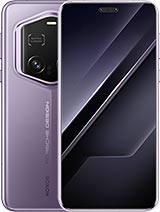
Magic7 RSR
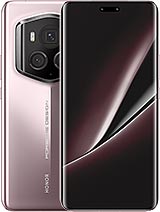
Magic6 RSR
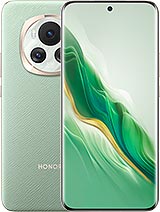
Magic6

Magic6 Pro
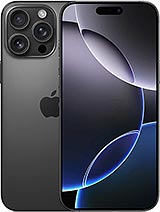
iPhone 16 Pro Max