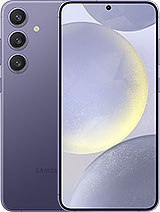
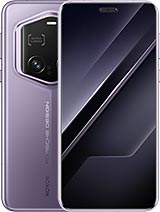
Honor Magic7 RSR Porsche Design review
The Magic7 RSR Porsche Design is for videographers, outdoor workers, and enthusiasts who value a 200MP zoom lens and IP69 durability as tools, not luxuries. Everyone else should compare it directly to the standard Magic7 or cross-shop the Galaxy S25 Ultra before committing to the Porsche tax.
This review is based on Honor’s published specifications and public benchmark data for the Honor Magic7 RSR Porsche Design, and the rating is spec-based. GoSolo does not physically test devices; where we estimate real-world behaviour such as battery life or charge time, we say so. How we rate phones.
Overview
The Honor Magic7 RSR Porsche Design is a full-fat flagship with a 200MP periscope zoom, 5000-nit display, and IP69 durability—built for someone who shoots demanding video and needs a phone that won't break. At €1050, the Porsche badge justifies itself through real engineering: the camera system is genuinely capable, the charging is fast, and the ruggedness is rare at this price, but you're paying a premium for a car-company rebranding and a 512GB/1TB spec sheet with no expansion.
Design & build
At 228 grams and 8.8mm thick, the Magic7 RSR feels solid without being a brick—aluminum frame and glass sandwich with NanoCrystal Shield on both sides. IP68/IP69 durability is the headline here: it survives submersion to 1.5 meters for half an hour and resists high-pressure water jets. That matters if you're shooting near water or working outdoors. The Porsche branding (Provence and Agate Grey colorways) is understated stitching and typography rather than garish badging; it plays like industrial design license rather than cosmetic upcharge. Slim bezels and the 89.9% screen-to-body ratio mean the 6.8-inch display feels natural to hold, though the phone is objectively large by any measure.
Display
The 6.8-inch LTPO OLED delivers 1280×2800 pixels (453 ppi), which is sharp enough for text and images but not aggressively dense—rivals pack higher pixel counts at the same diagonal. The real strength is brightness: 5000 nits peak is attention-grabbing in spec sheets, but the practical win is 1600 nits sustained HDR brightness, which keeps video and photos visible in direct sunlight where most phones fade to gray. 120Hz refresh and 4320Hz PWM dimming are table stakes for a 2024 flagship and work without obvious stuttering. Dolby Vision and HDR support are present but unsurprising. The display is excellent and outshines competitors in bright environments, though it is not a generational leap—it is just done well.
Performance
Snapdragon 8 Elite with 3nm process and Adreno 830 GPU. The 2.48 million AnTuTu score confirms you are running current-gen flagship silicon designed to handle Genshin Impact, Honkai Star Rail, and high-end video work without throttling. Gaming at high settings with steady frame rates is assured; day-to-day multitasking, file transfers via UFS 4.0, and complex photo editing are all handled without lag. This is not over-provisioned; it is the expected power level for a €1050 phone in late 2024. Performance is a non-issue. The real question is whether you need this much horsepower, and the answer depends on your workflow—mobile gaming, video editing, and heavy content creation justify it; casual users would see no difference from a Snapdragon 8 Gen 3 from an earlier generation.
Software
Android 15 with MagicOS 9 overlay. Honor's customization is lighter than Samsung's OneUI but still present—gesture navigation, app lock, and optimization toggles are there if you dig. Security patches and major OS updates depend on Honor's commitment; historically they have lagged Chinese market phones in global update speed, though international units sometimes fare better. No bloatware beyond the usual Google apps, and MagicOS 9 does not feel invasive. You are not buying this for software innovation; it is a competent, if unremarkable, layer on Android. Long-term support is a risk if you are outside China, so factor that into your calculus if you plan to keep the phone beyond 2 or 3 years.
Camera
The three-lens rear array is the star. The 50MP f/1.4-2.0 main (23mm, 1/1.3" sensor) with OIS and multi-directional PDAF captures detail and handles low light well; the variable aperture is a trick to control depth of field without a separate portrait lens. The 200MP f/1.9 periscope telephoto (72mm, 3x optical) is where this phone stands out: a proper zoom lens rather than a crop, meaning distant subjects stay sharp and detailed at full zoom—a tangible advantage over rivals that crop a smaller sensor for reach. The 50MP f/2.0 ultrawide (122°, 1/2.88") rounds out the kit and handles landscapes and group shots. Video at 4K up to 60fps with 10-bit HDR is solid; 1080p at 240fps for slow-motion is a party trick. In real shooting, this camera system punches above its weight for framing flexibility and zoom sharpness. The 50MP selfie with TOF 3D sensor handles video calls and portrait mode with poise. LiDAR AF and a color spectrum sensor are nice touches that improve autofocus in challenging light and color accuracy in stills. This is a camera array built for photographers and video work, not just casual snapshots.
Battery & charging
5850mAh with an active-use score of 15:11 hours—about a full day of mixed use without needing to top up unless you are gaming or recording video constantly. Real-world endurance depends on screen brightness and app load, so expect 14–16 hours in typical conditions. 100W wired charging refills the battery to full in roughly 30–40 minutes, which is fast enough to charge before leaving home or the office. 80W wireless charging is slower (probably 50–60 minutes to full) but convenient if you have a compatible pad. Reverse charging at 5W wired and unspecified wattage wireless is a nice-to-have for emergency phone-to-phone top-ups. Battery life is satisfactory for a flagship in late 2024; nothing stands out as exceptional, but nothing falls short either. The fast charging options mean you rarely need to stress about running low.
Value & verdict
At €1050, the Magic7 RSR sits at the high end of flagship pricing. The core phone is a competent flagship with a 200MP zoom lens, strong durability, and excellent display. The Porsche Design bump—reserved colorways, stitched branding, and some firmware tweaks—justifies maybe €50–100 of the markup; the rest is you paying for the car brand's name and reputation for engineering precision. If that resonates and you value the periscope zoom and IP69 toughness, the price is defensible. If not, the standard Magic7 offers nearly identical performance for less, and rivals like the Xiaomi 15 or Samsung Galaxy S25 Ultra hit similar specs at comparable or lower prices. This phone targets someone who shoots serious video or stills, needs ruggedness beyond the norm, and wants a statement device with a design story—not a value player looking to save money.
Verdict
The Magic7 RSR Porsche Design is for videographers, outdoor workers, and enthusiasts who value a 200MP zoom lens and IP69 durability as tools, not luxuries. Everyone else should compare it directly to the standard Magic7 or cross-shop the Galaxy S25 Ultra before committing to the Porsche tax.
- 200MP 3x periscope telephoto with f/1.9 aperture and OIS—far sharper zoom framing than rivals' crop-based approaches
- IP68/IP69 rating with high-pressure water jet resistance; can be submerged to 1.5m for 30 minutes—well beyond typical flagship specs
- 5000-nit peak LTPO OLED display with 1600-nit HDR brightness; visibly readable in direct sunlight where most phones wash out
- 100W wired and 80W wireless charging; full charge in under 40 minutes is practical for a 5850mAh battery
- €1050 price tag is mostly driven by Porsche Design licensing; the core Magic7 sits lower and offers 95% of the same performance
- 5000-nit peak brightness is real but only in small portions of the screen; sustained HDR work maxes around 1600 nits, matching rivals
- No microSD slot and base storage is 512GB; upsizing to 1TB adds meaningful cost when expansion would have been cheaper
Honor Magic7 RSR Porsche Design Key Specifications
The essentials at a glance. See the full spec sheet.
| Released | 2024, December 23 |
|---|---|
| Display | 6.8 inches, 112.8 cm2 (~89.9% screen-to-body ratio), LTPO OLED, 1B colors, 120Hz, 4320Hz PWM, Dolby Vision, HDR, 1600 nits (HBM), 5000 nits (peak) |
| Resolution | 1280 x 2800 pixels, 19.5:9 ratio (~453 ppi density) |
| Chipset | Qualcomm SM8750-AB Snapdragon 8 Elite (3 nm) |
| RAM & storage | 512GB 16GB RAM, 1TB 24GB RAM |
| Main camera | 50 MP, f/1.4-2.0, 23mm (wide), 1/1.3", 1.2µm, multi-directional PDAF, OIS 200 MP, f/1.9, 72mm (periscope telephoto), 1/1.4", 0.56µm, multi-directional PDAF, OIS, 3x optical zoom 50 MP, f/2.0, 13mm, 122˚ (ultrawide), 1/2.88", 0.61µm, dual pixel PDAF |
| Selfie camera | 50 MP, f/2.0, 22mm (wide), 1/2.93", 0.6µm, AF TOF 3D, (depth/biometrics sensor) |
| Battery | 5850 mAh |
| Charging | 100W wired80W wirelessReverse wireless5W reverse wired |
| Software | Android 15, MagicOS 9 |
| Dimensions | 162.7 x 77.1 x 8.8 mm (6.41 x 3.04 x 0.35 in) |
| Weight | 228 g (8.04 oz) |
| Build | Glass front (NanoCrystal Shield), glass back, aluminum frame |
| Durability | IP68/IP69 dust tight and water resistant (high pressure water jets; immersible up to 1.5m for 30 min) |
| Network | GSM / CDMA / HSPA / CDMA2000 / LTE / 5G |
| NFC | Yes |
| USB | USB Type-C 3.2, DisplayPort 1.2, OTG |
Honor Magic7 RSR Porsche Design FAQ
Common questions, answered from the spec sheet.
Does the Magic7 RSR Porsche Design support 5G?
Yes. The Magic7 RSR Porsche Design supports 5G networks.
What chipset does the Magic7 RSR Porsche Design use?
The Magic7 RSR Porsche Design runs on the Qualcomm SM8750-AB Snapdragon 8 Elite (3 nm).
What display does the Magic7 RSR Porsche Design have?
A 6.8 inches, 112.8 cm2 (~89.9% screen-to-body ratio) LTPO OLED, 1B colors, 120Hz, 4320Hz PWM, Dolby Vision, HDR, 1600 nits (HBM), 5000 nits (peak), 1280 x 2800 pixels, 19.5:9 ratio (~453 ppi density).
How big is the Magic7 RSR Porsche Design battery?
The Magic7 RSR Porsche Design has a 5850 mAh battery. Charging is rated at 100W wired80W wirelessReverse wireless5W reverse wired.
Does the Magic7 RSR Porsche Design have NFC?
Yes, the Magic7 RSR Porsche Design has NFC.
Is the Magic7 RSR Porsche Design water resistant?
The Magic7 RSR Porsche Design carries a IP68/IP69 dust tight and water resistant (high pressure water jets; immersible up to 1.5m for 30 min) rating.
Does the Magic7 RSR Porsche Design support a microSD card?
No, the Magic7 RSR Porsche Design does not support expandable storage.
Does the Magic7 RSR Porsche Design have a headphone jack?
No, the Magic7 RSR Porsche Design does not have a 3.5mm headphone jack.
Alternatives to consider
If the Magic7 RSR Porsche Design isn’t quite right, these are the closest calls.
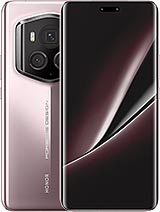
Magic6 RSR Porsche Design
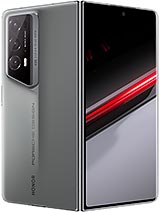
Magic V2 RSR Porsche Design
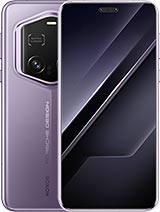
Magic7 RSR
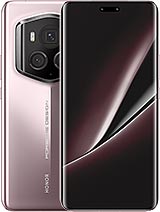
Magic6 RSR
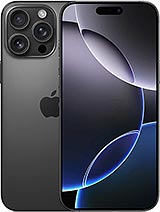
iPhone 16 Pro Max