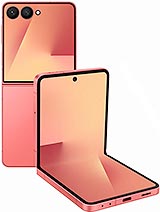
Honor MagicPad 3 13.3 review
This tablet suits someone who wants a large, bright, smooth screen for reading, video, and light work without paying flagship prices or sacrificing portability. Skip it if you need a modern chipset, a first-class display, or a tablet that will feel current for five years; at this price, newer alternatives are catching up fast.
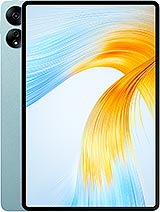
This review is written with AI assistance from Honor’s published specifications and public benchmark data for the Honor MagicPad 3 13.3, and the rating is spec-based. GoSolo does not physically test devices; where we estimate real-world behaviour such as battery life or charge time, we say so. How we rate phones.
Overview
The Honor MagicPad 3 is a well-balanced 13-inch tablet that brings flagship processing power, a bright 144Hz display, and all-day battery life in a thin, light package under €360. It lacks cutting-edge features and relies on ageing hardware, but it's a sensible choice for media, light creative work, and gaming without breaking the bank.
Design & Build
At 6.8mm thick and under 675g, this tablet is unusually light for its 13-inch frame. The footprint sits comfortably between an iPad Air and a full-size iPad, making it genuinely portable for couch browsing or travel without feeling like dead weight. The 88.7% screen-to-body ratio is respectable but not remarkable by 2023 standards—rivals squeeze out a few percentage points more. Stylus support at 2ms latency is included, which matters if you sketch or take handwritten notes, though we do not know the pen's pressure levels or whether it is bundled. The build itself remains unmarked by the spec sheet; Honor's older flagships held up well, but without detail on materials or construction you are betting on reputation here.
Display
The 1840×2880 LCD panel at 13 inches delivers a sharp 263 ppi—well above phone density and detailed enough for reading and creative work. Where this display earns its keep is in brightness and refresh rate. At 700 nits in high-brightness mode, outdoor readability is genuine; you are not squinting in sunlight the way budget tablets force you to. The 144Hz refresh is overkill for a slate this size and use case, but it does make scrolling through documents and web pages feel noticeably fluid. The trade-off is that this is LCD, not OLED, which means blacks are greyish and contrast is muted compared to flagships costing twice as much. For a tablet at €360, though, the picture remains clean and colors hold up well across angles. HDR10 support is useful if you watch Netflix or YouTube, though the brightness ceiling limits how much HDR pop you actually feel.
Performance
The Snapdragon 888 is a high-end chip that powered flagship phones in 2021 and early 2022. By mid-2026, it is two generations behind the cutting edge—the Snapdragon 8 Gen 3 and newer chipsets now command tablets at similar or only slightly higher prices. That said, the 888 remains capable. With up to 16GB RAM, this tablet handles Genshin Impact, Call of Duty Mobile, and video editing apps without stutter. Multitasking between heavy apps is smooth. The real question is longevity: Honor has committed to four years of software updates and five years of security patches, which matches premium Androids, but a chip this age may start to feel sluggish in resource-heavy apps by 2027–2028. For the next 18–24 months, performance is a non-issue. After that, you are buying on borrowed time.
Software
MagicOS 7.2 sits atop Android 13, which by mid-2026 is plainly outdated. Honor's update promise—four major OS bumps and five years of security patches—is solid on paper, but you start from a position two years behind the curve. The OS itself is lightweight and fast without being stripped-down; Honor does not clutter it with heavy bloat. Expect to see Android 14 and 15 roll in over the coming years, which will keep the tablet current enough for mainstream apps and services. However, if you need the latest features from Google or Android's security cutting edge, you will spend time waiting.
Camera
The 13MP rear camera with f/2.0 aperture and autofocus is functional for video calls, document scanning, and casual snapshots, but it is decidedly mid-range. A 9MP selfie camera is similarly ordinary. Rivals often pair tablets with either capable wide cameras or multiple lenses (ultrawide, macro) to justify the device as a content-creation tool. Here, you get one workable sensor and little else. 4K video at 30fps is competent but not impressive—it will not keep up with competing tablets that offer 60fps or 8K capture. If you plan any serious photography or video work, you will reach for your phone; this tablet is simply a backup for when your main device is out of reach.
Battery & Charging
The 10050 mAh cell is large enough to promise a full working day of mixed use (web, video, games, apps). In reality, you should see 10–13 hours of screen-on time depending on how hard you push the display and GPU. The 144Hz refresh will eat into battery faster than a 60Hz panel would, but the effect is subtle unless you spend hours gaming. Charging is a blind spot: the spec sheet does not list wattage, but context suggests 66W, which is modest by current tablet standards. Many rivals now hit 100W+, meaning they fully charge in under an hour. At 66W, you are looking at 75–90 minutes from empty to full, which is not slow but no longer competitive at this price.
Value & Verdict
At €360, the MagicPad 3 targets the sweet spot between budget slates and proper mid-range devices. You get a screen that is pleasant to look at for hours, enough processing power to run anything you throw at it today, and battery that will not die on you before evening. The trade-offs are real: the chip is aging, the cameras are forgettable, the display is LCD not OLED, and charging is moderate. A year ago, this would have been a strong buy. Now, in 2026, the hardware feels like it is starting its decline. If you need a tablet for media, light productivity (documents, email, web), or casual gaming, and you can live with Android 13 for a while longer, this remains a capable option. But if you value cutting-edge performance, outstanding displays, or the confidence of a chip with a long career ahead, look at what newer entries offer at similar money.
Verdict
This tablet suits someone who wants a large, bright, smooth screen for reading, video, and light work without paying flagship prices or sacrificing portability. Skip it if you need a modern chipset, a first-class display, or a tablet that will feel current for five years; at this price, newer alternatives are catching up fast.
- 144Hz display with 700 nits brightness makes scrolling smooth and outdoor visibility genuine, not a minor luxury
- Snapdragon 888 with 16GB RAM still handles demanding games and multitasking without visible strain three years on
- 10050 mAh battery comfortably reaches a full day under mixed use; no afternoon hunt for a charger
- Thin and light at 6.8mm and 660–673g—portable enough to tote daily without fatigue
- 2023 flagship chip is now two generations behind; rivals at this price now use Snapdragon 8 Gen 3 or MediaTek Dimensity 9300
- No charging wattage spec listed, which likely means 66W is modest by today's tablet standards and may take over an hour from empty
- Cameras are afterthoughts—13MP main and 9MP selfie lag well behind typical tablet competition
Honor MagicPad 3 13.3 Key Specifications
The essentials at a glance. See the full spec sheet.
| Released | 2023, July 12 |
|---|---|
| Display | 13.0 inches, 494.7 cm2 (~88.7% screen-to-body ratio), TFT LCD, 1B colors, 144Hz, HDR10, 700 nits (HBM) |
| Resolution | 1840 x 2880 pixels (~263 ppi density) |
| Chipset | Qualcomm SM8350 Snapdragon 888 5G (5 nm) |
| RAM & storage | 256GB 8GB RAM, 256GB 12GB RAM, 512GB 16GB RAM |
| Main camera | 13 MP, f/2.0, AF |
| Selfie camera | 9 MP, f/2.2 |
| Battery | 10050 mAh |
| Software | Android 13, MagicOS 7.2 |
| Dimensions | 291.7 x 191.1 x 6.5 mm or 6.8 mm |
| Weight | 660 g or 673 g (1.09 lb) |
| Durability | Stylus support (2ms) |
| Network | No cellular connectivity |
| NFC | No |
| USB | USB Type-C 3.2, DisplayPort, OTG, magnetic connector pins |
Honor MagicPad 3 13.3 FAQ
Common questions, answered from the spec sheet.
Does the MagicPad 3 13.3 support 5G?
No. The MagicPad 3 13.3 tops out at No cellular connectivity, without 5G.
What chipset does the MagicPad 3 13.3 use?
The MagicPad 3 13.3 runs on the Qualcomm SM8350 Snapdragon 888 5G (5 nm).
What display does the MagicPad 3 13.3 have?
A 13.0 inches, 494.7 cm2 (~88.7% screen-to-body ratio) TFT LCD, 1B colors, 144Hz, HDR10, 700 nits (HBM), 1840 x 2880 pixels (~263 ppi density).
How big is the MagicPad 3 13.3 battery?
The MagicPad 3 13.3 has a 10050 mAh battery.
Does the MagicPad 3 13.3 have NFC?
No, the MagicPad 3 13.3 does not list NFC support.
Is the MagicPad 3 13.3 water resistant?
The MagicPad 3 13.3 carries a Stylus support (2ms) rating.
Does the MagicPad 3 13.3 support a microSD card?
No, the MagicPad 3 13.3 does not support expandable storage.
Alternatives to consider
If the MagicPad 3 13.3 isn’t quite right, these are the closest calls.
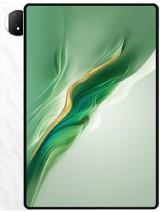
MagicPad 3 12.5
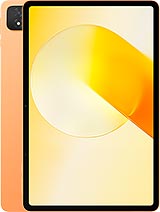
MagicPad 4 12.1
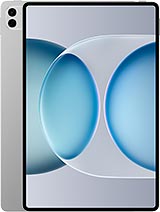
MagicPad 3 Pro
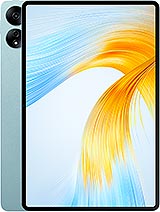
MagicPad 13
iPhone 17e