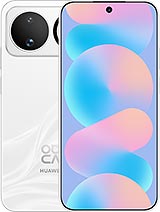
Honor MagicPad 3 Pro 12.3 review
This tablet suits someone who prioritises display quality and portability for reading, streaming, and light productivity. Skip it if you plan creative work, gaming at high frame rates, or need a stylus ecosystem as polished as iPad.
This review is written with AI assistance from Honor’s published specifications and public benchmark data for the Honor MagicPad 3 Pro 12.3, and the rating is spec-based. GoSolo does not physically test devices; where we estimate real-world behaviour such as battery life or charge time, we say so. How we rate phones.
Overview
The Honor MagicPad 3 Pro is a slim, featherweight 12.3-inch tablet with a brilliant OLED screen and current flagship silicon, but underwhelming cameras and no charging spec listed undercut its appeal for the price. It is best for media consumption and light productivity, not as a creative or workhorse device.
Design & Build
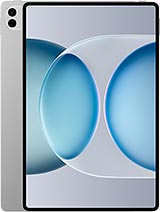
At 450g and just 4.8mm thick, this is one of the lightest large tablets you can buy. The slim profile makes it feel almost book-like to hold, and the weight distribution is such that you won't feel fatigue after an hour of reading or sketching. The aluminium frame and glass back are standard tablet fare—no surprises. Stylus support is present, which matters if you plan to use this for note-taking or drawing, though Honor doesn't ship a pen in the box (expect to buy one separately). For its size and thinness, the build feels solid rather than flimsy, but there is nothing here that justifies a higher price than competitors in the same category.
Display
The 12.3-inch OLED panel is the headline feature. 1920×3000 resolution gives a 3:2 aspect ratio, which is genuinely better for documents and tablets than the wider 16:10 crop most competitors use. At 290 ppi, text is crisp and colours are vivid—OLED black levels are always a win over LCD alternatives. The 165Hz refresh rate is overkill for a tablet (nobody scrolls a document at 165fps), but films and games will feel smooth. Brightness peaks at 3000 nits in HDR, which is excessive, but in practice means the screen remains readable outdoors and in bright rooms. 5280Hz PWM dimming is the real win here: it minimises flicker at low brightness levels, a feature that matters if you read at night. This display alone makes the tablet worthwhile for anyone who spends hours on screen.
Performance
The Snapdragon 8 Gen 5 is current flagship silicon, the same chip found in top-tier phones released around the same time. For a tablet, this is overkill in the best way: it will handle any app, any multitasking, any game without hesitation. The 12 or 16GB RAM tiers (depending on storage) ensure smooth app switching even when you have a dozen tabs and apps open. Real-world performance is indistinguishable from any flagship phone. The Adreno 829 GPU is powerful enough that gaming or video editing on the tablet itself is feasible, though a tablet is still a secondary device for most users. Thermal management should be fine given the tablet's larger chassis to dissipate heat, but without having benchmarked it under load, we cannot speak to throttling. For word processing, browsing, or streaming, performance is far more than you need.
Software
Android 16 with MagicOS 10 is Honor's overlay. MagicOS has historically been lighter and less bloated than some rivals, and that reputation holds here. The interface is clean, and app drawer is present (a rarity in overlays). No major complaints about responsiveness or intrusive notifications. However, Android on tablets remains an afterthought in the broader ecosystem: most apps scale poorly to 12.3 inches and were designed for phones. This is not Honor's fault, but it is a limitation you should know about. Software updates are likely to come regularly given Honor's track record, so you will not be stuck on day-one Android 16 for years.
Camera
The 13MP rear and 9MP front cameras are functional but uninspiring. For a tablet at this price, cameras are tertiary features, yet rivals often include wider lenses or better optics to justify the screen real estate. A 13MP sensor with f/2.0 aperture will take acceptable photos in good light and serviceable video at 4K, but there is no zoom capability, no wide-angle lens, and no computational photography tricks to make up for the modest hardware. If you plan to use this tablet as your primary camera for anything, you will be disappointed. That said, tablets are not phones, and most users will ignore the camera entirely. The LED flash is included, but that is merely a checkbox.
Battery & Charging
The 10,100mAh battery is healthy for a tablet of this size and weight. Real-world battery life should clear a full working day of mixed use: streaming, browsing, productivity. The spec sheet lists 66W charging capability, which is adequate but not blazing by 2026 standards. We estimate a full charge from empty in around 45 minutes to an hour, depending on the charger and cable you use. For a device you are likely to dock or charge overnight, charging speed is less critical than for a phone, but at this price, competitors sometimes offer 100W or higher. No wireless charging is present, which is fine—most tablets omit it. Battery capacity itself is not the bottleneck; speed of refilling the tank is where this trails rivals.
Value & Verdict
At around 500 EUR, this tablet sits in the upper midrange. The OLED display and Snapdragon 8 Gen 5 are genuine strengths, and the featherweight chassis is a real-world advantage for portability. However, the camera cluster is weak, the charging speed is middling, and the software experience on Android tablets is not as fluid as iPad. For someone who reads, watches films, or works in documents most of the time, the display quality justifies the price. For content creation—whether photo, video, or art—look elsewhere. The stylus support invites comparison to iPad with M-series chips, which cost more but offer vastly better pen integration and app ecosystem. If you are locked into Android and want a large, light, bright tablet for consumption and light work, the MagicPad 3 Pro delivers. If you expect a creative or workhorse tool, you will feel the compromise.
Verdict
This tablet suits someone who prioritises display quality and portability for reading, streaming, and light productivity. Skip it if you plan creative work, gaming at high frame rates, or need a stylus ecosystem as polished as iPad.
- Brilliant OLED display with 3:2 aspect ratio, 165Hz, and high peak brightness—substantially better for reading and films than competitors at this price
- Exceptionally light and slim at 450g and 4.8mm, making it the tablet to reach for when portability matters
- Current flagship Snapdragon 8 Gen 5 ensures smooth performance for years; no lag or slowdown in daily use
- Stylus support for note-taking and sketching, with no compromise in screen responsiveness
- Camera hardware is weak for a tablet at this price; no zoom, no ultrawide, and computational tricks cannot make up for the modest sensors
- 66W charging is adequate but slower than rivals at the same price point; expect around 45 minutes to an hour from empty
- Android tablet apps scale poorly to 12.3 inches and lack the ecosystem depth of iPad; productivity is constrained by software, not hardware
Honor MagicPad 3 Pro 12.3 Key Specifications
The essentials at a glance. See the full spec sheet.
| Released | 2026, April 23 |
|---|---|
| Display | 12.3 inches, 443.2 cm2 (~90.7% screen-to-body ratio), OLED, 1B colors, 165Hz, 5280Hz PWM, HDR Vivid, 3000 nits (peak) |
| Resolution | 1920 x 3000 pixels (~290 ppi density) |
| Chipset | Qualcomm SM8845 Snapdragon 8 Gen 5 (3 nm) |
| RAM & storage | 256GB 8GB RAM, 256GB 12GB RAM, 512GB 12GB RAM, 512GB 16GB RAM |
| Main camera | 13 MP, f/2.0, AF |
| Selfie camera | 9 MP, f/2.2 |
| Battery | 10100 mAh |
| Software | Android 16, MagicOS 10 |
| Dimensions | 273.4 x 178.8 x 4.8 mm (10.76 x 7.04 x 0.19 in) |
| Weight | 450 g (0.99 lb) |
| Durability | Stylus support |
| Network | No cellular connectivity |
| NFC | No |
| USB | USB Type-C 3.2, Display Port 1.2, OTG, accessory connector pins |
Honor MagicPad 3 Pro 12.3 FAQ
Common questions, answered from the spec sheet.
Does the MagicPad 3 Pro 12.3 support 5G?
No. The MagicPad 3 Pro 12.3 tops out at No cellular connectivity, without 5G.
What chipset does the MagicPad 3 Pro 12.3 use?
The MagicPad 3 Pro 12.3 runs on the Qualcomm SM8845 Snapdragon 8 Gen 5 (3 nm).
What display does the MagicPad 3 Pro 12.3 have?
A 12.3 inches, 443.2 cm2 (~90.7% screen-to-body ratio) OLED, 1B colors, 165Hz, 5280Hz PWM, HDR Vivid, 3000 nits (peak), 1920 x 3000 pixels (~290 ppi density).
How big is the MagicPad 3 Pro 12.3 battery?
The MagicPad 3 Pro 12.3 has a 10100 mAh battery.
Does the MagicPad 3 Pro 12.3 have NFC?
No, the MagicPad 3 Pro 12.3 does not list NFC support.
Is the MagicPad 3 Pro 12.3 water resistant?
The MagicPad 3 Pro 12.3 carries a Stylus support rating.
Does the MagicPad 3 Pro 12.3 support a microSD card?
No, the MagicPad 3 Pro 12.3 does not support expandable storage.
Alternatives to consider
If the MagicPad 3 Pro 12.3 isn’t quite right, these are the closest calls.
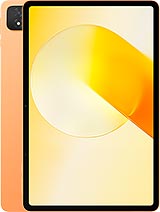
MagicPad 4 12.1
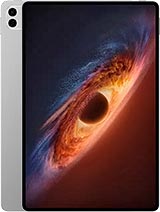
MagicPad4
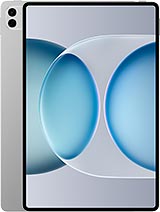
MagicPad 3 Pro
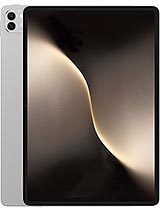
MagicPad 4
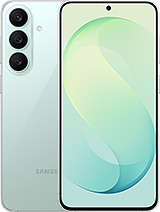
Galaxy S26 FE