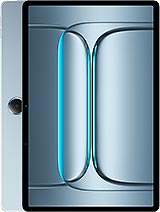
Honor Pad 10 review
This tablet suits travelers, readers, and people who do light work on the move and want something that does not feel like a brick in the bag. Anyone who leans on demanding games, video editing, or wants the most performance per euro should cross-shop faster competitors at the same price."

This review is based on Honor’s published specifications and public benchmark data for the Honor Pad 10, and the rating is spec-based. GoSolo does not physically test devices; where we estimate real-world behaviour such as battery life or charge time, we say so. How we rate phones.
Overview
The Honor Pad 10 is a lightweight, portable 12-inch tablet that excels at reading, browsing, and everyday work—but struggles with demanding apps and is held back by basic cameras. At €300, it is a solid choice for casual users who value portability over raw power, though rivals in the same class offer more capable processors and faster charging.
Design and Build
The Honor Pad 10 nails what matters for a tablet: it is genuinely portable. At 525g and just 6.3mm thick, it weighs less than many 10-inch competitors and slips into a laptop bag without bulk. The glass front and aluminum frame feel composed rather than cheap, though the Mohs 4 protection on the screen is a step down from Gorilla Glass—you will notice scratches sooner. The stylus support is listed but not included in the box, so sketching or note-taking requires an optional purchase. For a device at this price and size, the build is fit for purpose: light enough to use one-handed for reading, sturdy enough to survive daily carry.
Display
The 12.1-inch, 1600×2560 IPS LCD is the tablet's strongest feature. The 120Hz refresh makes scrolling silky, and the 16:10 aspect ratio gives you extra vertical space compared to 4:3 screens—a real win for reading and spreadsheets. At 249 ppi, text stays sharp and small UI elements remain legible without constant pinch-zooming. The HDR support adds decent punch to video, though the IPS panel means viewing angles matter more than on OLED. For a €300 tablet, this display is genuinely well-thought-out.
Performance
The Snapdragon 7 Gen 3 is a capable upper-midrange chip that handles email, web browsing, video playback, and office apps with no stutter. Opening tabs, scrolling through documents, and light multitasking feel smooth. However, this is where the tablet shows limits: demanding 3D games run at reduced settings or frame rates, and heavy photo editing or video work will feel sluggish. For 2025, rivals at similar prices now pair faster chips (mid-range Snapdragon or MediaTek flagships) with similar battery life, so the performance-to-price ratio has softened. The 8GB RAM is adequate but not generous for the money.
Software
Android 15 and MagicOS 9 arrive fresh, and Honor's commitment to two major upgrades means you will reach Android 17 before support trails off. MagicOS is lighter than before, with fewer aggressive background processes, so the interface does not feel bloated. The tablet-specific multitasking features—split-screen, floating windows—work as expected. Nothing stands out as either clumsy or exceptionally polished; it is straightforward Android with light customization.
Camera
Both the 8MP main and 8MP selfie cameras are functional but basic. They handle video calls and document scanning adequately, with decent autofocus on the rear sensor. But zoom, macro range, and low-light performance are absent. Shadow detail rolls off quickly, and distant subjects come out soft. For a tablet, most people do not expect camera excellence, so this is not a dealbreaker—but if you are counting on this as a second camera for casual content creation, expect disappointment.
Battery and Charging
The 10100mAh battery will last about 10 to 12 hours of mixed use (email, browsing, reading, video), which covers a full working day without needing a top-up. That is solid for a tablet. The 35W charger fills the battery in roughly 60 to 90 minutes, fast enough for a work-break refill and painless for overnight charging. For context, rivals at this price now offer 65W to 100W charging, so the Honor lags a bit on speed, though the difference is not painful for most users.
Value and Verdict
At €300, the Pad 10 is a competent, portable tablet for reading, browsing, and everyday productivity. It does not try to be a laptop or a gaming powerhouse—and that honesty is its strength. The real question is whether the Snapdragon 7 Gen 3 feels like yesterday's news for the price. In 2025, you can find 12-inch tablets at similar money with faster processors and quicker charging, so this is a case of paying for portability and a good display rather than raw capability. If you commute, travel, or spend a lot of time in cafes, the light weight and slim profile justify the choice. If you want the fastest chip for the money, look elsewhere.
Verdict
This tablet suits travelers, readers, and people who do light work on the move and want something that does not feel like a brick in the bag. Anyone who leans on demanding games, video editing, or wants the most performance per euro should cross-shop faster competitors at the same price."
- Slim and light at 525g and 6.3mm thick, making it genuinely pocketable for a 12-inch tablet
- 120Hz IPS LCD display with 85.4% screen-to-body ratio—smooth scrolling and plenty of workspace for reading and content consumption
- 10100mAh battery delivers a full day of mixed use; 35W charging tops it in about an hour
- Snapdragon 7 Gen 3 and 8GB RAM handle everyday apps, browsing, and light work without lag
- Snapdragon 7 Gen 3 is capable for office work but will stutter on demanding 3D games and heavy multitasking—rivals at this price now pair higher-tier chips with similar battery and charging
- 8MP cameras lack zoom, macro capability, or low-light performance; adequate for video calls but soft and noisy beyond snapshots
- Mohs 4 screen protection is below modern Gorilla Glass standards, meaning the display scratches more easily
Honor Pad 10 Key Specifications
The essentials at a glance. See the full spec sheet.
| Released | 2025, May 22 |
|---|---|
| Display | 12.1 inches, 424.5 cm2 (~85.4% screen-to-body ratio), IPS LCD, 1B colors, 120Hz, HDR |
| Resolution | 1600 x 2560 pixels, 16:10 ratio (~249 ppi density) |
| Chipset | Qualcomm SM7550-AB Snapdragon 7 Gen 3 (4 nm) |
| RAM & storage | 256GB 8GB RAM |
| Main camera | 8 MP, f/2.0, (wide), AF |
| Selfie camera | 8 MP, f/2.2, (wide) |
| Battery | 10100 mAh |
| Charging | 35W wired |
| Software | Android 15, up to 2 major Android upgrades, MagicOS 9 |
| Dimensions | 277.1 x 179.3 x 6.3 mm (10.91 x 7.06 x 0.25 in) |
| Weight | 525 g (1.16 lb) |
| Build | Glass front, aluminum frame, aluminum back |
| Durability | Stylus support |
| Network | LTE / 5G |
| NFC | No |
| USB | USB Type-C |
Honor Pad 10 FAQ
Common questions, answered from the spec sheet.
Does the Pad 10 support 5G?
Yes. The Pad 10 supports 5G networks.
What chipset does the Pad 10 use?
The Pad 10 runs on the Qualcomm SM7550-AB Snapdragon 7 Gen 3 (4 nm).
What display does the Pad 10 have?
A 12.1 inches, 424.5 cm2 (~85.4% screen-to-body ratio) IPS LCD, 1B colors, 120Hz, HDR, 1600 x 2560 pixels, 16:10 ratio (~249 ppi density).
How big is the Pad 10 battery?
The Pad 10 has a 10100 mAh battery. Charging is rated at 35W wired.
Does the Pad 10 have NFC?
No, the Pad 10 does not list NFC support.
Is the Pad 10 water resistant?
The Pad 10 carries a Stylus support rating.
Does the Pad 10 support a microSD card?
Yes, the Pad 10 supports expandable storage (microSDXC (cellular model only)).
Does the Pad 10 have a headphone jack?
No, the Pad 10 does not have a 3.5mm headphone jack.
Alternatives to consider
If the Pad 10 isn’t quite right, these are the closest calls.
Pad 10 Pro
Pad 20
Pad X10 Pro Max
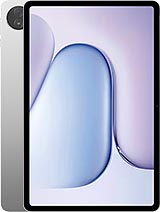
Pad 20 Pro
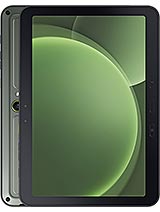
Galaxy Tab Active5 Pro