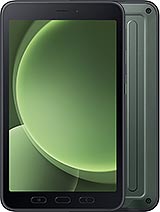
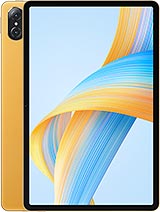
Honor Pad V8 review
The Pad V8 suits someone who reads, watches video, and browses in a home or office setting and does not mind tethering to a phone for mobile data. Anyone who needs cellular connectivity, fast charging, sustained gaming performance, or timely software updates should look at the Galaxy Tab S9 FE, iPad (10th gen), or Lenovo alternatives instead.
This review is based on Honor’s published specifications and public benchmark data for the Honor Pad V8, and the rating is spec-based. GoSolo does not physically test devices; where we estimate real-world behaviour such as battery life or charge time, we say so. How we rate phones.
Overview
The Honor Pad V8 is an 11-inch Android tablet built around Wi-Fi streaming, reading, and light work, with a sharp 120Hz LCD display and all-day battery life. The Dimensity 8020 and 22.5W charging are adequate for a 2023 mid-range tablet at this price, but performance throttles under sustained load and charging speed lags the competition.
Design & build
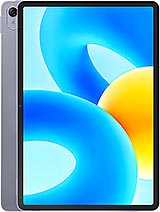
At 252 × 164 mm and 485 g, the Pad V8 sits in the sweet spot for an 11-inch tablet: light enough to hold for an hour, solid enough to feel intentional. The 7.4 mm thickness is competitive for 2023, and the aluminum frame with thin bezels (85% screen-to-body ratio) suggests a focus on display real estate over needless ornamentation. The magnetic USB-C connector is a small win for durability and ease of use. Build quality appears durable, though without glass back or IP rating, it feels less premium than it costs. The lack of a headphone jack is standard and not a complaint; the four stereo speakers are a genuine selling point for video and music.
Display
The 11-inch IPS LCD at 2560×1600 is sharp—274 ppi is crisp enough for text at typical viewing distances. The 120Hz refresh rate matters here; scrolling through web pages, PDFs, and feeds feels smooth and responsive, a real step above the 60Hz baseline. Colors are accurate and punchy without OLED's contrast, which is a fair trade-off: LCDs run cooler and drain battery more slowly during extended reading sessions. For streaming video, browsing, and productivity apps, this display does the job well. OLED would look prettier but would cost considerably more and chew through battery faster on a device meant for all-day use.
Performance
The Dimensity 8020 is a mid-range silicon designed for tablets and budgets, not flagships. Day-to-day performance—app launching, web browsing, office work, video playback—is smooth and snappy. Light games run fine, and the 8 GB of RAM keeps multitasking fluid. The problem emerges under load: sustained 3D gaming or video encoding will see performance drop measurably after 20 to 30 minutes as the chip throttles to manage heat. For most users (reading, streaming, casual photo editing), this is a non-issue. For anyone who plans to do serious creative work or play demanding games regularly, this is a limitation worth knowing.
Software
Android 12 with MagicOS 6.1 is two years old as of mid-2025, which is not ideal for security and feature updates. Honor has historically been slower with updates than Google or Samsung, so do not expect rapid patches or the latest Android version for at least 18 months. MagicOS adds productivity touches like sidebar apps and gestures, which are useful, but the interface can feel cluttered compared to stock Android. No ads or aggressive bloatware, which is a relief, though some pre-installed apps feel redundant. For a secondary device, this is acceptable; for anyone expecting timely security updates and clean software, it is a drawback.
Camera
The 13 MP main camera with f/1.8 aperture and autofocus is functional but uninspired. It captures daylight photos and documents adequately, with reasonable detail for the sensor size. The 2 MP macro lens is a spec-sheet addition that adds little in practice. The 5 MP front camera suits video calls but nothing more. Video tops out at 4K 30fps, which works for casual vlogging, but expect modest detail and slow autofocus tracking—do not expect cinematic results. For a tablet, the camera is an afterthought, and that is fine; most users do not buy tablets for photography.
Battery & charging
The 7250 mAh battery delivers 10–12 hours of mixed use (browsing, video, apps), enough for a full day of casual work or media consumption. Standby time is solid. Where the Pad V8 stumbles is charging: 22.5W takes roughly 90–120 minutes from empty, which is slow in 2023 when tablets at similar prices hit 45–65W. For a device meant to be always available, slow charging is a real friction point. The magnetic connector is a nice touch for durability, but it does not make up for the watt-hour deficit.
Value & verdict
At around 240 EUR, the Pad V8 is reasonably priced for an 11-inch tablet with a sharp 120Hz display, all-day battery, and Wi-Fi 6. It competes in a crowded segment against the iPad (2023 entry model, more polished), Samsung Galaxy Tab S9 FE (similar performance, faster charging), and Chinese tablets like the Xiaomi Pad 6. Where the Pad V8 carves a niche is in the balance of display quality, battery endurance, and affordability—it does not win on any single metric but does not embarrass itself on any either. The lack of cellular connectivity and slow charging are genuine frustrations for anyone who wants to work away from Wi-Fi or needs rapid top-ups between sessions. MagicOS is utilitarian and not a draw compared to Samsung or Apple, though it is not harmful either.
Verdict
The Pad V8 suits someone who reads, watches video, and browses in a home or office setting and does not mind tethering to a phone for mobile data. Anyone who needs cellular connectivity, fast charging, sustained gaming performance, or timely software updates should look at the Galaxy Tab S9 FE, iPad (10th gen), or Lenovo alternatives instead.
- 11-inch, 120Hz LCD display with 2560×1600 resolution is crisp for reading and video without the power drain of OLED
- All-day battery life from 7250 mAh; mixed use easily reaches 10–12 hours screen-on
- Wi-Fi 6 and dual-band connectivity for fast home networks; magnetic USB-C connector is a practical touch
- Thin and reasonably light at 7.4 mm and 485 g, making it portable for a tablet this size
- 22.5W charging is slow by 2023 standards; rivals in this price tier often hit 45–65W, cutting charge time roughly in half
- Dimensity 8020 throttles after 20–30 minutes of sustained heavy gaming or video encoding; not built for creative workloads
- No cellular option limits use to Wi-Fi or tethering; this rules out mobile freedom for work or travel without a hotspot
Honor Pad V8 Key Specifications
The essentials at a glance. See the full spec sheet.
| Released | 2023, April 28 |
|---|---|
| Display | 11.0 inches, 350.9 cm2 (~85.1% screen-to-body ratio), IPS LCD, 120Hz |
| Resolution | 2560 x 1600 pixels, 16:10 ratio (~274 ppi density) |
| Chipset | Mediatek Dimensity 8020 (6 nm) |
| RAM & storage | 128GB 8GB RAM, 256GB 8GB RAM |
| Main camera | 13 MP, f/1.8, (wide), 1/3.0", AF 2 MP (macro) |
| Selfie camera | 5 MP, f/2.2 |
| Battery | 7250 mAh |
| Charging | 22.5W wired |
| Software | Android 12, MagicOS 6.1 |
| Dimensions | 252.1 x 163.6 x 7.4 mm (9.93 x 6.44 x 0.29 in) |
| Weight | 485 g (1.07 lb) |
| Durability | Honor Pencil 3 (15ms latency) |
| Network | No cellular connectivity |
| NFC | No |
| USB | USB Type-C, magnetic connector |
Honor Pad V8 FAQ
Common questions, answered from the spec sheet.
Does the Pad V8 support 5G?
No. The Pad V8 tops out at No cellular connectivity, without 5G.
What chipset does the Pad V8 use?
The Pad V8 runs on the Mediatek Dimensity 8020 (6 nm).
What display does the Pad V8 have?
A 11.0 inches, 350.9 cm2 (~85.1% screen-to-body ratio) IPS LCD, 120Hz, 2560 x 1600 pixels, 16:10 ratio (~274 ppi density).
How big is the Pad V8 battery?
The Pad V8 has a 7250 mAh battery. Charging is rated at 22.5W wired.
Does the Pad V8 have NFC?
No, the Pad V8 does not list NFC support.
Is the Pad V8 water resistant?
The Pad V8 carries a Honor Pencil 3 (15ms latency) rating.
Does the Pad V8 support a microSD card?
Yes, the Pad V8 supports expandable storage (microSDXC (dedicated slot)).
Does the Pad V8 have a headphone jack?
No, the Pad V8 does not have a 3.5mm headphone jack.
Alternatives to consider
If the Pad V8 isn’t quite right, these are the closest calls.

Pad V8 WiFi
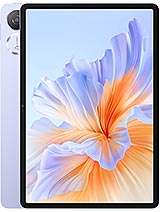
Pad V9
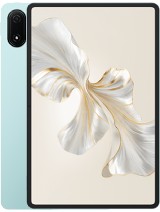
Pad 9 Pro

Pad V8 Pro WiFi
MatePad 11.5