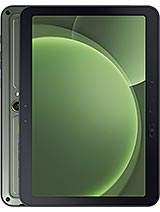
Honor Pad V9 review
The Pad V9 suits students, remote workers, and creatives who will use it at a desk or home and value pencil input and a smooth, thin form. Anyone who travels often, relies on cellular connectivity, or drops devices regularly should look for a more rugged tablet with cellular support and better durability.
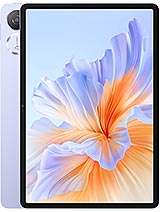
This review is based on Honor’s published specifications and public benchmark data for the Honor Pad V9, and the rating is spec-based. GoSolo does not physically test devices; where we estimate real-world behaviour such as battery life or charge time, we say so. How we rate phones.
Overview
The Honor Pad V9 is a slim, lightweight 11.5-inch tablet with a smooth 144Hz display and pencil support, built around a mid-range chipset that handles daily work and light entertainment without strain. At 350 EUR it lands in a competitive segment, but its lack of durability protection and Wi-Fi-only design limit it to desk-bound users and well-connected homes.
Design & build
At 475g and 6.1mm thick, the Pad V9 is impressively slim for an 11.5-inch slab. That weight and thinness make it one of the lightest tablets in its class—most rivals run 500g or heavier. The trade-off is obvious: there is no stated drop protection, no Gorilla Glass, and the chassis feels like it relies on luck more than engineering. A fall to concrete from desk height is a real worry. The magnetic charging connector is convenient, but the overall construction reads as optimized for shelf life and marketing photos rather than real durability. For a student who will keep it in a bag and a desk for four years, this works. For anyone who travels or has a household accident rate, it is a risk.
Display
The 11.5-inch IPS LCD at 2800×1840 with 144Hz refresh is the device's genuine star. At 291 ppi the text is sharp enough for document work; 500 nits (typical) means reading in daylight does not require squinting or hunting for shade. The 144Hz matters less for scrolling PDFs than it does for sketching with the pencil—motion blur is minimal, and lines feel live. The 85.8% screen-to-body ratio is normal for modern tablets; bezels are slim without sacrificing grip. Rivals at this price often max out at 120Hz or 90Hz, so the extra smoothness is a real differentiator. Colors on an IPS panel are accurate but not vibrant, which suits productivity over media binging.
Performance
The Mediatek Dimensity 8350 is a capable mid-range chip that handles the tablet's actual job—browsing, email, light content creation, streaming—without stuttering. In day-to-day use you will not feel the difference between this and a flagship chip because a tablet does not ask the same of a processor that a gaming phone does. Light gaming (PUBG, Genshin Impact at medium settings) runs smooth enough; heavy 3D games will throttle. Multitasking with 8GB or 12GB RAM (depending on storage tier) is seamless. For pencil work or document editing, there is no performance bottleneck. If you routinely run demanding mobile games or VM software, look elsewhere; for the 80% of tablet users who want smooth, responsive productivity, this chip is fit-for-purpose.
Software
Android 15 with MagicOS 9 is current and mature. Honor's overlay is lighter than it used to be, adding customization and one-handed gestures without the bloat of older versions. Pencil integration is tight—app compatibility is broader than it used to be, and pressure sensitivity across Adobe and note-taking apps is reliable. The real question is update longevity: Honor has improved here, but if you need five years of security patches, check the fine print. For the lifespan most tablet owners expect (three to four years of active use), the software story is solid.
Camera
The 13MP main and 8MP front cameras are functional without being impressive. Rear autofocus and LED flash mean document scanning is viable, and the camera app includes a smart scan mode that will appeal to students and office workers. Video is 4K@30fps—technically sufficient, but dated; competitors now shoot 4K@60fps or 8K@30fps at this price. In low light, expect noise and color loss. The 8MP front camera handles video calls adequately at 1080p. If pencil sketching and writing are your focus, the camera is secondary; if video or photography matter, you will be disappointed. For the price and form factor, though, the cameras do not break the tablet—they just do not add value either.
Battery & charging
The 10100 mAh battery yields approximately 10 to 12 hours of mixed use—enough for a full working day. The global 35W charging tops it up in under an hour (Chinese variant 66W reaches full in about 20 to 30 minutes). For a Wi-Fi tablet that sits on a desk or in a bag most of the day, this is adequate. The real advantage is the fast top-up: a 20-minute charge will get you through an afternoon. Standby drain is negligible. If you are a heavy user relying on this as your only device, you may need to charge twice in a long day; for most, once daily is enough.
Connectivity & value
Wi-Fi 6 (802.11ax) is standard now, and dual-band support means you will get speeds close to your router's ceiling. Bluetooth 5.2 with aptX HD keeps audio latency low for wireless earbuds. The fatal limitation is Wi-Fi only—no LTE or 5G option. In a connected home or campus this is fine; for travel or outdoor work, you are tethered to your phone's hotspot or hunted for Wi-Fi. At 350 EUR, the Pad V9 sits between budget tablets (200 EUR, slower chips, dim screens) and flagship slates (500+ EUR, flagship silicon, better durability). For a student or home office user who will never leave their network, it is a strong value. For anyone who needs cellular or expects the device to survive a tough life, the compromises add up fast. The lack of a microSD slot means storage config is a one-time choice: pick wisely between the 256GB or 512GB models.
Verdict
The Pad V9 suits students, remote workers, and creatives who will use it at a desk or home and value pencil input and a smooth, thin form. Anyone who travels often, relies on cellular connectivity, or drops devices regularly should look for a more rugged tablet with cellular support and better durability.
- 11.5-inch 144Hz display at 291 ppi with 500 nits brightness—crisp, responsive, and readable indoors and outdoors without the weight of a larger slate
- Thin and light (6.1mm, 475g) makes it genuinely portable for a this size; most 11-inch tablets weigh 500g or more
- Honor Pencil 3 support with 15ms latency at this price point is rare; sketching and note-taking feel responsive
- 10100 mAh battery lasts a full workday on mixed use; 35W charging (66W in China) is quick enough for daily tops-ups
- No glass protection over the LCD and unpadded chassis means real fragility for a device this thin; drops will likely crack the screen
- Wi-Fi only—no cellular option forces dependence on hotspot or home network, a genuine drawback for a large screen built for mobility
- Camera system is purely functional (13MP main, 8MP front); image quality lags rivals and video is capped at 4K@30fps
Honor Pad V9 Key Specifications
The essentials at a glance. See the full spec sheet.
| Released | 2024, December 17 |
|---|---|
| Display | 11.5 inches, 391.6 cm2 (~85.8% screen-to-body ratio), IPS LCD, 1B colors, 144Hz, HDR, 500 nits (typ) |
| Resolution | 2800 x 1840 pixels, 3:2 ratio (~291 ppi density) |
| Chipset | Mediatek Dimensity 8350 (4 nm) |
| RAM & storage | 128GB 8GB RAM, 256GB 8GB RAM, 256GB 12GB RAM, 512GB 12GB RAM |
| Main camera | 13 MP, f/2.0, (wide), AF |
| Selfie camera | 8 MP, f/2.0, (wide) |
| Battery | 10100 mAh |
| Charging | 35W wired - Global66W wired - China |
| Software | Android 15, MagicOS 9 |
| Dimensions | 259.1 x 176.1 x 6.1 mm (10.20 x 6.93 x 0.24 in) |
| Weight | 475 g (1.05 lb) |
| Durability | Honor Pencil 3 (15ms latency) |
| Network | No cellular connectivity |
| NFC | No |
| USB | USB Type-C 2.0, magnetic connector |
Honor Pad V9 FAQ
Common questions, answered from the spec sheet.
Does the Pad V9 support 5G?
No. The Pad V9 tops out at No cellular connectivity, without 5G.
What chipset does the Pad V9 use?
The Pad V9 runs on the Mediatek Dimensity 8350 (4 nm).
What display does the Pad V9 have?
A 11.5 inches, 391.6 cm2 (~85.8% screen-to-body ratio) IPS LCD, 1B colors, 144Hz, HDR, 500 nits (typ), 2800 x 1840 pixels, 3:2 ratio (~291 ppi density).
How big is the Pad V9 battery?
The Pad V9 has a 10100 mAh battery. Charging is rated at 35W wired - Global66W wired - China.
Does the Pad V9 have NFC?
No, the Pad V9 does not list NFC support.
Is the Pad V9 water resistant?
The Pad V9 carries a Honor Pencil 3 (15ms latency) rating.
Does the Pad V9 support a microSD card?
No, the Pad V9 does not support expandable storage.
Does the Pad V9 have a headphone jack?
No, the Pad V9 does not have a 3.5mm headphone jack.
Alternatives to consider
If the Pad V9 isn’t quite right, these are the closest calls.
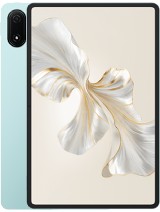
Pad 9 Pro
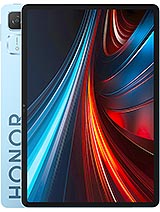
Pad GT
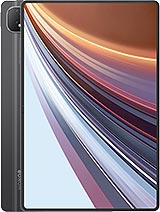
Pad GT Pro
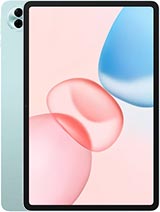
Pad 10
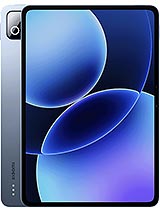
Pad 8