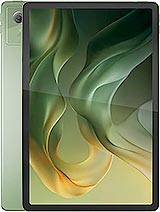
Honor Pad X7 review
Best for families or individuals who want an affordable tablet for at-home streaming, reading, and light work on Wi-Fi. Skip it if you game, multitask frequently, or need the flexibility to top up the battery quickly between uses.
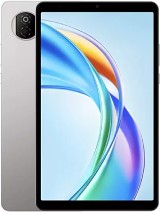
This review is based on Honor’s published specifications and public benchmark data for the Honor Pad X7, and the rating is spec-based. GoSolo does not physically test devices; where we estimate real-world behaviour such as battery life or charge time, we say so. How we rate phones.
Overview
The Honor Pad X7 is a budget Wi-Fi tablet for at-home streaming and browsing, held back by weak performance and slow charging. Its 90Hz display and long battery life are the main draws for light household use, but the Snapdragon 680 and meager 10W charger make it a one-task machine.
Design & build
At 365 grams and 8 mm thick, the Honor Pad X7 lands in the goldilocks zone for a compact tablet: light enough to hold in one hand for an hour, solid enough to feel more than like a toy. The glass front, aluminum frame, and aluminum back do feel assembled with some care, though the exposed front glass invites scratches and cracks without a case. There is no water resistance rating and no listed drop protection, so this is a device that needs a sleeve or case if you plan to move it around the house much.
Display
The 8.7-inch IPS LCD panel is the Pad X7's strongest selling point. It runs at 90Hz, which smooths scrolling and video playback noticeably compared to 60Hz budget tablets. Brightness peaks at 500 nits typical (625 nits in high brightness mode), enough to watch videos and read text indoors without eye strain or glare. Direct sunlight will wash it out, but that is not the use case here. The 5:3 aspect ratio is wider than most phones and lends itself to landscape video; the 81% screen-to-body ratio is generous for its class. The real weakness is the 179 ppi density. Text stays legible, but fine details and small UI elements lack crispness at arm's length—nothing wrong with it for video and casual browsing, but noticeable if you spend time reading or editing documents.
Performance
The Snapdragon 680 with Adreno 610 GPU and 4 GB of RAM occupies the budget-tier mainstream market. It handles Netflix, web browsing, email, and light document work without hiccups. Launch an email app, load a web page, switch between two browser tabs, and you feel no strain. Start gaming, open photo-heavy apps, or pile on more than three background tasks, and the device begins to stumble. Games designed for entry-level hardware run acceptably at lower settings; modern titles either choke or force you to dial down visuals. For a household tablet used for video streaming and quick web checks, it is adequate. For anyone expecting to multitask or play casual games, it will frustrate within weeks.
Camera
The 8 MP main camera with autofocus and HDR takes acceptable snapshots in daylight. Photos are soft and low in detail, typical for a tablet's sensor, but usable for casual social-media posts or video calls. The 5 MP front camera covers the same ground: fine for video meetings in decent light, but produces muddy detail in dim rooms. The 1080p video at 30 fps is a bare minimum. Do not expect to edit or print anything larger than a phone screen. Tablets are rarely bought for their cameras, and this one will not change anyone's mind about that.
Battery & charging
The 7020 mAh battery delivers roughly 7 to 8 hours of continuous screen-on time with moderate use—streaming video, web browsing, email. That is solid for a compact tablet and covers a day of household use between charges. The problem is the charger. At 10W, a full discharge takes roughly 90 minutes to 2 hours, which is slow even by budget standards. Rivals at this price point have climbed to 18W or 20W. The wait time is not dealbreaking for a home device you charge overnight, but it is worth noting if you plan regular top-ups.
Software
The Pad X7 ships with Android 15 and Honor's MagicOS 9. The interface is clean, largely stock Android with a few Honor tweaks like Circle to Search. There is no bloatware beyond Google's suite, and the experience is straightforward. Updates should arrive reasonably quickly given that this is a 2025 device, though Honor's tablet support historically lags phones. Software itself is not a draw or a problem.
Value & verdict-context
At around 150 EUR, the Pad X7 targets households buying an affordable tablet for media consumption and basic tasks. It undercuts more expensive budget competitors by focusing ruthlessly on display and battery life while cutting corners on performance and charging speed. That trade-off works for its intended audience: someone who wants a device to read the news, watch Netflix, and swap emails without fuss. It fails for anyone expecting to game, multitask heavily, or grab the tablet for quick top-ups between use. The lack of cellular connectivity means it is also a Wi-Fi-only device, limiting use outside the house.
Verdict
Best for families or individuals who want an affordable tablet for at-home streaming, reading, and light work on Wi-Fi. Skip it if you game, multitask frequently, or need the flexibility to top up the battery quickly between uses.
- 90Hz IPS display with decent indoor brightness (500 nits typical) and an 81% screen-to-body ratio make video streaming and reading comfortable
- 7020 mAh battery lasts about 7 to 8 hours of moderate use, enough for a full day of light web browsing or video watching
- 8.7-inch screen and 365g weight strike a livable balance for one-handed reading and lap use without being bulky
- Wi-Fi ac and Bluetooth 5.0 handle home streaming and wireless audio reliably
- Snapdragon 680 with 4 GB RAM stutters during gaming and multitasking; it handles Netflix and email, not anything demanding
- 10W charging fills the battery in roughly 90 minutes to 2 hours, slow by today's standards even for a budget tablet
- 179 ppi pixel density makes fine text and detail slightly soft at normal viewing distance
Honor Pad X7 Key Specifications
The essentials at a glance. See the full spec sheet.
| Released | 2025, July 24 |
|---|---|
| Display | 8.7 inches, 214.9 cm2 (~81.3% screen-to-body ratio), IPS LCD, 90Hz, 500 nits (typ), 625 nits (HBM) |
| Resolution | 800 x 1340 pixels, 5:3 ratio (~179 ppi density) |
| Chipset | Qualcomm SM6225 Snapdragon 680 (6 nm) |
| RAM & storage | 128GB 4GB RAM |
| Main camera | 8 MP, f/2.0, AF |
| Selfie camera | 5 MP, f/2.2 |
| Battery | 7020 mAh |
| Charging | 10W wired |
| Software | Android 15, MagicOS 9 |
| Dimensions | 211.8 x 124.8 x 8 mm (8.34 x 4.91 x 0.31 in) |
| Weight | 365 g (12.87 oz) |
| Build | Glass front, aluminum frame, aluminum back |
| Network | No cellular connectivity |
| NFC | No |
| USB | USB Type-C, OTG |
Honor Pad X7 FAQ
Common questions, answered from the spec sheet.
Does the Pad X7 support 5G?
No. The Pad X7 tops out at No cellular connectivity, without 5G.
What chipset does the Pad X7 use?
The Pad X7 runs on the Qualcomm SM6225 Snapdragon 680 (6 nm).
What display does the Pad X7 have?
A 8.7 inches, 214.9 cm2 (~81.3% screen-to-body ratio) IPS LCD, 90Hz, 500 nits (typ), 625 nits (HBM), 800 x 1340 pixels, 5:3 ratio (~179 ppi density).
How big is the Pad X7 battery?
The Pad X7 has a 7020 mAh battery. Charging is rated at 10W wired.
Does the Pad X7 have NFC?
No, the Pad X7 does not list NFC support.
Does the Pad X7 support a microSD card?
Yes, the Pad X7 supports expandable storage (microSDXC).
Does the Pad X7 have a headphone jack?
No, the Pad X7 does not have a 3.5mm headphone jack.
Alternatives to consider
If the Pad X7 isn’t quite right, these are the closest calls.

Pad X9a

Pad X7 2025
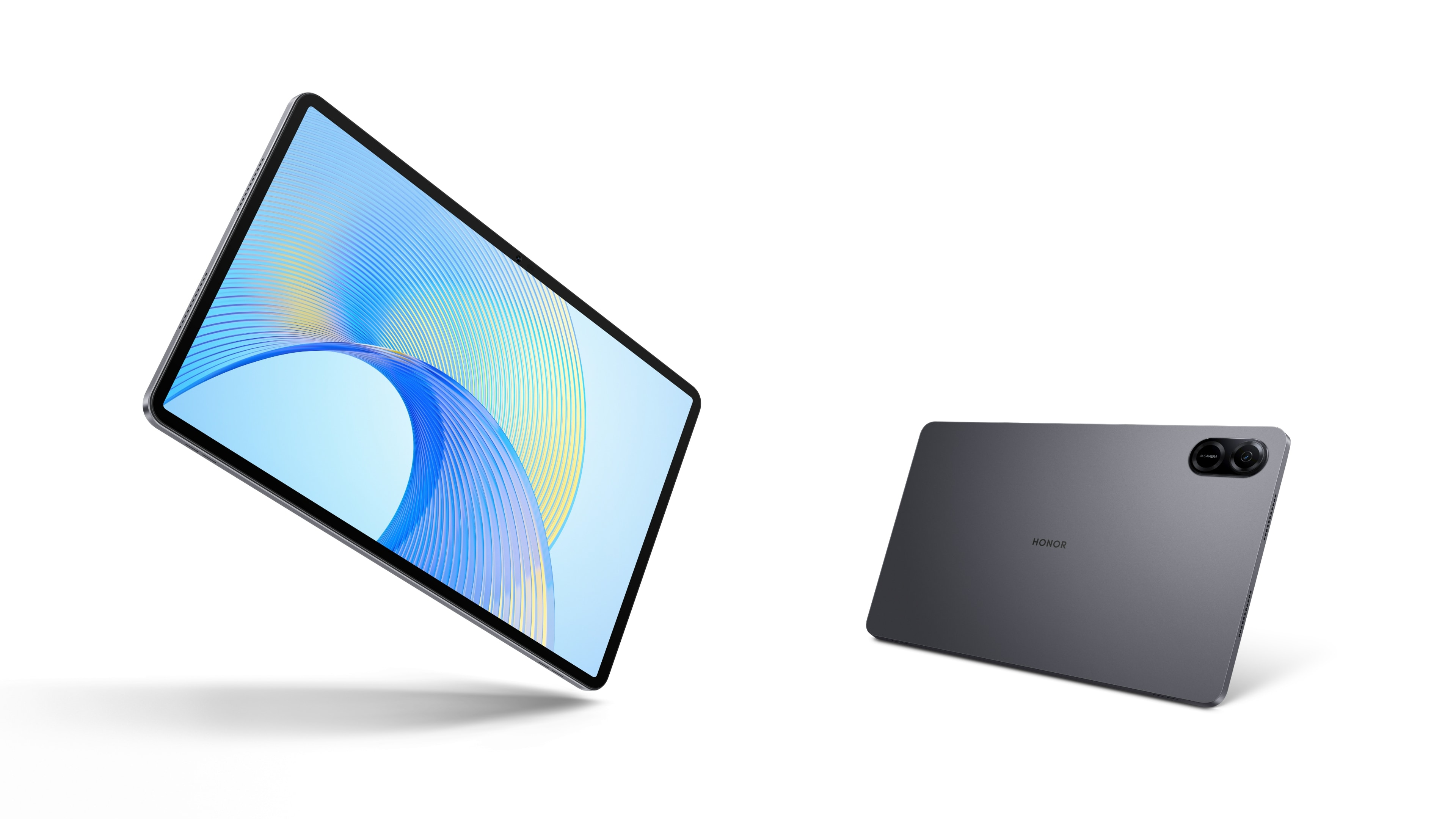
Pad X9 Pro
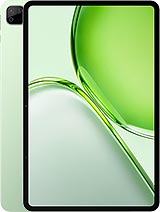
Pad X10 Pro Max

Black Shark Pad SE