Honor Play 50 Plus review
The Play 50 Plus suits budget-conscious users in regions where 5G is rolling out and who value all-day battery life and a 3.5mm jack above speed or ruggedness. Skip it if you game seriously, need fast charging, or want a water-resistant phone you can pocket in any weather.

This review is based on Honor’s published specifications and public benchmark data for the Honor Play 50 Plus, and the rating is spec-based. GoSolo does not physically test devices; where we estimate real-world behaviour such as battery life or charge time, we say so. How we rate phones.
Overview
The Honor Play 50 Plus is a 6.8-inch battery phone with a 3.5mm jack and 5G, built for people who value all-day use and audio input over raw speed. It delivers practical performance for everyday apps and media, but the Dimensity 6020 and thin 8.2mm frame are neither durable nor quick enough for demanding users.
Design & Build
At 199g and 8.2mm thin, the Play 50 Plus feels light in the hand, but that slimness is deceptive—it makes the phone feel fragile, and the lack of any water or dust rating leaves you uneasy in wet pockets or dusty bags. For comparison, rivals at this price often weigh a few grams more and come with at least an IP53 splash guard. The side-mounted fingerprint sensor is a smart touch: faster to unlock while holding the phone than a rear-mounted reader. The build materials are not disclosed, but the design reads as typical mid-budget plastic-and-glass fare for a 2023 phone around 190 EUR. Dual nano-SIMs let you use two numbers, which suits travellers and those juggling work and personal lines.
Display
The 6.8-inch TFT LCD is a generous slab that makes watching video and browsing feel spacious. At 1080 x 2412 pixels, the 389 ppi pixel density is on the loose side for a screen this large; text and icons are crisp at arm's length but show visible grain up close, a step down from OLED rivals or high-ppi LCDs in the flagship tier. The 90Hz refresh rate is a genuine lift from 60Hz scrolling, making the interface feel snappier than budget phones that topped out at 60Hz just a year or two earlier. Peak brightness of 850 nits is solid enough to read outdoors in full sunlight, though not as effortless as 1000+ nit OLEDs. For everyday web browsing, video, and social media, this screen does the job without fatigue.
Performance
The Mediatek Dimensity 6020 is a mainstream midrange chip for 2023, capable and efficient but not fast. It handles everyday apps—messaging, email, light social media, and casual browsing—without stutter or delay. For moderate gaming (think Candy Crush or light 3D titles), it works, but demanding games like Genshin Impact or Honkai: Star Rail will force you into low graphics settings and frame drops if you want them playable at all. Video editing apps and photo processing are possible but slower than you'd want, and multitasking with many apps open will eventually make you feel the RAM limits. The Mali-G57 GPU is not built for high-end graphics. If you plan to keep this phone for three years, expect performance to feel more creaky in year two as apps grow heavier and you hit Android version updates. For a user whose day is calls, messages, and streaming, this is plenty. For a creator or gamer, it is not.
Software
Android 13 with Honor's MagicOS 7.2 overlay ships on the device, and both are dated by mid-2026 standards. MagicOS is lighter than some skins but still adds bloat—unnecessary apps that you can disable but not remove. Honor's track record with software updates is mixed; midrange models often receive two years of OS updates and three years of security patches at best. That means by 2025, you may be on Android 14 or 15, but improvements and bug fixes tail off after that. The 3.5mm jack support is native in Android and works without issue. File management and customization are standard Android fare, neither remarkable nor frustrating.
Camera
The 50MP main sensor with f/1.8 aperture and PDAF is the highlight. In daylight, it captures sharp, well-exposed shots with good colour and minimal noise. The larger aperture helps in low light—dingy interiors or evening outdoor scenes are brighter and less grainy than you'd get from a smaller sensor at the same price. The 8MP selfie camera is basic but adequate for video calls. The real letdown is video: 1080p at 30fps is passable for social media clips, but it looks soft when viewed on larger screens and limits your flexibility if you later want to crop or zoom in post. No 4K recording, no slow-motion modes, no ultrawide. For stills, this is a solid budget workhorse; for video, it feels like a compromise. The LED flash helps in full darkness, though quality degrades if the subject is too close.
Battery & Charging
The 6000 mAh battery is the standout. On moderate screen time (3–4 hours a day), you will comfortably reach bedtime and wake the next morning still above 20% charge. That is real value in a device priced at 190 EUR; most rivals either have smaller cells or more power-hungry screens. If you use the phone heavily (6+ hours screen time), expect to dip below one full day, but light users can easily stretch to 1.5 days. Charging at 35W is the weak point. From zero to 100% takes about 50–70 minutes, which is not fast by 2023 standards—rivals at this price were already offering 65W or 100W wired charging by then. If you charge overnight, this is fine. If you need 30 minutes to full charge before leaving the house, you will be disappointed. There is no wireless charging.
Connectivity & Audio
The 3.5mm headphone jack is a rarity in 2023 and 2026, worth celebrating if you own a drawer of wired headphones or earbuds. Stereo speakers add volume and separation for media playback, though they are not concert-grade. 5G connectivity is present (SA/NSA modes) and future-proofed you for the next few years, though real-world speed gains over LTE are modest in many regions. Wi-Fi 5 (802.11ac) is standard, not cutting-edge, but handles typical home and cafe use without lag. Bluetooth 5.1 pairs reliably with modern wireless earbuds and speakers. There is no NFC, so contactless payments and tag reading are not options. USB Type-C 2.0 charges the device, though the older USB 2.0 standard means file transfer speeds are slower than USB 3.0 rivals—a minor inconvenience if you regularly move large video files to a computer.
Value & Verdict Context
At around 190 EUR, the Play 50 Plus is a budget-focused device that prioritises battery endurance, audio input, and screen size over durability, speed, or camera versatility. It is built for users who charge their phone once a day and want to avoid proprietary dongles or Bluetooth pairing. The lack of water resistance and the fragile thinness are real risks if you are careless with phones, and the slow charging means you cannot rely on a quick top-up in a pinch. For photography and video, it is a step above entry-level but not a creative tool. If your needs are calls, messaging, social media, streaming, and light gaming at low settings, this phone will serve you for two years without frustration. If you demand fast charging, durability, or high-frame-rate video, look elsewhere.
Verdict
The Play 50 Plus suits budget-conscious users in regions where 5G is rolling out and who value all-day battery life and a 3.5mm jack above speed or ruggedness. Skip it if you game seriously, need fast charging, or want a water-resistant phone you can pocket in any weather.
- 6000 mAh battery lasts about 1.5 days on moderate use, a real strength in its price tier
- 3.5mm headphone jack and stereo speakers—rare and useful for wired audio lovers
- 50MP main camera with f/1.8 aperture and PDAF keeps daylight shots sharp and handles dim light better than smaller sensors
- 5G and dual-band Wi-Fi 5, plus a bright 850-nit LCD that stays readable in sunlight
- 35W charging is medium speed for 2023; rivals at this price hit 65–100W, so a full top-up takes about an hour
- No IP rating for splash or dust resistance, and the 8.2mm thinness makes it feel fragile
- Dimensity 6020 handles daily apps fine, but struggles with modern games at anything beyond low settings
Honor Play 50 Plus Key Specifications
The essentials at a glance. See the full spec sheet.
| Released | 2023, October 10 |
|---|---|
| Display | 6.8 inches, 111.3 cm2 (~87.3% screen-to-body ratio), TFT LCD, 90Hz, 850 nits (peak) |
| Resolution | 1080 x 2412 pixels, 20:9 ratio (~389 ppi density) |
| Chipset | Mediatek Dimensity 6020 (7 nm) |
| RAM & storage | 256GB 8GB RAM, 256GB 12GB RAM |
| Main camera | 50 MP, f/1.8, (wide), PDAF Auxiliary lens |
| Selfie camera | 8 MP, f/2.0, (wide) |
| Battery | 6000 mAh |
| Charging | 35W wired |
| Software | Android 13, MagicOS 7.2 |
| Dimensions | 166.7 x 76.5 x 8.2 mm (6.56 x 3.01 x 0.32 in) |
| Weight | 199 g (7.02 oz) |
| Network | GSM / CDMA / HSPA / EVDO / LTE / 5G |
| NFC | No |
| USB | USB Type-C 2.0, OTG |
Honor Play 50 Plus FAQ
Common questions, answered from the spec sheet.
Does the Play 50 Plus support 5G?
Yes. The Play 50 Plus supports 5G networks.
What chipset does the Play 50 Plus use?
The Play 50 Plus runs on the Mediatek Dimensity 6020 (7 nm).
What display does the Play 50 Plus have?
A 6.8 inches, 111.3 cm2 (~87.3% screen-to-body ratio) TFT LCD, 90Hz, 850 nits (peak), 1080 x 2412 pixels, 20:9 ratio (~389 ppi density).
How big is the Play 50 Plus battery?
The Play 50 Plus has a 6000 mAh battery. Charging is rated at 35W wired.
Does the Play 50 Plus have NFC?
No, the Play 50 Plus does not list NFC support.
Does the Play 50 Plus support a microSD card?
No, the Play 50 Plus does not support expandable storage.
Does the Play 50 Plus have a headphone jack?
Yes, the Play 50 Plus has a 3.5mm headphone jack.
Alternatives to consider
If the Play 50 Plus isn’t quite right, these are the closest calls.
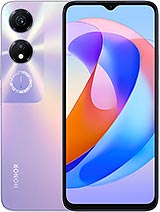
Play 40
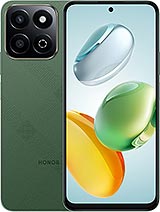
Play 60 Plus

X5 Plus
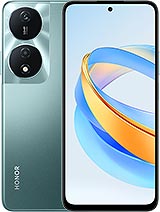
X7b 5G (50 MP)
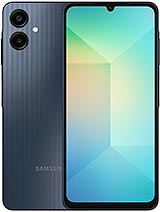
Galaxy A06