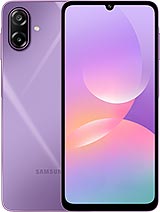
Honor Play20C review
This phone suits users in emerging markets who prioritize battery life and screen size over speed and camera quality, and who are willing to trade responsiveness for low cost. Skip it if you need a snappy processor for apps, a capable camera, or plan to keep the phone for more than three years—the aging T610 chip and entry-level design will feel increasingly strained as time goes on."
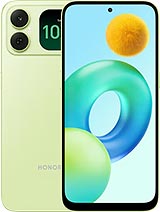
This review is based on Honor’s published specifications and public benchmark data for the Honor Play20C, and the rating is spec-based. GoSolo does not physically test devices; where we estimate real-world behaviour such as battery life or charge time, we say so. How we rate phones.
Overview
The Honor Play20C is a 100 EUR budget Android phone with a large 6.78-inch screen and 6000 mAh battery, aimed squarely at users in emerging markets who need basic calling, messaging, and light apps without paying flagship prices. The Unisoc T610 is old by 2026 standards and day-to-day speed will feel sluggish compared to modern rivals, but for the money it gets the job done if you do not ask much of it.
Design & build
At 214 grams and 8.7 mm thick, this is a chunky phone by modern standards but feels solid in hand thanks to the glass front and plastic back. The frame is plastic too, so do not expect any sense of rigidity or premium finish. The screen-to-body ratio of 84.8 percent is reasonable for a budget device, and the triple rear camera cutout is understated. Colors are practical—Forest Green, Midnight Black, Sunrise Gold—though nothing will set it apart on a shelf. For the price, the build quality is fine; it will not feel like it will shatter if dropped, but it also will not earn compliments from friends.
Display
The 6.78-inch screen is the real surprise here. For 100 EUR, getting a 90Hz TFT LCD with 600 nits brightness is generous, and the large size makes video watching and reading less of a chore than on cramped budget phones. The trade-off is the 720p resolution stretched across that diagonal, which lands at 256 ppi—soft and blurry compared to modern phones. Text and small interface elements will look fuzzier than you might be used to, and anyone moving from a mid-range phone from the last two years will notice the hit. That said, for scrolling social media and watching YouTube, it remains serviceable.
Performance
The Unisoc T610 octa-core processor is the device's weakest link. By mid-2026, this is old silicon, and you will feel it in app launch times and scene transitions. Android 16 Go edition helps keep overhead low, but do not expect snappy performance when jumping between apps or running anything heavier than email and light gaming. Photos taken on the camera will take noticeable seconds to save. For pure calling, messaging, and web browsing, it will cope, but anyone who does light video editing, heavier gaming, or runs background tasks will find themselves waiting. The Mali-G52 MP2 GPU is adequate for simple graphics, nothing more.
Camera
Thirteen megapixels rear and 5 MP front sound sparse on a spec sheet, and they are. The rear camera produces flat, soft images with muddy colors in anything but bright daylight and struggles with low-light scenes. The 5 MP selfie is barely passable for video calls. There is no ultrawide, no macro mode, no telephoto—just a single fixed focal length with an LED flash that does little to rescue indoor shots. If photography matters at all to you, this phone will disappoint; if you only need occasional snapshots for social media or documents, it will do.
Battery & charging
The 6000 mAh battery is the standout feature and will deliver about two full days of moderate use—calling, messaging, social media, light browsing—on a single charge. The spec sheet does not detail charging wattage clearly, but based on the price point and USB Type-C 2.0 support, expect 10W or thereabouts, meaning full charge from empty will take about two hours. That is slow by 2026 standards, where many budget phones hit 30W or higher, but for a device this price, it is not shocking. The battery is not removable, so longevity depends on how Honor's firmware treats degradation over years.
Software
Android 16 Go edition is designed for low-end hardware and will keep the phone responsive despite the aging chipset. The trade-off is that you will not get the full suite of Google services and some heavy apps will refuse to install or perform poorly. Bloatware is usually minimal on Go phones, which is welcome. Honor's skin is light, but do not expect major OS features or early updates. Security patches may arrive slowly, so this is not a phone to trust with sensitive banking if you need the latest security standards immediately.
Value & verdict
At 100 EUR, this is budget-tier pricing, and the phone delivers appropriately. You get a large, bright screen, a battery that lasts, and competent essentials—calling, messaging, basic apps. The processor is noticeably dated, the cameras are weak, and the resolution is fuzzy, but for someone in a cost-sensitive market who just needs a reliable second phone or an upgrade from a much older device, the math works. The 6000 mAh battery alone sets this apart from skinflint rivals that settle for 4000-5000 mAh at the same price. Do not buy this expecting a slimmed-down flagship; buy it as what it is: a no-frills workhorse for light daily use.
Verdict
This phone suits users in emerging markets who prioritize battery life and screen size over speed and camera quality, and who are willing to trade responsiveness for low cost. Skip it if you need a snappy processor for apps, a capable camera, or plan to keep the phone for more than three years—the aging T610 chip and entry-level design will feel increasingly strained as time goes on."
- 6000 mAh battery will easily last two full days of moderate use and is larger than you'll find at this price point
- 6.78-inch TFT LCD screen with 90Hz refresh and 600 nits brightness is unusually generous for a 100 EUR phone
- Dedicated microSDXC slot for storage expansion means you are not locked into 32GB or waiting for cloud services
- Dual SIM design covers users in regions where carrying two networks is standard practice
- Unisoc T610 is a 2023-era chip now well behind current budget options, making any app switching or multitasking feel laggy
- 13 MP rear camera and 5 MP selfie are bare-minimum specs that produce soft, low-detail shots in ordinary indoor light
- 720p display density at 256 ppi means text will look fuzzy and small icons hard to read for extended browsing
Honor Play20C Key Specifications
The essentials at a glance. See the full spec sheet.
| Released | 2026, October 06 |
|---|---|
| Display | 6.78 inches, 112.1 cm2 (~84.8% screen-to-body ratio), TFT LCD, 90Hz, 600 nits |
| Resolution | 720 x 1576 pixels, 19.5:9 ratio (~256 ppi density) |
| Chipset | Unisoc T610 (12 nm) |
| RAM & storage | 32GB 3GB RAM, 64GB 4GB RAM, 128GB 4GB RAM |
| Main camera | 13 MP |
| Selfie camera | 5 MP |
| Battery | 6000 mAh |
| Software | Android 16 (Go edition) |
| Dimensions | 168.3 x 78.5 x 8.7 mm (6.63 x 3.09 x 0.34 in) |
| Weight | 214 g (7.55 oz) |
| Build | Glass front, plastic back, plastic frame |
| Network | GSM / HSPA / LTE |
| NFC | No |
| USB | USB Type-C 2.0, OTG |
Honor Play20C FAQ
Common questions, answered from the spec sheet.
Does the Play20C support 5G?
No. The Play20C tops out at GSM / HSPA / LTE, without 5G.
What chipset does the Play20C use?
The Play20C runs on the Unisoc T610 (12 nm).
What display does the Play20C have?
A 6.78 inches, 112.1 cm2 (~84.8% screen-to-body ratio) TFT LCD, 90Hz, 600 nits, 720 x 1576 pixels, 19.5:9 ratio (~256 ppi density).
How big is the Play20C battery?
The Play20C has a 6000 mAh battery.
Does the Play20C have NFC?
No, the Play20C does not list NFC support.
Does the Play20C support a microSD card?
Yes, the Play20C supports expandable storage (microSDXC (dedicated slot)).
Alternatives to consider
If the Play20C isn’t quite right, these are the closest calls.
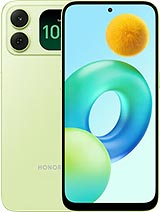
X5d s
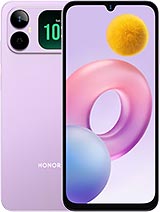
Play20A
Play 70C
X5d
N6x