Honor Play7T review
The Play7T suits someone who values screen size and battery life over sharpness, speed, or charging convenience. Skip it if you read a lot of small text, play demanding games, or expect fast charging to keep up with your pace.

This review is based on Honor’s published specifications and public benchmark data for the Honor Play7T, and the rating is spec-based. GoSolo does not physically test devices; where we estimate real-world behaviour such as battery life or charge time, we say so. How we rate phones.
Overview
The Honor Play7T is a large, long-lasting budget phone that prioritizes screen and battery size over sharpness or speed. At 150 EUR it delivers a full day of use and smooth scrolling, but the display resolution lags and charging is sluggish by 2023 standards.
Design & Build
The Play7T is a straightforward large phone: 167.5 × 76.9 × 8.3 mm, 196 g. At that weight it sits in the middleground for its size, neither light nor notably heavy. The 8.3 mm thickness is thin enough to feel modern, though the spec sheet reveals nothing about the actual materials or how it handles drops. What matters here is the form factor—it is a phone that prioritizes screen real estate and battery volume over compactness, and the dual nano-SIM slots keep it relevant for regional users who swap carriers.
Display
A 6.74-inch IPS LCD with 90Hz refresh sounds like good value until you read the resolution: 720 × 1600 pixels, 260 ppi. At this size, that is noticeable softness. Text edges blur slightly, and images lack the crispness of 1080p panels now standard at this price. The 90Hz animation does help—scrolling feels smoother than 60Hz—but it cannot hide the lower pixel density. For video and casual browsing it is acceptable; for anyone who reads small text or zooms into photos, it is a step backward compared to similarly priced rivals that have moved to 1080p or even 1440p displays.
Performance
The Dimensity 6020 is mainstream midrange: two fast Cortex-A76 cores and six efficiency cores, Mali-G57 GPU. It handles everyday tasks—messaging, calls, light browsing, social media—without lag. The 90Hz display masks some of the chip's limits; scrolling feels more fluid than the CPU alone could deliver on a 60Hz panel. Casual games like Candy Crush run fine. Asphalt 9 or Genshin Impact struggle at playable settings. Apps rarely crash, but demanding multitasking or heavy photo editing will show its age. For 2023, this is not entry-level, but it is not snappy either—it is the chip you get to keep costs down.
Software
Android 12 with Magic UI 6.1 is now two OS versions behind (this review written in 2026), which raises questions about how much longer security patches will roll in. Magic UI itself is light on bloat compared to some skins; Honor's approach is cleaner than Xiaomi or Samsung's. Side-mounted fingerprint unlock is reliable. Overall, software is functional and not intrusive, though a buyer in 2026 would expect Android 14 or 15 out of the box, even on a budget phone.
Camera
The 50MP f/1.8 main sensor with phase-detect autofocus is the standout hardware here. In daylight it captures sharp, well-exposed shots with solid color; the wide aperture helps in low light without producing excessive noise. A 5MP selfie camera is basic but adequate for video calls. Video tops out at 1080p 30fps—no 4K, no slow-motion, no stabilization mentioned—so do not expect cinematic results. The auxiliary depth lens is cosmetic. For a budget phone, the main camera punches above its weight; the limitation is software processing and the lack of zoom or ultra-wide versatility, not the sensor itself.
Battery & Charging
The 6000 mAh battery delivers honest all-day life: messaging, browsing, some video and social media will get you to bedtime. Heavier users (gaming, constant video streaming) may need a mid-afternoon top-up. The real friction is 22.5W charging, which takes 75–90 minutes to full. By 2023, rivals at 150 EUR were already offering 65W or 100W—a quarter to a third of the time. The charger is included in the box, which counts for this price, but if you are accustomed to 30-minute full charges, the Play7T will feel slow. For weekend use or if you charge overnight, it is fine; for heavy commuters, it is a nuisance.
Value & Verdict
At 150 EUR, the Play7T lands in crowded territory. It is not the fastest phone in its class, and the display resolution is a dated choice even by 2023 standards. But it trades raw specs for size and battery endurance: a large, bright screen that lasts all day, with a camera that does not feel like a budget compromise. The 3.5mm jack and included charger matter to users who care about those conveniences. It is a phone that asks you to accept trade-offs: lower pixel density for bigger screen, slower charging for all-day battery, entry-level chip for the ability to fit a 6000 mAh cell. Those trade-offs are deliberate, not accidental, and they suit someone prioritizing practical life over performance or image quality.
Verdict
The Play7T suits someone who values screen size and battery life over sharpness, speed, or charging convenience. Skip it if you read a lot of small text, play demanding games, or expect fast charging to keep up with your pace.
- 6000 mAh battery easily lasts a full day of normal use, with the 90Hz display keeping scrolling feel snappy despite the modest chip
- Large 6.74-inch screen with 85% screen-to-body ratio maximizes viewing area; ideal for video and reading on a budget
- 50MP f/1.8 main camera with phase-detect autofocus captures usable daylight and low-light shots without the typical softness of entry-level sensors
- Keeps the 3.5mm jack and ships with a charger included, genuine conveniences for the price tier
- 720×1600 resolution at 260 ppi makes text and images noticeably less sharp than 1080p rivals; a real step down on a 6.74-inch display
- 22.5W charging takes 75–90 minutes to full, slow compared to the 65W and 100W options now common at this price
- Dimensity 6020 is entry-level for 2023; handles chat and light games, but heavy apps and demanding games struggle
Honor Play7T Key Specifications
The essentials at a glance. See the full spec sheet.
| Released | 2023, March 28 |
|---|---|
| Display | 6.74 inches, 109.7 cm2 (~85.1% screen-to-body ratio), IPS LCD, 90Hz |
| Resolution | 720 x 1600 pixels, 20:9 ratio (~260 ppi density) |
| Chipset | Mediatek Dimensity 6020 (7 nm) |
| RAM & storage | 128GB 8GB RAM, 256GB 8GB RAM |
| Main camera | 50 MP, f/1.8, (wide), PDAF Auxiliary lens |
| Selfie camera | 5 MP, f/2.2, (wide) |
| Battery | 6000 mAh |
| Charging | 22.5W wired |
| Software | Android 12, Magic UI 6.1 |
| Dimensions | 167.5 x 76.9 x 8.3 mm (6.59 x 3.03 x 0.33 in) |
| Weight | 196 g (6.91 oz) |
| Network | GSM / CDMA / HSPA / EVDO / LTE / 5G |
| NFC | No |
| USB | USB Type-C 2.0, OTG |
Honor Play7T FAQ
Common questions, answered from the spec sheet.
Does the Play7T support 5G?
Yes. The Play7T supports 5G networks.
What chipset does the Play7T use?
The Play7T runs on the Mediatek Dimensity 6020 (7 nm).
What display does the Play7T have?
A 6.74 inches, 109.7 cm2 (~85.1% screen-to-body ratio) IPS LCD, 90Hz, 720 x 1600 pixels, 20:9 ratio (~260 ppi density).
How big is the Play7T battery?
The Play7T has a 6000 mAh battery. Charging is rated at 22.5W wired.
Does the Play7T have NFC?
No, the Play7T does not list NFC support.
Does the Play7T support a microSD card?
No, the Play7T does not support expandable storage.
Does the Play7T have a headphone jack?
Yes, the Play7T has a 3.5mm headphone jack.
Alternatives to consider
If the Play7T isn’t quite right, these are the closest calls.

90 Lite
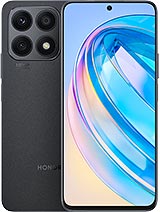
X8A 5G
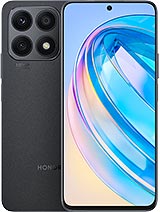
X8a
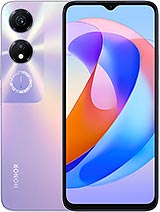
Play 40
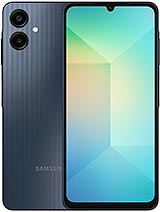
Galaxy A06