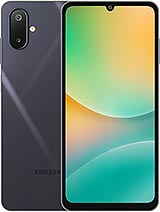
Honor Play9A review
The Play9A suits someone who needs a durable, long-running phone for calls, messaging, and light media without expecting gaming performance or fast charging. Skip it if you multitask heavily, play games, or want a sharp display—at similar prices, you can find phones with better chipsets and higher resolution, but you'll lose the battery life and offline features that define this one.
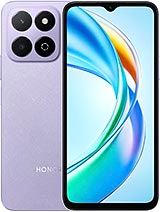
This review is based on Honor’s published specifications and public benchmark data for the Honor Play9A, and the rating is spec-based. GoSolo does not physically test devices; where we estimate real-world behaviour such as battery life or charge time, we say so. How we rate phones.
Overview
The Honor Play9A is a straightforward budget phone built for calls, messaging, and light tasks rather than gaming or heavy multitasking. Its real strengths—a 5200 mAh battery, headphone jack, FM radio, and microSD slot—matter more here than raw power, and at 80 EUR it delivers honest value for someone who wants durability and offline features, not flagship performance.
Design & build
At 194g and 8.7mm, the Play9A sits just inside normal—not light, not heavy, solid in the hand. The 83.2% screen-to-body ratio means minimal bezels and a usable 6.56" display, which is roomy for messaging and video even if the resolution won't satisfy pixel counters. Dual SIM (Nano) with a shared microSD slot is practical for regional users and mobile workers. No details on materials or finish, so assume a modest plastic build that prioritizes durability over feel; for 80 EUR, that trade-off makes sense.
Display
A 720 x 1612 LCD at 269 ppi is the budget compromise laid bare. Text and icons look soft when you hold it close or squint in direct sunlight, and there's no Gorilla Glass spec, so expect fingerprints and scratches over time. That said, the 20:9 ratio and large screen make video, e-books, and messaging comfortable enough, and TFT LCDs are reliable workhorses that don't dim in sunlight like OLED can. This is not a sharp panel, but it is legible for the price and use case.
Performance
The Helio G36 with PowerVR GE8320 GPU is entry-level silicon designed for calls, browsing, and light apps—not gaming or heavy multitasking. You'll breeze through messaging, social media, and video apps; switching between three or four open apps stays smooth. Launch a demanding 3D game or edit a video, and you'll hit lag and frame drops. 4GB RAM across all storage tiers is the soft point here; rivals at this price are moving to 6GB. For someone who does not game and uses one app at a time, this is fine. For anyone else, it is a real compromise.
Software
Android 14 with MagicOS 8 means a fresh OS foundation, but Honor's skin adds its own layer of bloat and quirks. At least you get an update path (typically 2 years of OS, 3 years of patches on Honor's mid-range track record). No sign of adware in the specs, which is not guaranteed on ultra-cheap phones. Expect a few preloaded apps you cannot remove, but the core experience is stable for basic use.
Camera
A 13MP f/1.8 main sensor with LED flash is decent for 80 EUR—the wide aperture lets in more light than usual for the price, so daytime photos hold detail and indoor flash shots are usable. The 5MP selfie camera is purely functional. 1080p@30fps video is baseline; do not expect smooth slow-motion or high bitrate. Night mode, portrait mode, and computational features are absent. This is a camera that shoots reliable snapshots and clips, not one that competes with phones double the price.
Battery & charging
A 5200 mAh battery with Helio G36's low power draw should yield a full 15–18 hours of mixed use: some screen-on, some standby, typical LTE and Wi-Fi blend. One day without a charger is the realistic promise. Charging speed is not listed, which suggests modest wattage—no 65W or 100W competition here; expect 10W or less and a full overnight charge. The trade-off is clear: larger capacity and modest power consumption over speed. For a user in a region with unreliable electricity or someone without constant access to a charger, this is a feature, not a weakness.
Value & verdict context
At 80 EUR, the Play9A competes with older flagships, other entry-level new releases, and used mid-range phones. Its deliberate choices—FM radio, headphone jack, large battery, microSD slot—point to a buyer who values durability, offline independence, and honesty over raw speed or gloss. In markets where connectivity is spotty or power is intermittent, this phone's strengths compound. In urban hubs with fast charging culture and gaming-first shopping, it reads as outdated. The Helio G36 is genuinely limiting for multitasking, and the 720p display will disappoint anyone used to sharper screens. However, if your priorities are reliability, battery life, and a no-fuss daily driver, this phone does not cut corners where it counts.
Verdict
The Play9A suits someone who needs a durable, long-running phone for calls, messaging, and light media without expecting gaming performance or fast charging. Skip it if you multitask heavily, play games, or want a sharp display—at similar prices, you can find phones with better chipsets and higher resolution, but you'll lose the battery life and offline features that define this one.
- 5200 mAh battery lasts a full day of mixed use without a charger in sight
- Headphone jack and FM radio still present; rare at this price and genuinely useful offline
- MicroSD expansion up to 512GB on most cards, so you're not locked into 64GB storage
- Side-mounted fingerprint sensor and Bluetooth 5.1 are solid for a sub-100 EUR phone
- Helio G36 chipset handles everyday apps fine but stumbles with heavy games and heavy multitasking
- 720p resolution on a 6.56" screen leaves text and icons soft in bright sun or up close
- No charger data or speed spec listed; absence suggests modest wattage, charging likely slow
Honor Play9A Key Specifications
The essentials at a glance. See the full spec sheet.
| Released | 2024, November |
|---|---|
| Display | 6.56 inches, 103.4 cm2 (~83.2% screen-to-body ratio), TFT LCD |
| Resolution | 720 x 1612 pixels, 20:9 ratio (~269 ppi density) |
| Chipset | Mediatek Helio G36 (12 nm) |
| RAM & storage | 64GB 4GB RAM, 128GB 4GB RAM, 256GB 4GB RAM |
| Main camera | 13 MP, f/1.8, (wide) Auxiliary lens |
| Selfie camera | 5 MP, f/2.2, (wide) |
| Battery | 5200 mAh |
| Software | Android 14, MagicOS 8 |
| Dimensions | 163.9 x 75.8 x 8.7 mm (6.45 x 2.98 x 0.34 in) |
| Weight | 194 g (6.84 oz) |
| Network | GSM / HSPA / LTE |
| NFC | No |
| USB | USB Type-C 2.0, OTG |
Honor Play9A FAQ
Common questions, answered from the spec sheet.
Does the Play9A support 5G?
No. The Play9A tops out at GSM / HSPA / LTE, without 5G.
What chipset does the Play9A use?
The Play9A runs on the Mediatek Helio G36 (12 nm).
What display does the Play9A have?
A 6.56 inches, 103.4 cm2 (~83.2% screen-to-body ratio) TFT LCD, 720 x 1612 pixels, 20:9 ratio (~269 ppi density).
How big is the Play9A battery?
The Play9A has a 5200 mAh battery.
Does the Play9A have NFC?
No, the Play9A does not list NFC support.
Does the Play9A support a microSD card?
Yes, the Play9A supports expandable storage (microSDXC (uses shared SIM slot)).
Does the Play9A have a headphone jack?
Yes, the Play9A has a 3.5mm headphone jack.
Alternatives to consider
If the Play9A isn’t quite right, these are the closest calls.
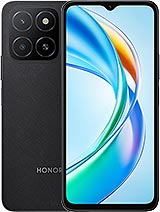
X5b
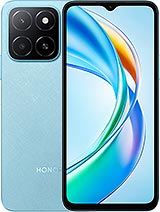
X5b Plus
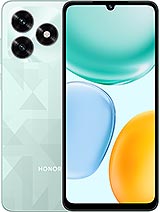
Play10A

Play 60A
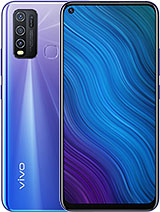
Y50 5G