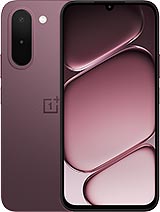
Honor X5d s review
The Honor X5d s suits buyers who need a simple phone with exceptional battery life and don't demand speed, screen clarity, or camera quality. Anyone who multitasks, plays games, or expects snappy performance should look to a midrange phone in the €150–180 range, where an extra €30–60 buys a significantly faster chip and clearer display.

This review is based on Honor’s published specifications and public benchmark data for the Honor X5d s, and the rating is spec-based. GoSolo does not physically test devices; where we estimate real-world behaviour such as battery life or charge time, we say so. How we rate phones.
Overview
The Honor X5d s is a budget Android phone built for basic daily tasks and long battery life, with a large 6.78-inch display and 6000mAh battery that define it more than its modest processor. At €120, it delivers reliable performance for messaging, browsing, and calls, but the low-resolution 256ppi screen and entry-level Unisoc chip mean demanding apps and games will struggle.
Design & build
The Honor X5d s is slim at 8.7mm and light enough at 214 grams, but the glass front paired with a plastic back and frame feels hollow, not like the durable phone it claims to be. The design is functional without flair, and the plastic back picks up fingerprints and dust easily. Build quality is acceptable for the price, but don't expect a phone that feels solid or weighty in hand—it's the opposite. The 168.3 x 78.5mm footprint is manageable even for one-handed use, despite the tall 6.78-inch panel, and the color options (Forest Green, Midnight Black, Sunrise Gold) are standard fare.
Display
The 6.78-inch TFT LCD with 90Hz refresh is the phone's strongest feature. The 90Hz make scrolling and swiping smooth, a real quality-of-life improvement on budget hardware. Brightness of 600 nits is adequate for outdoor use in most light. The problem is resolution: 720 x 1576 pixels spreads across 6.78 inches, landing at just 256ppi, which is below the sharpness threshold where your eye stops seeing individual pixels. Text is noticeably soft, icons lack definition, and photos in the gallery look compressed. For comparison, mid-range rivals at the same price now offer 720p at 6.5 inches or 1080p at 6.7 inches, making this screen feel less refined even though the refresh rate is snappy. It is not unusable, but the low pixel density is a compromise you will notice daily.
Performance
The Unisoc T610 is entry-level hardware, even for 2026. It will handle messaging, calls, and light social media, but anything beyond baseline tasks reveals its limits. Opening multiple apps causes noticeable lag, browser tabs reload often, and any app with heavy animations or real-time updates will stutter. Gaming is off the table. Android 16 Go edition helps keep the bloat down, but 4GB RAM is the real bottleneck here; most competitors in this price bracket now pair even weaker chips with 6GB. That extra 2GB makes a real difference in app responsiveness and multitasking fluidity. If you live in messaging and light browsing, you will survive; if you juggle apps or expect snappy performance, look elsewhere.
Software
Android 16 (Go edition) is the right choice for this hardware—it is lean and designed to run comfortably on modest specs. Honor's skin appears light here, so you get closer to stock Android than usual. The side-mounted fingerprint sensor is responsive and snappy. No bloat, no unnecessary launcher, no subscription prompts. The operating system is reliable and stable, which is what matters most on budget hardware. You are not getting the latest features or cutting-edge customization, but you are getting a phone that starts fast and does not slow down over time due to software weight.
Camera
The 50MP main camera is a spec-sheet win that translates poorly into real-world results. The sensor is small and lacks optical stabilization, so photos in indoor light or shade are soft and grainy. Daylight shots have acceptable detail, but colors are muted and contrast is flat. The 5MP selfie camera is basic and suitable only for video calls. Video is capped at 1080p@30fps, which is standard for budget phones but feels dated when even midrange rivals now hit 4K or slow-motion. The LED flash helps in darkness but can make skin tones look harsh. For a phone at this price, the camera is not a selling point; treat it as a necessity, not a strength.
Battery & charging
The 6000mAh battery is a high-capacity pack that provides real battery life—expect 35 to 40 hours of mixed use before a charge is needed, which is two full days for most users. This is genuine value in the budget tier, where most phones max out at one day. There is no fast charging listed (and the spec sheet does not mention a charger power figure), so refill times are slow, likely 2 to 3 hours from empty. USB Type-C 2.0 is present but does not support modern fast-charge standards. The trade-off is clear: excellent endurance paired with patience at the outlet.
Value & verdict context
At €120, the Honor X5d s is affordable, and the battery life alone justifies consideration for anyone who travels, works off-grid, or simply hates charging daily. The large 90Hz display is a bonus. However, the low-resolution screen, weak processor, and minimal RAM put a ceiling on what you can do with this phone. It is built for basic communication and web use, not for anyone who expects smooth multitasking or quality photos. The microSD slot and dedicated SIM slot are practical touches that show thinking about the user, but they do not address the core limitation: this is a phone for essential use, not a capable companion for anything demanding. For €120, it is honest value if you know what you are buying.
Verdict
The Honor X5d s suits buyers who need a simple phone with exceptional battery life and don't demand speed, screen clarity, or camera quality. Anyone who multitasks, plays games, or expects snappy performance should look to a midrange phone in the €150–180 range, where an extra €30–60 buys a significantly faster chip and clearer display.
- 6000mAh battery should deliver two full days of typical use, a genuine advantage in the budget segment where most rivals aim for one day
- Large 6.78-inch display with 90Hz refresh and decent brightness (600 nits) makes everyday browsing and video playback feel fluid and comfortable
- MicroSD card slot with dedicated slot design lets you expand storage without sacrificing the SIM, practical for a phone with only 64GB base storage
- Side-mounted fingerprint sensor and Android 16 (Go edition) keep the experience responsive despite the weak chipset
- 720x1576 resolution on a 6.78-inch screen yields just 256ppi, making text and icons noticeably soft and blurry compared to rivals at the same price
- Unisoc T610 is an older entry-level chip that will stutter and lag in any moderately demanding app or game; even basic multitasking shows strain
- 4GB RAM across both storage variants is tight even for Go Android; heavier browsers and chat apps cause visible stuttering and app reloads
Honor X5d s Key Specifications
The essentials at a glance. See the full spec sheet.
| Released | 2026, October 06 |
|---|---|
| Display | 6.78 inches, 112.1 cm2 (~84.8% screen-to-body ratio), TFT LCD, 90Hz, 600 nits |
| Resolution | 720 x 1576 pixels, 19.5:9 ratio (~256 ppi density) |
| Chipset | Unisoc T610 (12 nm) |
| RAM & storage | 64GB 4GB RAM, 128GB 4GB RAM |
| Main camera | 50 MP |
| Selfie camera | 5 MP |
| Battery | 6000 mAh |
| Software | Android 16 (Go edition) |
| Dimensions | 168.3 x 78.5 x 8.7 mm (6.63 x 3.09 x 0.34 in) |
| Weight | 214 g (7.55 oz) |
| Build | Glass front, plastic back, plastic frame |
| Network | GSM / HSPA / LTE |
| NFC | No |
| USB | USB Type-C 2.0, OTG |
Honor X5d s FAQ
Common questions, answered from the spec sheet.
Does the X5d s support 5G?
No. The X5d s tops out at GSM / HSPA / LTE, without 5G.
What chipset does the X5d s use?
The X5d s runs on the Unisoc T610 (12 nm).
What display does the X5d s have?
A 6.78 inches, 112.1 cm2 (~84.8% screen-to-body ratio) TFT LCD, 90Hz, 600 nits, 720 x 1576 pixels, 19.5:9 ratio (~256 ppi density).
How big is the X5d s battery?
The X5d s has a 6000 mAh battery.
Does the X5d s have NFC?
No, the X5d s does not list NFC support.
Does the X5d s support a microSD card?
Yes, the X5d s supports expandable storage (microSDXC (dedicated slot)).
Alternatives to consider
If the X5d s isn’t quite right, these are the closest calls.
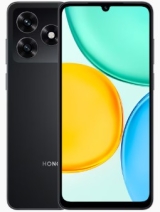
X5d
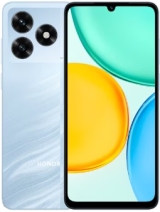
X5d Plus

X6d

Play20C
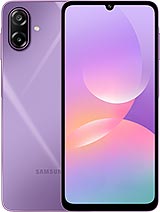
Galaxy M17e