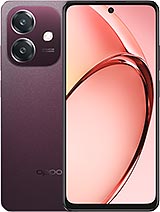
Huawei Enjoy 60 Pro review
This phone suits someone who reads, browses, and photographs in daylight, values a full day of battery over gaming power, and is buying in a market where 5G is not yet a priority. Anyone expecting performance headroom, bright outdoor visibility, or a telephoto reach should look to a midrange phone with a newer chipset instead.

This review is based on Huawei’s published specifications and public benchmark data for the Huawei Enjoy 60 Pro, and the rating is spec-based. GoSolo does not physically test devices; where we estimate real-world behaviour such as battery life or charge time, we say so. How we rate phones.
Overview
The Enjoy 60 Pro is a straightforward large-screen phone built for everyday use: solid battery life, a bright main camera, and a smooth display, held back by a weak chipset and no meaningful upgrade path. It suits someone buying in markets without 5G rollout who reads and browses more than plays, and needs a phone that simply lasts.
Design & build
At 193 grams and 8.6mm thick, the Enjoy 60 Pro is light and slim for its 6.8-inch frame, making it reasonably pocketable despite the size. The weight distribution feels balanced in hand, and the side-mounted fingerprint sensor is easy to reach without fumbling. The dual-SIM setup and microSD slot keep the door open for storage expansion, a practical touch that budget phones often skip. Build materials aren't flagship-grade, but nothing here feels cheap or creaky. The design is clean and forgettable, which suits a phone in this tier.
Display
The 6.8-inch TFT LCD with 90Hz refresh and 385 ppi density delivers a smooth, sharp daily experience. Scrolling through apps and pages feels fluid, and text stays crisp at typical viewing distances. The panel's weakness lies in direct sunlight: TFT LCDs simply cannot match the brightness and contrast of modern OLED or high-end LCDs, so you will squint outdoors or in bright rooms. The 1080p resolution is adequate for the size, but do not expect vibrant colors or the punch of an AMOLED screen. For reading, browsing, and video at night, it performs without complaint.
Performance
The Snapdragon 680 is a mainstream entry-level chip, and this phone's performance sits squarely there. Apps launch and switch without lag in everyday use, and light gaming at low settings runs smoothly. Push it harder—sustained heavy loads, high-frame-rate gaming, or bulky apps opening in sequence—and the Adreno 610 GPU shows its age with visible stutter and slowdowns. For someone who browses, reads, messages, and shoots photos, the experience is fine. For anyone expecting to run PUBG Mobile at high settings or handle video editing, look elsewhere. The 8GB RAM helps keep things snappy in day-to-day tasks, but the chipset is the bottleneck, not memory.
Software
HarmonyOS 3.0 runs smoothly on this hardware and offers most of what you would expect from a modern Android-like OS. Navigation is intuitive, and Huawei's app ecosystem has matured enough to cover common needs, though the Google Play Store integration remains a gap if you are outside mainland China. The lack of access to certain Google services is a real friction point for international buyers; Huawei's alternatives work, but they are not seamless. For users in markets where Huawei services are standard, software is unremarkable and functional.
Camera
The 50MP main sensor with f/1.8 aperture and phase-detect autofocus captures sharp, well-exposed photos in daylight and close-range work. The fast aperture helps in dim indoor light, and the LED flash provides a fallback, though it can be harsh. Where the camera shows its limits is range and motion: there is no telephoto, so distant subjects come out soft, and the 1080p@30fps video captures movement without fluidity or detail. The 8MP selfie camera is adequate for video calls and casual snaps, but do not expect portrait-mode depth or impressive low-light selfies. For a budget phone, the main camera punches above its weight; the camera system as a whole is competent but not versatile.
Battery & charging
The 5000 mAh cell easily stretches past a full day on light to moderate use, and with conservative brightness and app habits, you can eke out a day and a half. Heavy use—video streaming, gaming, constant app switching—cuts that to 6 to 8 hours of active screen time. The 40W wired charger fills the battery from zero in under an hour, which is decent for the class, though rivals at the same price now push 65W or higher. There is no wireless charging, but that is standard to skip in this tier. The main win here is that you are not chained to a outlet by mid-afternoon.
Value & verdict
At roughly 200 EUR, the Enjoy 60 Pro sits in the crowded budget segment where you must choose your priorities. It trades raw performance for battery endurance and a large, smooth screen. The lack of 5G is a non-issue in many global-south markets where rollout is limited, and the 90Hz display and all-day battery matter more than a faster chipset you will rarely max out. The camera is a genuine strength for daylight work. The main drawback is that the Snapdragon 680 is showing its age even now in 2026—a year older might see this phone struggling to handle app updates and new software. If you need a phone that lasts a full day, takes decent photos in natural light, and handles everyday tasks without fuss, the Enjoy 60 Pro delivers. If you value raw speed, gaming, or future-proofing, the gap between this and a midrange Snapdragon 7xx device is worth the extra outlay.
Verdict
This phone suits someone who reads, browses, and photographs in daylight, values a full day of battery over gaming power, and is buying in a market where 5G is not yet a priority. Anyone expecting performance headroom, bright outdoor visibility, or a telephoto reach should look to a midrange phone with a newer chipset instead.
- 5000 mAh battery lasts a full day on moderate use with breathing room
- 50MP main camera with f/1.8 aperture and autofocus handles daylight and close-ups well
- 6.8-inch 90Hz LCD keeps scrolling smooth and text sharp at 385 ppi
- 40W charging refills the battery in under an hour from empty
- Snapdragon 680 is entry-level and stutters under sustained load or gaming
- TFT LCD panel lacks brightness outdoors and cannot match OLED color depth
- No telephoto, 1080p video, and 8MP selfie mean distant or moving subjects are soft
Huawei Enjoy 60 Pro Key Specifications
The essentials at a glance. See the full spec sheet.
| Released | 2023, May |
|---|---|
| Display | 6.8 inches, 112.0 cm2 (~90.0% screen-to-body ratio), TFT LCD, 90Hz |
| Resolution | 1080 x 2388 pixels (~385 ppi density) |
| Chipset | Qualcomm SM6225 Snapdragon 680 4G (6 nm) |
| RAM & storage | 128GB 8GB RAM, 256GB 8GB RAM, 512GB 8GB RAM |
| Main camera | 50 MP, f/1.8, (wide), PDAF Auxiliary lens |
| Selfie camera | 8 MP, f/2.0, (wide) |
| Battery | 5000 mAh |
| Charging | 40W wired |
| Software | HarmonyOS 3.0 |
| Dimensions | 164.6 x 75.6 x 8.6 mm (6.48 x 2.98 x 0.34 in) |
| Weight | 193 g (6.81 oz) |
| Network | GSM / HSPA / LTE |
| NFC | No |
| USB | USB Type-C 2.0, OTG |
Huawei Enjoy 60 Pro FAQ
Common questions, answered from the spec sheet.
Does the Enjoy 60 Pro support 5G?
No. The Enjoy 60 Pro tops out at GSM / HSPA / LTE, without 5G.
What chipset does the Enjoy 60 Pro use?
The Enjoy 60 Pro runs on the Qualcomm SM6225 Snapdragon 680 4G (6 nm).
What display does the Enjoy 60 Pro have?
A 6.8 inches, 112.0 cm2 (~90.0% screen-to-body ratio) TFT LCD, 90Hz, 1080 x 2388 pixels (~385 ppi density).
How big is the Enjoy 60 Pro battery?
The Enjoy 60 Pro has a 5000 mAh battery. Charging is rated at 40W wired.
Does the Enjoy 60 Pro have NFC?
No, the Enjoy 60 Pro does not list NFC support.
Does the Enjoy 60 Pro support a microSD card?
Yes, the Enjoy 60 Pro supports expandable storage (microSDXC).
Does the Enjoy 60 Pro have a headphone jack?
Yes, the Enjoy 60 Pro has a 3.5mm headphone jack.
Alternatives to consider
If the Enjoy 60 Pro isn’t quite right, these are the closest calls.
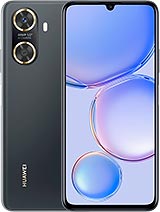
Enjoy 60

Enjoy 60X
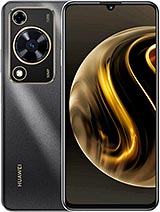
Enjoy 70

nova 11i
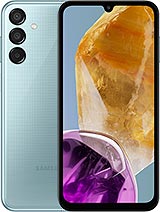
Galaxy M15 5G