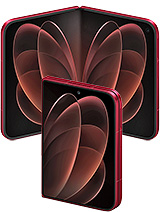
Huawei Enjoy 80 review
The Enjoy 80 suits buyers in rural or 5G-absent regions who prioritize a large, bright, long-lasting screen and durability over performance or ecosystem breadth. Those in 5G markets or who demand snappy multitasking and seamless app access should look at LTE budget rivals or save for an entry-level 5G model.
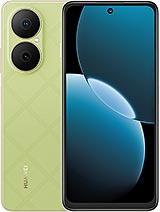
This review is written with AI assistance from Huawei’s published specifications and public benchmark data for the Huawei Enjoy 80, and the rating is spec-based. GoSolo does not physically test devices; where we estimate real-world behaviour such as battery life or charge time, we say so. How we rate phones.
Overview
The Enjoy 80 is a large-screen budget phone built for regions without 5G, delivering a bright 6.67-inch display and multi-day battery life at €140. It is straightforward and durable, though the 720p screen and missing optical zoom limit it to light daily use rather than ambitious tasks.
Design & Build
At 203g and 8.3mm thick, the Enjoy 80 is hefty by modern standards but not unusual for a 6.67-inch phone. The Aluminosilicate glass front feels more robust than budget plastic but sits below Gorilla Glass in durability. IP64 rating means it shrugs off dust and splash, though it will not survive a dive; the 1.8m drop-resistance claim is realistic for waist-height tumbles but no guarantee against a concrete smack. The side-mounted fingerprint sensor is fast and reliable for this class. Build quality feels assembled rather than engineered, but it should hold up to daily pocket wear in rough-and-tumble markets where this phone is priced.
Display
The 6.67-inch panel is the phone's main argument: large, bright, and smooth. At 1000 nits peak brightness it stays readable in direct sunlight, and 90Hz makes scrolling noticeably smoother than a 60Hz budget phone. The catch is resolution: 720 x 1604 pixels yields 264 ppi, which is visibly soft-edged compared to standard 1080p. Text in small fonts looks fuzzy, and fine details in photos lack crispness. For video and casual browsing this is liveable; for reading and detailed work it is a step down. An IPS LCD panel means colors are neutral and viewing angles are wide, which is fitting for a phone this size meant for media consumption rather than outdoor gaming.
Performance
Huawei does not publish the chipset for this model, which is telling: it is clearly a budget part, likely a MediaTek or Huawei Kirin from an older generation. With 8GB RAM across all storage tiers, everyday tasks (messaging, social media, video) run smoothly enough, but sustained gaming or heavy multitasking will cause stuttering. This is not a phone for heavy lifting. For light social use it is competent; for power users it will feel sluggish. Expect it to age gracefully only if you do not demand much from it.
Software
HarmonyOS 4.0 is Huawei's own OS, built to work around US sanctions that cut access to Google Play services. Within Huawei's walled garden, the OS runs smoothly and respects battery. Outside it, your app ecosystem is limited. WhatsApp, Telegram, and most essentials are available through Huawei's AppGallery, but app gaps are real, and the learning curve is steep if you are used to Android. For buyers in regions where Huawei phones are common (Southeast Asia, Middle East, Africa), this is normal; for others, it is a friction point worth testing before committing.
Camera
The 50MP f/1.8 main camera with PDAF does well in daylight: detail is sharp, and the wide aperture lifts low-light shots above the budget mean. HDR and panorama modes work as expected. The 8MP selfie camera is ordinary and fine for video calls. Video caps out at 1080p@30fps with no stabilization or zoom mentioned, which is standard budget fare but feels dated beside rivals offering 4K or gimbal-like stabilization. For day-to-day photos and social-media stories it is sufficient; for anything beyond that you will feel the limits.
Battery & Charging
The 6620mAh cell is large, and real-world estimates suggest 1.5 to 2 days on moderate use (browsing, messaging, some video). Heavy users will land closer to a single day. Charging at 40W takes about 50 to 70 minutes flat to full, which is respectable for this tier—quick enough for a lunch-hour top-up but not so aggressive that it risks battery wear. There is no wireless charging (standard at this price), and reverse charging exists but is a gimmick at 5W. For a phone this size built for two-day battery, the charging speed strikes a realistic balance.
Value & Verdict-Context
At €140 this phone addresses a real gap: large, bright, long-lasting, and tough, in regions without 5G. The 720p display and missing network feel like cuts to hit a price point, not engineering neglect. Against rival budget phones at this price, the Enjoy 80 competes on screen size and battery, not raw horsepower or camera prowess. It is deliberately built for light social use in developing markets where a two-day battery and durability matter more than flagship aspirations. The lack of 5G is a stone around its neck in markets rolling out 5G infrastructure, but in rural or offline-heavy regions it is irrelevant.
Verdict
The Enjoy 80 suits buyers in rural or 5G-absent regions who prioritize a large, bright, long-lasting screen and durability over performance or ecosystem breadth. Those in 5G markets or who demand snappy multitasking and seamless app access should look at LTE budget rivals or save for an entry-level 5G model.
- 6.67-inch 90Hz display with 1000 nits peak brightness makes it usable in bright sun and a genuine pleasure for video
- 6620mAh battery delivers 1.5–2 days on moderate use without gaming or social-media binges
- Large storage options (up to 512GB) with no microSD slot means buyers get room for apps, photos, and downloads at purchase
- IP64 durability plus 1.8m drop rating and Aluminosilicate glass suit rough handling in developing markets
- 720p resolution on a 6.67-inch screen means text and fine details look soft-edged compared to standard 1080p at this size
- No 5G and undisclosed chipset signal a dated platform that will feel sluggish under sustained load or future app demands
- HarmonyOS 4.0 creates app gaps and friction for users outside Huawei's ecosystem, particularly in Western markets
Huawei Enjoy 80 Key Specifications
The essentials at a glance. See the full spec sheet.
| Released | 2025, April 22 |
|---|---|
| Display | 6.67 inches, 107.2 cm2 (~84.3% screen-to-body ratio), IPS LCD, 90Hz, 1000 nits (peak) |
| Resolution | 720 x 1604 pixels, 20:9 ratio (~264 ppi density) |
| RAM & storage | 128GB 8GB RAM, 256GB 8GB RAM, 512GB 8GB RAM |
| Main camera | 50 MP, f/1.8, (wide), PDAF |
| Selfie camera | 8 MP, f/2.0, (wide) |
| Battery | 6620 mAh |
| Charging | 40W wired5W reverse wired |
| Software | HarmonyOS 4.0 |
| Dimensions | 166 x 76.6 x 8.3 mm (6.54 x 3.02 x 0.33 in) |
| Weight | 203 g or 206 g (7.16 oz) |
| Durability | IP64 dust tight and water resistant (water splashes) Drop resistant up to 1.8m |
| Network | GSM / HSPA / LTE |
| NFC | No |
| USB | USB Type-C 2.0, OTG |
Huawei Enjoy 80 FAQ
Common questions, answered from the spec sheet.
Does the Enjoy 80 support 5G?
No. The Enjoy 80 tops out at GSM / HSPA / LTE, without 5G.
What display does the Enjoy 80 have?
A 6.67 inches, 107.2 cm2 (~84.3% screen-to-body ratio) IPS LCD, 90Hz, 1000 nits (peak), 720 x 1604 pixels, 20:9 ratio (~264 ppi density).
How big is the Enjoy 80 battery?
The Enjoy 80 has a 6620 mAh battery. Charging is rated at 40W wired5W reverse wired.
Does the Enjoy 80 have NFC?
No, the Enjoy 80 does not list NFC support.
Is the Enjoy 80 water resistant?
The Enjoy 80 carries a IP64 dust tight and water resistant (water splashes) Drop resistant up to 1.8m rating.
Does the Enjoy 80 support a microSD card?
No, the Enjoy 80 does not support expandable storage.
Does the Enjoy 80 have a headphone jack?
No, the Enjoy 80 does not have a 3.5mm headphone jack.
Alternatives to consider
If the Enjoy 80 isn’t quite right, these are the closest calls.
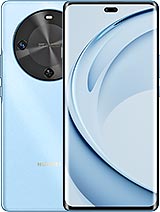
Enjoy 70X Energy
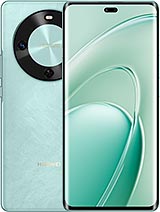
Enjoy 70X
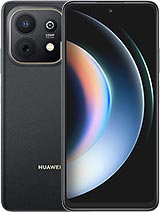
Enjoy 90
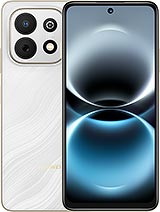
Enjoy 90 Plus
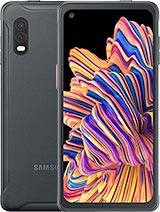
Galaxy XCover 7 Pro