Huawei Mate 60 review
The Mate 60 suits buyers in China and parts of Southeast Asia where HarmonyOS has critical app support and 5G networks are still not ubiquitous. For everyone else—most of the Global South, Europe, the US—the absence of 5G plus the Google Services lockout make it a poor choice, no matter how solid the charging speed or display.
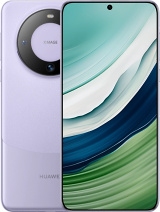
This review is based on Huawei’s published specifications and public benchmark data for the Huawei Mate 60, and the rating is spec-based. GoSolo does not physically test devices; where we estimate real-world behaviour such as battery life or charge time, we say so. How we rate phones.
Overview
The Mate 60 is a large, capable phone built for Huawei's core markets where HarmonyOS has traction. The Kirin 9000S handles daily work and gaming smoothly, the display is bright and fluid, and 66W charging fills the battery in 30 minutes—but no 5G and lack of Google services limit it outside China and Southeast Asia.
Design & Build
At 209 grams and 8mm thick, the Mate 60 is not particularly slim or light for a 6.69-inch phone. The glass front, aluminum frame, and glass back feel sturdy, and IP68 water resistance up to 4 meters for 30 minutes is table stakes for this class. Huawei's Kunlun Glass 2 is their own strengthened option, but it does not outshine Gorilla Glass or comparable rivals by any measurable margin. The phone sits solidly in hand, though the weight stacks up after extended use and it will not slip into jean pockets as easily as lighter competitors. For durability alone, it holds up well; for ergonomics, it is average.
Display
The 6.69-inch LTPO OLED panel at 1216 x 2688 resolution delivers about 441 pixels per inch, which is sharp enough for text and photos without obvious pixelation. The 120Hz refresh rate makes scrolling through apps and social feeds visibly smoother than 60Hz rivals, and LTPO adaptive refresh is a smart battery saver that ramps down to lower frequencies when you are reading static content. Colors are punchy and blacks are true blacks, as OLED always delivers. For everyday use the display is a strength, though it does not stand out in a market where OLED at 120Hz is now standard for mid-to-high-end phones.
Performance
The Kirin 9000S is Huawei's own flagship-class chip at 7nm, built around proprietary Taishan cores rather than Arm's standard designs. It handles day-to-day tasks—messaging, browsing, video streaming—with no lag, and demanding games like Genshin Impact run at high settings without stuttering. The octa-core setup mixes one high-performance core at 2.62 GHz, three mid-range cores at 2.15 GHz, and four efficiency cores, a sensible balance for thermal management. For a 2023 phone, this is solid in-house performance. It will not outrace the latest Snapdragon or Exynos flagships, but it was not meant to; it delivers consistent, capable performance within Huawei's ecosystem.
Software
HarmonyOS 4.0 is Huawei's homegrown operating system, built as an alternative to Android after US sanctions cut off Google services. For users in China and parts of Southeast Asia, it works well and has grown a usable app store. Outside those regions, it is a significant handicap. There is no Google Play Store, no Gmail built-in, no Google Maps—you rely on Huawei's own ecosystem, regional alternatives, or sideloading. If you are outside Huawei's core markets and rely on Google services, this phone forces you to either find workarounds or accept second-rate alternatives. Within China, HarmonyOS has critical mass; globally, it remains a barrier.
Camera
The main camera is a 50MP sensor with a variable f/1.4-f/4.0 aperture and optical image stabilization, which is a strong base for daylight and low-light capture. The f/1.4 aperture lets in more light than many rivals, reducing reliance on computational noise reduction in dim scenes. The 12MP periscope telephoto at 125mm with 5x optical zoom is genuinely useful for framing distant subjects without digital interpolation, and OIS steadies shots at that focal length. The 12MP ultrawide at 120 degrees is respectable but unremarkable. The color spectrum sensor helps white balance, though results are competent rather than exceptional. Video tops out at 4K 60fps, standard for the class. The camera is capable and well-balanced, but not class-leading; rivals in the same price band offer comparable optical performance and software-driven enhancements that sometimes produce more vivid results.
Battery & Charging
The 4750 mAh battery with 66W wired charging is a highlight. The phone charges from zero to full in roughly 30 minutes, one of the faster times at this price point. Wireless charging at 50W adds about 25 to 35 minutes if you skip the cable. For battery life, 4750 mAh is not exceptional by today's standards; expect about 1.5 to 2 days of mixed use (messaging, browsing, video), dropping to a single day under heavy gaming or streaming. The LTPO display helps stretch endurance, but the battery size itself is unremarkable. Fast charging is the story here, not capacity.
Connectivity & Value
Here is the core problem: no 5G. The Mate 60 supports only LTE, which in 2026 is becoming a relic in most developed markets and even in growing economies where 5G rollout is well underway. This is a glaring omission for a 2023 flagship at 750 EUR. WiFi 6 is present, and dual-band GPS with Galileo and multiple frequency support helps location lock in challenging urban environments. NFC is there for payments. For a user in China where 5G rollout was slower and HarmonyOS apps are native, this phone made sense at launch; for a global buyer, the lack of 5G is disqualifying. Combined with HarmonyOS's limited app ecosystem outside China, the Mate 60 is a regional phone with global pricing.
Verdict
The Mate 60 suits buyers in China and parts of Southeast Asia where HarmonyOS has critical app support and 5G networks are still not ubiquitous. For everyone else—most of the Global South, Europe, the US—the absence of 5G plus the Google Services lockout make it a poor choice, no matter how solid the charging speed or display.
- 66W wired charging reaches full in 30 minutes, faster than most rivals at this price
- LTPO OLED display runs at 120Hz and scales refresh intelligently to save battery during static content
- 50MP main camera with f/1.4 aperture and OIS captures detail in low light and daylight without relying on computational tricks
- Kirin 9000S is a solid in-house chip that handles demanding games and everyday apps without stutter
- No 5G at all—LTE only—making it already dated for 2026, especially outside China where carriers have moved on
- HarmonyOS 4.0 means no Google Play Store; app ecosystem outside Huawei's circle is thin for most of the world
- 209g and 8mm thick makes it heavier and bulkier than most rivals with similar screen sizes
Huawei Mate 60 Key Specifications
The essentials at a glance. See the full spec sheet.
| Released | 2023, August 29 |
|---|---|
| Display | 6.69 inches, 108.4 cm2 (~88.4% screen-to-body ratio), LTPO OLED, 1B colors, 120Hz |
| Resolution | 1216 x 2688 pixels (~441 ppi density) |
| Chipset | Kirin 9000S (7 nm) |
| RAM & storage | 256GB 12GB RAM, 512GB 12GB RAM, 1TB 12GB RAM |
| Main camera | 50 MP, f/1.4-f/4.0, 24mm (wide), PDAF, OIS 12 MP, f/3.4, 125mm (periscope telephoto), PDAF, OIS, 5x optical zoom 12 MP, f/2.2, 13mm, 120˚ (ultrawide), PDAF |
| Selfie camera | 13 MP, f/2.4, 18mm (ultrawide) |
| Battery | 4750 mAh |
| Charging | 66W wired, 100% in 30 min50W wireless5W reverse wireless |
| Software | HarmonyOS 4.0 |
| Dimensions | 161.4 x 76 x 8 mm (6.35 x 2.99 x 0.31 in) |
| Weight | 209 g (7.37 oz) |
| Build | Glass front, aluminum frame, glass back |
| Durability | IP68 dust tight and water resistant (immersible up to 4m for 30 min) |
| Network | GSM / CDMA / HSPA / CDMA2000 / LTE |
| NFC | Yes |
| USB | USB Type-C 3.1, OTG, Display Port 1.2 |
Huawei Mate 60 FAQ
Common questions, answered from the spec sheet.
Does the Mate 60 support 5G?
No. The Mate 60 tops out at GSM / CDMA / HSPA / CDMA2000 / LTE, without 5G.
What chipset does the Mate 60 use?
The Mate 60 runs on the Kirin 9000S (7 nm).
What display does the Mate 60 have?
A 6.69 inches, 108.4 cm2 (~88.4% screen-to-body ratio) LTPO OLED, 1B colors, 120Hz, 1216 x 2688 pixels (~441 ppi density).
How big is the Mate 60 battery?
The Mate 60 has a 4750 mAh battery. Charging is rated at 66W wired, 100% in 30 min50W wireless5W reverse wireless.
Does the Mate 60 have NFC?
Yes, the Mate 60 has NFC.
Is the Mate 60 water resistant?
The Mate 60 carries a IP68 dust tight and water resistant (immersible up to 4m for 30 min) rating.
Does the Mate 60 support a microSD card?
Yes, the Mate 60 supports expandable storage (Nano Memory (uses shared SIM slot)).
Does the Mate 60 have a headphone jack?
No, the Mate 60 does not have a 3.5mm headphone jack.
Alternatives to consider
If the Mate 60 isn’t quite right, these are the closest calls.
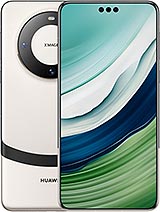
Mate 60 Pro
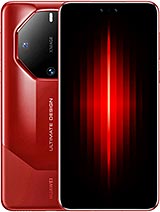
Mate 60 RS Ultimate
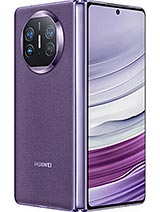
Mate X5
Mate X3
Galaxy S23 FE