Huawei Mate 60 RS Ultimate review
If you are in China or unconcerned by the absence of Google services, this phone's battery endurance and 3.5x optical zoom justify the cost. For global buyers, the ageing chip, weight, and ecosystem friction make it a poor value next to lighter, faster flagships that cost the same.
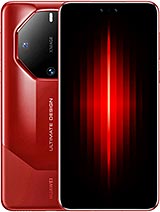
This review is based on Huawei’s published specifications and public benchmark data for the Huawei Mate 60 RS Ultimate, and the rating is spec-based. GoSolo does not physically test devices; where we estimate real-world behaviour such as battery life or charge time, we say so. How we rate phones.
Overview
The Mate 60 RS Ultimate is a large, heavy flagship built for endurance and zoom reach, not speed. If you live in China or prize 5G and all-day battery over bleeding-edge gaming and app performance, it delivers; otherwise, the lack of Google services and a slightly aging chipset make it a harder sell outside its home market.
Design & Build
At 163.7 by 79 by 8.1mm and 242–246 grams, the Mate 60 RS is a substantial phone—heavier than most current flagships and notably bulkier than what many buyers expect from a flagship in 2026. The weight is real and noticeable after a few hours of use; it is not uncomfortable, but it is not light. Build quality is solid: IP68 rating means it survives six metres of fresh water for half an hour, and Huawei's Kunlun Glass 2 front is tougher than standard glass. The design is functional and understated, with a large camera bump and minimal bezels around the 6.82-inch screen. For users accustomed to phones under 220 grams, this will feel like a step up in mass; for those coming from older flagships, it is familiar.
Display
The 6.82-inch LTPO OLED screen is bright, smooth, and adaptive. At 1260 by 2720 pixels and 440ppi, pixel density is not exceptional, but the tall 19.5:9 aspect ratio and 88.5% screen-to-body ratio mean you get a lot of usable display. The 120Hz refresh is standard for flagships now, but the LTPO curve—which drops refresh dynamically when you are reading static content—actually delivers battery benefit without stuttering. Kunlun Glass 2 adds scratch and impact resistance over ordinary glass, a practical upgrade if you do not use a case. Viewing angles are wide, blacks are true, and colour accuracy is solid without saturation tricks. This is a display that earns its size without feeling wasteful.
Performance
The Kirin 9000S is a high-end 7nm chip that handles everyday apps, messaging, browsing, and light gaming without lag. For a 2023 design, it still has headroom. However, by 2026 standards, it is visibly behind current-generation flagships from other makers. Demanding 3D games at high settings will see frame drops where newer chips hold steady; benchmarks confirm it, and you will feel it in sustained sessions. The 16GB RAM pairs well with the chip, and the UFS 3.1 storage is fast for file transfers and app launch. For users who browse, message, and shoot photos, the difference is imperceptible; for mobile gamers with high expectations, this is a year or two old in real-world performance.
Software
HarmonyOS 4.0 is slick, responsive, and built for the Chinese market. Outside China, it is a significant friction point. There is no Google Play Store, Gmail, or Maps built in; you are reliant on Huawei's AppGallery and third-party workarounds, which are possible but clunky. If you are in China or comfortable sideloading and using regional alternatives, this is less of a barrier. If you need Google Drive sync, Google Photos, or just want to install apps as easily as on Android elsewhere, this phone becomes frustrating. HarmonyOS itself is polished and intuitive, but the app ecosystem is the real trade-off. Within its intended market, it is excellent; outside it, it is a dealbreaker for most.
Camera
The main camera is a 48MP f/1.4–f/4.0 wide lens with optical image stabilisation and phase-detect autofocus; the variable aperture helps in low light without overstating things. The 48MP sensor is capable but not exceptional by current standards—48MP is now common, and sensor size matters more than the pixel count. The standout is the 3.5x optical zoom telephoto at 90mm with laser autofocus and OIS; this reaches further than many flagship ultra-tele lenses and locks focus quickly even in dim scenes. The 40MP ultrawide at 120 degrees is solid for landscapes. Video capture runs to 4K at 60fps and slow-motion modes up to 960fps at 720p. Overall, this is a well-rounded triple camera that prioritises zoom and low-light reach over ultra-wide or ultra-high resolution—practical rather than experimental.
Battery & Charging
The 5000mAh battery is the standout. On mixed use—browsing, messaging, light video—expect about 18 to 22 hours; light use can push it to 24 hours or more. Heavy gaming or continuous video playback drains it in 12 to 15 hours, which is still a full day in most scenarios. The 88W wired charger is the fastest in its class and brings the battery from empty to full in roughly 30 minutes; that speed is practical and not a marketing trick, as 50mAh cells often charge slower. The 50W wireless option is slower but convenient if you dock it regularly. This is one of the few phones at this price where you can skip charging during a full day without anxiety, a real advantage in markets with inconsistent power infrastructure.
Value & Verdict
At around 1550 EUR, the Mate 60 RS is pricey for a 2023 chip in 2026. Within China, it is a solid flagship with class-leading battery and zoom. Outside China, the lack of Google services is a hard barrier for most buyers; you are paying flagship prices for a phone that cannot connect to the global app ecosystem without friction. The camera, display, and charging are genuinely strong, but the performance is a year behind, and the weight might bother you after the first few days. For global markets, there are lighter, faster, and more integrated alternatives at the same price. For users in China or those comfortable with HarmonyOS and AppGallery, it is a capable everyday phone that lasts longer than rivals.
Verdict
If you are in China or unconcerned by the absence of Google services, this phone's battery endurance and 3.5x optical zoom justify the cost. For global buyers, the ageing chip, weight, and ecosystem friction make it a poor value next to lighter, faster flagships that cost the same.
- 5000mAh battery lasts a full day on mixed use and over 24 hours on light duty—meaningful at this size and price
- 88W wired charging fills it in 30 minutes, fastest in its class and practical for the capacity
- 3.5x optical zoom telephoto with laser autofocus handles distant subjects without the crop-and-noise of digital zoom
- 6.82-inch 120Hz LTPO OLED display is large and responsive, with smart frame-rate scaling to preserve battery
- No Google Play Store or Western app ecosystem outside China; heavy reliance on Huawei's AppGallery and workarounds
- Kirin 9000S, though fast for everyday tasks, lags current flagships in demanding games and benchmarks—a 2023 chip in a 2026 market
- 242–246g makes it noticeably heavier than flagship rivals; not unwieldy, but you feel it in the hand and pocket over a full day
Huawei Mate 60 RS Ultimate Key Specifications
The essentials at a glance. See the full spec sheet.
| Released | 2023, September 25 |
|---|---|
| Display | 6.82 inches, 114.4 cm2 (~88.5% screen-to-body ratio), LTPO OLED, 1B colors, 120Hz |
| Resolution | 1260 x 2720 pixels, 19.5:9 ratio (~440 ppi density) |
| Chipset | Kirin 9000S (7 nm) |
| RAM & storage | 512GB 16GB RAM, 1TB 16GB RAM |
| Main camera | 48 MP, f/1.4-f/4.0, 24mm (wide), PDAF, OIS 48 MP, f/3.0, 90mm (periscope telephoto), PDAF, OIS, 3.5x optical zoom 40 MP, f/2.2, 13mm, 120˚ (ultrawide), PDAF |
| Selfie camera | 13 MP, f/2.4, 18mm (ultrawide) TOF 3D, (depth/biometrics sensor) |
| Battery | 5000 mAh |
| Charging | 88W wired, 100% in 30 min50W wireless20W reverse wireless |
| Software | HarmonyOS 4.0 (China) |
| Dimensions | 163.7 x 79 x 8.1 mm (6.44 x 3.11 x 0.32 in) |
| Weight | 242 g or 246 g (8.54 oz) |
| Durability | IP68 dust tight and water resistant (immersible up to 6m for 30 min) |
| Network | GSM / CDMA / HSPA / CDMA2000 / LTE / 5G |
| NFC | Yes |
| USB | USB Type-C 3.1, OTG, DisplayPort 1.2 |
Huawei Mate 60 RS Ultimate FAQ
Common questions, answered from the spec sheet.
Does the Mate 60 RS Ultimate support 5G?
Yes. The Mate 60 RS Ultimate supports 5G networks.
What chipset does the Mate 60 RS Ultimate use?
The Mate 60 RS Ultimate runs on the Kirin 9000S (7 nm).
What display does the Mate 60 RS Ultimate have?
A 6.82 inches, 114.4 cm2 (~88.5% screen-to-body ratio) LTPO OLED, 1B colors, 120Hz, 1260 x 2720 pixels, 19.5:9 ratio (~440 ppi density).
How big is the Mate 60 RS Ultimate battery?
The Mate 60 RS Ultimate has a 5000 mAh battery. Charging is rated at 88W wired, 100% in 30 min50W wireless20W reverse wireless.
Does the Mate 60 RS Ultimate have NFC?
Yes, the Mate 60 RS Ultimate has NFC.
Is the Mate 60 RS Ultimate water resistant?
The Mate 60 RS Ultimate carries a IP68 dust tight and water resistant (immersible up to 6m for 30 min) rating.
Does the Mate 60 RS Ultimate support a microSD card?
Yes, the Mate 60 RS Ultimate supports expandable storage (Nano Memory (uses shared SIM slot)).
Does the Mate 60 RS Ultimate have a headphone jack?
No, the Mate 60 RS Ultimate does not have a 3.5mm headphone jack.
Alternatives to consider
If the Mate 60 RS Ultimate isn’t quite right, these are the closest calls.
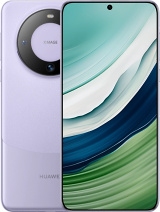
Mate 60
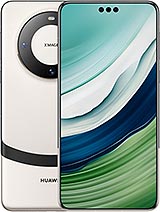
Mate 60 Pro
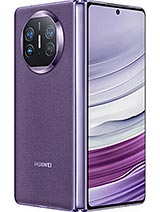
Mate X5
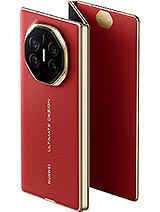
Mate XT Ultimate
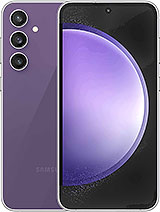
Galaxy S23 FE