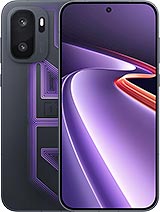
Huawei Mate 80 review
Suits buyers who prioritize durability and battery life over performance benchmarks, especially those near water or outdoors, or living in markets where HarmonyOS is established. Everyone else should weigh whether the loss of Google services and the narrower app ecosystem is worth the IP68 protection and 5750 mAh capacity—it often is not for international customers on a tighter budget.
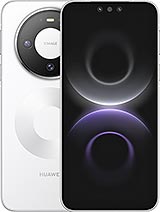
This review is written with AI assistance from Huawei’s published specifications and public benchmark data for the Huawei Mate 80, and the rating is spec-based. GoSolo does not physically test devices; where we estimate real-world behaviour such as battery life or charge time, we say so. How we rate phones.
Overview
The Mate 80 is a large, flat-screened flagship with a reliable build, strong all-day battery, and a solid camera system that keeps practical strengths over spec-sheet flash. At 570 EUR it sits in a crowded middle ground where its IP68 durability and LTPO OLED screen stand out more than its Kirin 9020 performance, which is capable but no longer a headline draw for this price.
Design & Build
At 217 grams and 8 mm thin, the Mate 80 is light for its 6.75-inch footprint and sits flat in the hand thanks to the aluminum rail. Glass front, plastic back (glass-fiber reinforced), and an aluminum frame is a sensible cost-down from all-glass rivals, though it doesn't feel cheap. The flat edges and squared shoulders feel modern, and the slimness is the phone's best visual trick. IP68/IP69 is the real story here: immersible to 6 meters for 30 minutes, it laughs at splashes and accidental dips where flagship rivals demand more care. Kunlun Glass 2 adds scratch and drop resilience. For buyers who spend time outdoors, kayaking, or in dusty climates, this build is built to outlast.
Display
The 6.75-inch LTPO OLED is the Mate 80's clearest strength. 1280 x 2832 resolution reaches 460 ppi—sharp enough for text, photos, and video at normal viewing distance. LTPO dynamic refresh from as low as 1 Hz to 120 Hz stretches battery life noticeably without feeling sluggish, and the panel's HDR Vivid mode is genuinely bright outdoors, which matters on a phone this size. The 1440 Hz PWM eliminates flicker for sensitive eyes. It is not the sharpest or fastest OLED you can buy at this price (some rivals cram higher ppi or 144 Hz refresh), but it balances visual quality, responsiveness, and efficiency well.
Performance
The Kirin 9020 is a capable chip for a 2025 flagship, with its octa-core configuration and 7 nm process handling everyday work smoothly and gaming at respectable frame rates. Messaging, streaming, social media, and light multitasking feel frictionless. Demanding 3D games run at high settings with stable frame rates, though some demanding titles at max settings may dip below 60 fps depending on the game. In raw GPU metrics, the Maleoon 920 trails the latest Snapdragon and MediaTek flagship GPUs released alongside it, and you will notice the gap in back-to-back A/B gaming tests. For most buyers, it is plenty. For mobile gamers chasing every fps and planning to keep this phone for three years, know that rivals offer more sustained performance headroom.
Software
HarmonyOS 6.0 is Huawei's closed ecosystem replacement for Android, and it ships without Google services or the Google Play Store. In China and select markets, this is seamless; internationally, it is a friction point. The AppGallery alternative store works but has fewer apps and missing third-party support compared to Android. Banking, messaging, and everyday apps are usually there, but niche tools, social platforms, and games are hit-and-miss. Sideloading and APK installation are options but add friction for buyers used to plug-and-play Android. If you live outside China and rely on a specific app ecosystem, test compatibility before buying. Within HarmonyOS's walls, the OS itself is responsive, customizable, and stable.
Camera
The rear stack is straightforward and solid. The 50 MP f/1.4 main sensor with OIS and laser autofocus is the workhorse, handling daylight shots with good detail and low-light photos with minimal noise. The 12 MP periscope telephoto at 125 mm (5.5x optical zoom) adds reach for framing without the quality loss of digital zoom—a practical step up from the ultrawide. The 40 MP 120-degree ultrawide rounds out the set but is not notably stronger or weaker than rivals. Video maxes out at 4K with stabilization and HDR, plus 1080p at 240 fps for slow-motion—useful but not cutting-edge. The front 13 MP ultrawide for selfies is adequate. The color spectrum sensor (which adjusts white balance) is a thoughtful addition but not a game-changer. You will not mistake this for a Galaxy S25 Ultra or a Pixel's processing prowess, but it is reliable and covers most shooting scenarios without compromise.
Battery & Charging
5750 mAh is a large capacity, and it pays off: with moderate use (a few hours of screen time daily), the Mate 80 easily skips a day of charging and can stretch into the second day. Heavy use (continuous video, gaming, or navigation) brings that down to a full day or slightly less, which is still respectable for a 6.75-inch phone. The LTPO display helps considerably by scaling refresh when the screen is static. Wired charging tops out at 66 W, reaching a full charge in roughly 40 to 50 minutes; wireless at 50 W takes 15 to 20 minutes longer. Rivals now offer 100 W+ wired and faster wireless, so the Mate 80 is middle-of-the-road here, not slow but not an advantage.
Value & Verdict
At 570 EUR, the Mate 80 stacks up as a competent flagship in a crowded year. Its real wins are durability (IP68/IP69 is rare at this price), battery longevity, the bright LTPO display, and a functional camera system. The Kirin 9020 keeps pace with daily work and gaming but does not lead the pack. HarmonyOS outside China is a genuine barrier for some buyers, and 66 W charging feels incremental now. If you live in China or a market with mature HarmonyOS support, and you value outdoor toughness and all-day battery over the latest performance crown, this phone makes sense. For buyers in Western markets who need Google services and the full Android app ecosystem, or who want the fastest chip for the money, look at Snapdragon alternatives or last-year's flagships.
Verdict
Suits buyers who prioritize durability and battery life over performance benchmarks, especially those near water or outdoors, or living in markets where HarmonyOS is established. Everyone else should weigh whether the loss of Google services and the narrower app ecosystem is worth the IP68 protection and 5750 mAh capacity—it often is not for international customers on a tighter budget.
- 6.75-inch LTPO OLED display with 120Hz, adaptive refresh, and bright outdoor usability—a genuine asset for a phone this size
- 5750 mAh battery that lasts a full day with moderate use and into the second day without stress, outpacing typical rivals at this price
- IP68/IP69 durability (waterproof to 6 meters) plus Kunlun Glass 2 for real peace of mind outdoors or near water—rare to find this level of protection at 570 EUR
- 50 MP f/1.4 wide camera with OIS and the 5.5x periscope zoom cover most everyday shooting without compromise
- 66W wired charging, while fast, lags behind 100W+ rivals now common at this price point and climbs slower than competitors in tests
- Kirin 9020 is solid for daily work but cedes ground to Snapdragon 8 Gen 2 Ultra and rival flagship chips released this year in raw GPU power and gaming headroom
- HarmonyOS 6 ecosystem remains fragmented outside China; app store selection and third-party support trail Android in many regions, a real friction point for international buyers
Huawei Mate 80 Key Specifications
The essentials at a glance. See the full spec sheet.
| Released | 2025, November 25 |
|---|---|
| Display | 6.75 inches, 110.3 cm2 (~89.7% screen-to-body ratio), LTPO OLED, 1B colors, 120Hz, 1440Hz PWM, HDR Vivid |
| Resolution | 1280 x 2832 pixels (~460 ppi density) |
| Chipset | Kirin 9020 (7 nm) |
| RAM & storage | 256GB 12GB RAM, 512GB 12GB RAM, 512GB 16GB RAM |
| Main camera | 50 MP, f/1.4-f/4.0, 24mm (wide), PDAF, OIS 12 MP, f/3.4, 125mm (periscope telephoto), PDAF, OIS, 5.5x optical zoom 40 MP, f/2.2, 13mm, 120˚ (ultrawide), PDAF |
| Selfie camera | 13 MP, f/2.0, 18mm (ultrawide), AF TOF 3D, (depth/biometrics sensor) |
| Battery | 5750 mAh |
| Charging | SuperCharge up to 66 W, Wireless: Charger power 50 W |
| Software | HarmonyOS 6.0 |
| Dimensions | 161.9 x 76 x 8 mm (6.37 x 2.99 x 0.31 in) |
| Weight | 217 g (7.65 oz) |
| Build | Glass front, aluminum frame, glass-fiber reinforced plastic back |
| Durability | IP68/IP69 dust tight and water resistant (high pressure water jets; immersible up to 6m for 30 min) |
| Network | GSM / CDMA / HSPA / CDMA2000 / LTE / 5G |
| NFC | Yes |
| USB | USB Type-C 3.1, OTG, DisplayPort 1.2 |
Huawei Mate 80 FAQ
Common questions, answered from the spec sheet.
Does the Mate 80 support 5G?
Yes. The Mate 80 supports 5G networks.
What chipset does the Mate 80 use?
The Mate 80 runs on the Kirin 9020 (7 nm).
What display does the Mate 80 have?
A 6.75 inches, 110.3 cm2 (~89.7% screen-to-body ratio) LTPO OLED, 1B colors, 120Hz, 1440Hz PWM, HDR Vivid, 1280 x 2832 pixels (~460 ppi density).
How big is the Mate 80 battery?
The Mate 80 has a 5750 mAh battery. Charging is rated at SuperCharge up to 66 W, Wireless: Charger power 50 W.
Does the Mate 80 have NFC?
Yes, the Mate 80 has NFC.
Is the Mate 80 water resistant?
The Mate 80 carries a IP68/IP69 dust tight and water resistant (high pressure water jets; immersible up to 6m for 30 min) rating.
Does the Mate 80 support a microSD card?
No, the Mate 80 does not support expandable storage.
Alternatives to consider
If the Mate 80 isn’t quite right, these are the closest calls.
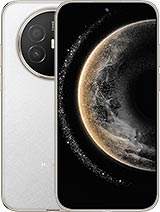
Mate 70 Air
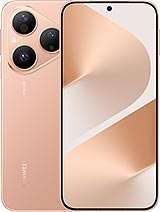
Pura 80
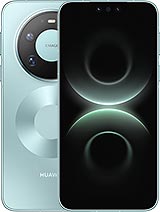
Mate 80 Pro Max
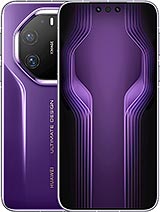
Mate 80 RS
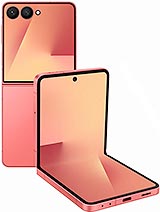
Galaxy Z Flip7