Huawei Mate 80 Pro review
This phone suits anyone who prioritizes durability, wireless convenience, and telephoto reach over raw processing grunt and screen finesse—particularly buyers in regions where Huawei's ecosystem makes sense. Those chasing gaming performance, peak display quality, or lighter everyday carry should spend the same money on a Snapdragon or MediaTek flagship instead.
This review is written with AI assistance from Huawei’s published specifications and public benchmark data for the Huawei Mate 80 Pro, and the rating is spec-based. GoSolo does not physically test devices; where we estimate real-world behaviour such as battery life or charge time, we say so. How we rate phones.
Overview
The Mate 80 Pro is a water-resistant workhorse with a tall 6.75-inch OLED screen, punchy 100W charging, and enough performance for everyday tasks, though its Kirin processor lags behind Snapdragon and MediaTek flagships in raw gaming power. It suits buyers who value durability and wireless convenience over processing muscle, but those chasing gaming or computational speed should look elsewhere.
Design & build
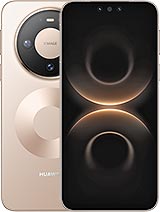
At 219 grams and 8mm thick, the Mate 80 Pro is genuinely heavy and feels more like a tablet than a modern flagship phone. The aluminum frame and glass front-and-back construction are standard, but the glass-fiber reinforced plastic rear cuts cost compared to all-glass rivals. IP68/IP69 certification goes further than most: it survives submersion to 6 meters for 30 minutes and can handle high-pressure water jets, making it one of the most durable flagships for outdoor and underwater work. Kunlun Glass 2 is Huawei's own protective coating, tougher than typical Gorilla Glass but not a game changer in real-world drops. The phone fits two Nano-SIMs but no expandable storage, standard for 2025. If you plan to pocket this daily, the weight will nag you; if you want a bulletproof device, the durability pays dividends.
Display
The 6.75-inch LTPO OLED panel is bright, punchy, and deep-blacks are genuine—OLED always delivers there. At 1280×2832 pixels and 460 ppi density, text clarity is adequate for most users but noticeably grainy compared to 500+ ppi flagships when you zoom in. The 120Hz refresh, anchored by 1440Hz PWM for flicker control, makes scrolling through email and social feeds smooth and responsive. HDR Vivid support means Netflix and YouTube content looks rich, though this screen does not push Samsung or Apple's peak brightness. For a 6.75-inch phone, the resolution trade-off (higher pixels would tax battery harder) makes sense, but it is still a compromise you will see in icons and fine typography.
Performance
The Kirin 9030 Pro—a high-end but non-cutting-edge chip—powers the top-tier 512GB 16GB and 1TB 16GB variants; lower storage tiers get the weaker Kirin 9030. Both are competent for email, messaging, photo editing, and streaming, with no stutter in daily use. Where they stumble is sustained gaming: Genshin Impact and PUBG Mobile run at reduced detail and 30–60 fps on high settings, whereas Snapdragon 8 Elite and MediaTek Dimensity 9400 flagships hold higher fidelity longer. The Maleoon 935 GPU is respectable but simply not in the same league. If you never play demanding games, this is a non-issue; if you do, the processor will bottleneck you compared to true flagship rivals at this price.
Software
The Mate 80 Pro ships with EMUI 15 (international markets) or HarmonyOS 6.0 (China). Both are Android-adjacent and work without Google Play Services in most regions outside China, which complicates app access for international buyers relying on Gmail, Drive, and other Google services. In China, HarmonyOS 6.0 offers deep ecosystem integration with Huawei's cloud and cross-device features. EMUI 15 on international variants aims for a broader app ecosystem but still carries some friction if you live outside China and depend on Google's core services. This is less a flaw and more a reality for Huawei devices post–US ban: choose carefully depending on your region and whether you can live with Huawei's App Gallery or alternative app stores.
Camera
The 50MP wide with f/1.4–f/4.0 and OIS is the workhorse; it captures balanced exposures and handles low light better than faster but smaller sensors thanks to the variable aperture and optical stabilization. The 48MP periscope telephoto at 93mm with 4x optical zoom is the standout: laser autofocus locks fast, and the zoom avoids the cropping and quality loss of digital zooms, making it genuinely useful for portraits and distant subjects. The 40MP ultrawide covers 120 degrees but suffers from typical ultrawide distortion and lacks the optical quality of the main sensor. Video is capable—4K with gyro-EIS and OIS, plus 1080p at 240fps for slow-motion—but nothing remarkable compared to flagship rivals. The 13MP selfie with TOF depth sensor handles video calls and portraits adequately. Color rendering is warm and natural rather than oversaturated, which appeals to some but may feel dull versus Google and Samsung's tuning.
Battery & charging
The 5750 mAh battery paired with the LTPO OLED screen delivers roughly 1.5 to 2 days of mixed use (messaging, social media, some video) on a single charge; heavy gaming or constant 120Hz use drops it to a single day. That is not exceptional for a 2025 flagship, but adequate for most. The headline here is charging: 100W wired SuperCharge reaches a full charge in roughly 25–40 minutes depending on thermal conditions, and 80W wireless adds convenience without a cable—both top-tier for a non-flagship-maximum tier. If you commute daily and have 30 minutes in the morning, you will rarely dip below 80% battery. Thermal management under heavy load does throttle charging speed, so expect the high end of that range in summer.
Value & verdict
At around 900 EUR, the Mate 80 Pro sits in the flagship zone but does not command flagship performance or display density. It is priced as a premium device yet hamstrung by a processor that lags Snapdragon 8 Elite rivals at the same cost. The weight and thickness also feel dated against lighter 2025 flagships. What you gain is durability (IP68/IP69), wireless charging (80W is rare), and an excellent periscope telephoto—strengths that appeal to specific buyers. The international software situation is a real friction point if you rely on Google services; make sure EMUI 15's app ecosystem works for you before committing. For buyers in regions where HarmonyOS integrates well, the equation shifts favorably. Otherwise, you are paying flagship money for a high-end mid-range processor in a heavy chassis.
Verdict
This phone suits anyone who prioritizes durability, wireless convenience, and telephoto reach over raw processing grunt and screen finesse—particularly buyers in regions where Huawei's ecosystem makes sense. Those chasing gaming performance, peak display quality, or lighter everyday carry should spend the same money on a Snapdragon or MediaTek flagship instead.
- 100W wired and 80W wireless charging speeds leave most rivals behind at this price
- IP68/IP69 rating with Kunlun Glass 2 survives serious abuse—water jets, submersion, drops
- Tall 6.75-inch LTPO OLED display with 460 ppi is sharp for reading and video; 120Hz scrolling feels smooth
- Periscope telephoto with 4x optical zoom and laser autofocus handles portrait and distant subjects without cropping
- Kirin 9030 Pro, while capable, underperforms Snapdragon 8 Elite and MediaTek Dimensity flagship rivals in sustained gaming and compute-heavy apps
- At 219g and 8mm thick, it is chunky and heavy for a 2025 flagship—noticeable in one hand over hours
- Only 460 ppi density on a 6.75-inch 2025 flagship feels behind; text edges show roughness that sharper rivals do not
Huawei Mate 80 Pro Key Specifications
The essentials at a glance. See the full spec sheet.
| Released | 2025, November 25 |
|---|---|
| Display | 6.75 inches, 110.3 cm2 (~89.7% screen-to-body ratio), LTPO OLED, 1B colors, 120Hz, 1440Hz PWM, HDR Vivid |
| Resolution | 1280 x 2832 pixels (~460 ppi density) |
| Chipset | Kirin 9030 Pro (6 nm) (512GB / 1TB 16GB RAM)Kirin 9030 (6 nm) (256GB / 512GB 12GB RAM) |
| RAM & storage | 256GB 12GB RAM, 512GB 12GB RAM, 512GB 16GB RAM, 1TB 16GB RAM |
| Main camera | 50 MP, f/1.4-f/4.0, 24mm (wide), PDAF, OIS 48 MP, f/2.1, 93mm (periscope telephoto), PDAF, OIS, 4x optical zoom 40 MP, f/2.2, 13mm, 120˚ (ultrawide), PDAF |
| Selfie camera | 13 MP, f/2.0, 18mm (ultrawide), AF TOF 3D, (depth/biometrics sensor) |
| Battery | 5750 mAh |
| Charging | SuperCharge up to 100 W, Wireless: Charger power 80 W |
| Software | EMUI 15 (International), HarmonyOS 6.0 (China) |
| Dimensions | 161.9 x 76 x 8 mm (6.37 x 2.99 x 0.31 in) |
| Weight | 219 g (7.72 oz) |
| Build | Glass front, aluminum frame, glass-fiber reinforced plastic back |
| Durability | IP68/IP69 dust tight and water resistant (high pressure water jets; immersible up to 6m for 30 min) |
| Network | GSM / CDMA / HSPA / CDMA2000 / LTE / 5G |
| NFC | Yes |
| USB | USB Type-C 3.1, OTG, DisplayPort 1.2 |
Huawei Mate 80 Pro FAQ
Common questions, answered from the spec sheet.
Does the Mate 80 Pro support 5G?
Yes. The Mate 80 Pro supports 5G networks.
What chipset does the Mate 80 Pro use?
The Mate 80 Pro runs on the Kirin 9030 Pro (6 nm) (512GB / 1TB 16GB RAM)Kirin 9030 (6 nm) (256GB / 512GB 12GB RAM).
What display does the Mate 80 Pro have?
A 6.75 inches, 110.3 cm2 (~89.7% screen-to-body ratio) LTPO OLED, 1B colors, 120Hz, 1440Hz PWM, HDR Vivid, 1280 x 2832 pixels (~460 ppi density).
How big is the Mate 80 Pro battery?
The Mate 80 Pro has a 5750 mAh battery. Charging is rated at SuperCharge up to 100 W, Wireless: Charger power 80 W.
Does the Mate 80 Pro have NFC?
Yes, the Mate 80 Pro has NFC.
Is the Mate 80 Pro water resistant?
The Mate 80 Pro carries a IP68/IP69 dust tight and water resistant (high pressure water jets; immersible up to 6m for 30 min) rating.
Does the Mate 80 Pro support a microSD card?
No, the Mate 80 Pro does not support expandable storage.
Alternatives to consider
If the Mate 80 Pro isn’t quite right, these are the closest calls.
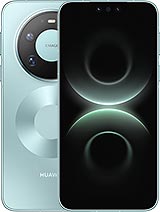
Mate 80 Pro Max
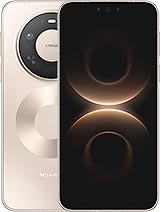
Mate 80 Pro Max Wind
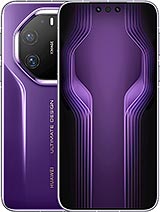
Mate 80 RS
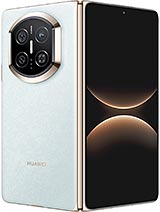
Mate X7
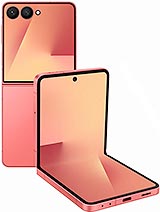
Galaxy Z Flip7