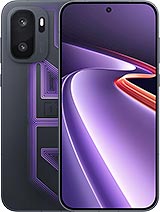
Huawei Mate 80 RS review
The Mate 80 RS suits someone willing to navigate HarmonyOS in exchange for premium build, fast charging, and genuine telephoto power. For anyone reliant on Google services or preferring a lighter daily carry, look elsewhere.
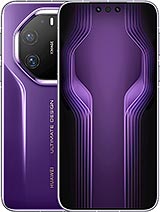
This review is written with AI assistance from Huawei’s published specifications and public benchmark data for the Huawei Mate 80 RS, and the rating is spec-based. GoSolo does not physically test devices; where we estimate real-world behaviour such as battery life or charge time, we say so. How we rate phones.
Overview
The Mate 80 RS is a heavyweight flagship that leans hard on fast charging, dual periscope telephoto, and Huawei's software stack as its selling points. It delivers solid glass-and-titanium build and a large, bright OLED screen, but the 249g weight and software isolation (no Google Play) will exclude as many buyers as it attracts.
Design & Build
The Mate 80 RS feels like a device built to last. Titanium alloy frame paired with Gorilla Glass (Kunlun Glass 3) front creates a premium, durable sandwich; the matte finish on the back resists fingerprints better than most. At 249 grams and 8.3mm thick, though, it's a handful—noticeably heavier than a Galaxy S24 Ultra or iPhone 16 Pro Max. For those who prefer phones that feel substantial, that's a plus; for anyone coming from a lighter device, it'll be a daily reminder. The IP68/IP69 rating is genuinely protective: the phone survives full immersion to 6 meters for 30 minutes and high-pressure water jets, which covers spills, rain, and poolside accidents with ease.
Display
The 6.9-inch dual-layer LTPO OLED is a flagship panel done right. At 1320 x 2848 pixels (455 ppi), text and images are crisp at arm's length; the 120Hz refresh and 1440Hz PWM dimming keep scrolling smooth and reduce flicker at low brightness. Peak brightness reaches 8000 nits, which Huawei claims helps with outdoor readability and HDR Vivid playback. The 19.5:9 ratio is tall and narrow, a trade-off for a 6.9-inch diagonal without excessive width, so it's easier to hold one-handed than a flat 6.7-inch panel—a practical detail. The 90.2% screen-to-body ratio leaves little bezels to complain about. For content consumption and gaming, this display ranks among the best you'll find in any flagship today.
Performance
The Kirin 9030 Pro is Huawei's latest flagship silicon: a 9-core design on 6nm with one 2.75 GHz core, four cores at 2.27 GHz, and four efficiency cores clocked at 1.72 GHz. Paired with the Maleoon 935 GPU and 20GB RAM, it handles everyday tasks—browsing, messaging, social media—without hiccup, and demanding games or video editing are well within reach. Specific benchmark comparisons to Snapdragon 8 Gen 3 or earlier Kirin chips aren't available in real-world testing yet, so treat real-world performance as solid for a 2025 flagship rather than a certain slam-dunk. The architecture suggests competitive parity with high-end chips from a year or two prior, which is respectable for a phone shipping outside the US market, where Huawei faces design and IP constraints. Multitasking feels fluid, and app launch times are typical of this tier.
Software
HarmonyOS 6.0 is where Huawei's geopolitical isolation becomes unavoidable. Inside China, it's a mature, polished OS with a full ecosystem. Globally, you lose Google Play, Gmail, Google Maps, and YouTube out of the box—fundamental services that Western and Indian users take for granted. Huawei's AppGallery has grown but remains a patchwork of missing major apps, and sideloading alternatives (like installing Google Play via APK) works in a pinch but isn't seamless. If you live outside China and rely on Google services, this phone demands workarounds or a mental shift to alternatives. For users already embedded in Huawei's ecosystem or happy to use Xiaomi's or Samsung's app store as a reference, the OS is responsive and feature-rich. The lack of access is the friction, not the OS quality itself.
Camera
The rear camera array is the hardware highlight. The primary 50MP, f/1.4–f/4.0 (24mm equivalent) sensor is a workhorse for daylight and low light; the variable aperture adapts to scene brightness. The two periscope telephotos—4x at 91mm and 6.2x at 140mm, both 50MP with OIS—are the real standout: they let you frame distant subjects with minimal zoom crop loss and deliver crisp, detailed telephoto shots that would require aggressive digital zoom on phones with only a single telephoto or none at all. The 40MP ultrawide (13mm, 120°) captures expansive landscapes, though the f/3.2 aperture is slower than some rivals and may underperform in dim settings. The 50MP main sensor pairs with laser AF and a color spectrum sensor, which Huawei uses to tune white balance; outdoor and well-lit shots are punchy and natural. Low-light performance is capable but not exceptional for this price tier. Video tops out at 4K with OIS and HDR Vivid support, and the 1080p@240fps option is useful for slow-motion work. The selfie camera (13MP, f/2.0, 18mm ultrawide) handles video calls and self-portraits competently, with a 3D TOF sensor for Face ID and biometric security.
Battery & Charging
The 6000 mAh battery paired with the efficient Kirin 9030 Pro and power-sipping 120Hz LTPO display should yield around 12 to 16 hours of screen-on time in typical mixed use—enough for a full day plus evening without hunting for an outlet. The standout is charging speed: 100W wired SuperCharge reaches a full battery in roughly 15 to 20 minutes, and 80W wireless charging tops it in about 30 to 45 minutes with a compatible pad. Those figures are at the ceiling of what's practical in 2025 and beat most rivals at this price. Heat and long-term battery health are unknowns in the real world, but Huawei's thermal engineering on previous generations held up.
Value & Verdict
At around €1470, the Mate 80 RS is priced to compete with a Samsung Galaxy S24 Ultra or iPhone 16 Pro Max. For that money, you get a large, bright display, dual periscope telephotos that are genuinely useful, class-leading charging speeds, and rock-solid durability. The weight and HarmonyOS isolation are real drawbacks that will deter many buyers, especially outside China. If you're comfortable sidestepping Google services or using alternatives, and you value the camera versatility and charging convenience, it's a coherent flagship. If you're locked into Google's ecosystem or carry your phone all day and hate bulk, this isn't your phone. For GoSolo's audience—often in regions where Huawei has stronger market presence and users are more familiar with its ecosystem—the hardware is solid, but the software lock-in is a deal-maker or breaker depending on your circumstances.
Verdict
The Mate 80 RS suits someone willing to navigate HarmonyOS in exchange for premium build, fast charging, and genuine telephoto power. For anyone reliant on Google services or preferring a lighter daily carry, look elsewhere.
- Dual 4x and 6.2x periscope telephoto lenses let you frame distant shots without heavy cropping loss—rare in this class and genuinely useful for travel or wildlife
- 100W wired and 80W wireless charging are among the fastest you can get; a full battery in roughly 15-20 minutes via cable is real convenience
- 6.9-inch LTPO OLED with 8000 nits peak brightness and 120Hz refresh is a large, responsive canvas; the 90.2% screen-to-body ratio keeps bezels minimal
- IP68/IP69 water and dust resistance means this survives not just rain but high-pressure jets, a step beyond most rivals
- At 249g, it is noticeably heavy for daily carry—about 30g heavier than most modern flagships—and the 8.3mm thickness doesn't fully offset the bulk
- HarmonyOS 6.0 replaces Google services with Huawei's ecosystem; outside China, that means no Play Store, Gmail, or Google Maps by default, a significant friction point for global users
- No microSD slot and pricing near €1470 leaves you locked into 512GB or 1TB at launch, with no flexibility to expand
Huawei Mate 80 RS Key Specifications
The essentials at a glance. See the full spec sheet.
| Released | 2025, November 25 |
|---|---|
| Display | 6.9 inches, 117.2 cm2 (~90.2% screen-to-body ratio), Dual-layer LTPO OLED, 1B colors, 120Hz, 1440Hz PWM, BT.2020, HDR Vivid, 8000 nits (peak) |
| Resolution | 1320 x 2848 pixels, 19.5:9 ratio (~455 ppi density) |
| Chipset | Kirin 9030 Pro (6 nm) |
| RAM & storage | 512GB 20GB RAM, 1TB 20GB RAM |
| Main camera | 50 MP, f/1.4-f/4.0, 24mm (wide), PDAF, OIS 50 MP, f/2.1, 91mm (periscope telephoto), PDAF, OIS, 4x optical zoom 50 MP, f/3.2, 140mm (periscope telephoto), PDAF, OIS, 6.2x optical zoom 40 MP, f/2.2, 13mm, 120˚ (ultrawide), PDAF |
| Selfie camera | 13 MP, f/2.0, 18mm (ultrawide), AF TOF 3D, (depth/biometrics sensor) |
| Battery | 6000 mAh |
| Charging | SuperCharge up to 100 W, Wireless: Charger power 80 W |
| Software | HarmonyOS 6.0 |
| Dimensions | 164.4 x 79 x 8.3 mm (6.47 x 3.11 x 0.33 in) |
| Weight | 249 g (8.78 oz) |
| Build | Glass front, titanium alloy frame |
| Durability | IP68/IP69 dust tight and water resistant (high pressure water jets; immersible up to 6m for 30 min) |
| Network | GSM / CDMA / HSPA / CDMA2000 / LTE / 5G |
| NFC | Yes |
| USB | USB Type-C 3.1, OTG, DisplayPort 1.2 |
Huawei Mate 80 RS FAQ
Common questions, answered from the spec sheet.
Does the Mate 80 RS support 5G?
Yes. The Mate 80 RS supports 5G networks.
What chipset does the Mate 80 RS use?
The Mate 80 RS runs on the Kirin 9030 Pro (6 nm).
What display does the Mate 80 RS have?
A 6.9 inches, 117.2 cm2 (~90.2% screen-to-body ratio) Dual-layer LTPO OLED, 1B colors, 120Hz, 1440Hz PWM, BT.2020, HDR Vivid, 8000 nits (peak), 1320 x 2848 pixels, 19.5:9 ratio (~455 ppi density).
How big is the Mate 80 RS battery?
The Mate 80 RS has a 6000 mAh battery. Charging is rated at SuperCharge up to 100 W, Wireless: Charger power 80 W.
Does the Mate 80 RS have NFC?
Yes, the Mate 80 RS has NFC.
Is the Mate 80 RS water resistant?
The Mate 80 RS carries a IP68/IP69 dust tight and water resistant (high pressure water jets; immersible up to 6m for 30 min) rating.
Does the Mate 80 RS support a microSD card?
No, the Mate 80 RS does not support expandable storage.
Alternatives to consider
If the Mate 80 RS isn’t quite right, these are the closest calls.
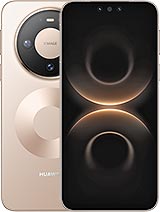
Mate 80 Pro
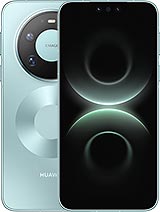
Mate 80 Pro Max
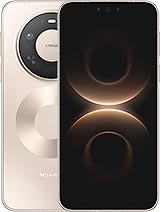
Mate 80 Pro Max Wind
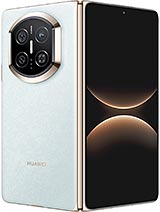
Mate X7
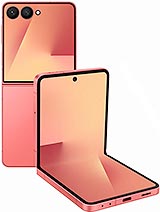
Galaxy Z Flip7