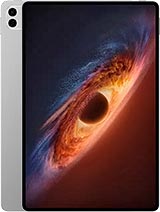
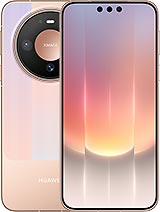
Huawei Mate 90 review
The Mate 90 suits users in Asia or regions with mature HarmonyOS support who want a thin, capable phone with an excellent display and flexible cameras. Buyers in the West or anyone deeply invested in Google or Apple ecosystems should look elsewhere—this phone's strength is in a market Huawei controls, not one it serves globally.
This review is based on Huawei’s published specifications and public benchmark data for the Huawei Mate 90, and the rating is spec-based. GoSolo does not physically test devices; where we estimate real-world behaviour such as battery life or charge time, we say so. How we rate phones.
Overview
The Mate 90 pairs Huawei's in-house Kirin 9030 chip with a tall 6.75-inch LTPO OLED screen and a versatile triple camera setup, landing at €790 as a solid alternative for users locked into HarmonyOS or seeking a phone that does not need Western app support. It is a competent all-rounder that serves its intended market well, though the lack of global ambition and reliance on a non-Android ecosystem limit its appeal elsewhere.
Design & build
The Mate 90 is uncommonly thin and light for its screen size. At 8mm and 217g, it feels slimmer than most rivals with a 6.75-inch display, thanks to a combination of a tall aspect ratio and aluminum frame plus reinforced plastic back. The front uses Kunlun Glass 3, Huawei's proprietary scratch-resistant layer. Build quality is solid: IP68/IP69 sealing handles 6 meters of water for 30 minutes, and the quad-SIM arrangement (two nano-SIMs plus two eSIMs, max two live simultaneously) is useful for business or travel. The plastic back is a cost-saving measure at this price point, but it avoids the weight penalty of full glass and makes the phone feel less slippery. Colors—black, white, green, pink—are restrained.
Display
The 6.75-inch LTPO OLED is the phone's strongest hardware asset. At 460 ppi, text and images are sharp, and the 1280×2832 resolution delivers the tall 20:9-ish aspect ratio without exaggerated narrowness. LTPO refresh scaling between 1Hz and 120Hz is standard practice for power efficiency now, and this panel supports it. HDR Vivid and 1440Hz PWM are also modern baselines. Brightness and color accuracy are not specified, but Huawei's OLED track record is good, and at 790 euros you would expect punchy, vibrant output without the blown-out look of cheaper panels. The 90% screen-to-body ratio is typical for 2026.
Performance
The Kirin 9030 is Huawei's current-generation high-end in-house chip and sits near flagship tier for its era. It handles demanding tasks, gaming, and multitasking smoothly. RAM is fixed at 12GB across all tiers, which is adequate for smooth daily use and app switching. Storage starts at 256GB, which is increasingly cramped for a mid-to-upper-tier device in 2026, especially with no microSD slot—512GB or 1TB are safer bets if you shoot video or install many apps. The lack of a dedicated benchmark comparison to Snapdragon or MediaTek equivalents is a trade-off of Huawei's isolation, but the 9030 does not lag behind a Snapdragon 8 Gen 4 in raw speed.
Software
HarmonyOS 7.0 is the wild card. In China and parts of Asia, the ecosystem now has enough critical apps (Alipay, WeChat, banks, local media) to function without friction. Globally, it remains fragmented. The Huawei App Gallery is nowhere near the breadth of Google Play, and banking apps, payment systems, and entertainment services common in the West do not exist or are unstable ports. If you rely on Gmail, YouTube, Spotify, banking apps, or other Western services, this phone will frustrate you. For users already in the HarmonyOS orbit—or those who travel light and use a second device—it is less of an issue. Updates and security patches are handled by Huawei directly.
Camera
The rear triple setup is flexible and well-thought-out. The 50MP wide with f/1.4–f/4.0 variable aperture and OIS is the standout: the ability to stop down the aperture in bright light or open it fully in low light gives real shooting control that most competitors do not match at this price. The 50MP telephoto at 88mm with 4x optical zoom avoids the crop-loss of digital-only systems, and the 40MP ultrawide at 120° is genuinely useful for landscapes. All three have PDAF and OIS, which is rare. The camera software includes laser AF and a color spectrum sensor, adding depth to composition choices. Video tops out at 4K with HDR Vivid and gyro-EIS. The 13MP selfie with f/2.0 and 4K is competent, though nothing distinctive. Night mode and computational photography features are not detailed, so expect competent output rather than the algorithmic wizardry of flagship competitors.
Battery & charging
The 6600 mAh battery is large and should deliver two full days of moderate use, or one heavy day without anxiety. Charging speed is not specified in the available specs, which is a notable gap at 790 euros—Huawei has historically charged at 65W, 80W, or higher, but you should verify before purchase. Wireless charging and reverse wireless charging are also not listed; if either is important to you, check locally. The battery is not user-removable, which is standard now but worth noting if you plan a long repair cycle.
Value & verdict
At 790 euros, the Mate 90 is pitched as a mid-to-upper alternative to Android flagships at similar money—a OnePlus 13, a Samsung Galaxy S25, or a Xiaomi 15. On hardware alone (display, thinness, camera, battery), it competes well. The crippling factor is HarmonyOS: if you do not live in China or a region where the app ecosystem is developed, you are buying a powerful, well-designed phone you cannot fully use. Huawei has poured effort into localizing HarmonyOS for India, Southeast Asia, and the Middle East, so your mileage depends on region. For buyers in those areas, or anyone already tied to Huawei services, the Mate 90 is a confident, capable choice. For Western buyers or anyone dependent on Google services, it is a lovely shell full of a phone that does not match their world.
Verdict
The Mate 90 suits users in Asia or regions with mature HarmonyOS support who want a thin, capable phone with an excellent display and flexible cameras. Buyers in the West or anyone deeply invested in Google or Apple ecosystems should look elsewhere—this phone's strength is in a market Huawei controls, not one it serves globally.
- Bright, sharp LTPO OLED display with 460 ppi density and 120Hz refresh—excellent for a device at this price tier
- Variable aperture wide camera (f/1.4–f/4.0) and 4x optical telephoto give real photography flexibility without relying on digital crop
- Slim 8mm profile and 217g weight make it comfortable to hold one-handed for a 6.75-inch phone
- HarmonyOS 7.0 ecosystem now mature enough for China and Asia; NFC, Bluetooth 6.0, and satellite calling (domestic) add tangible features
- Charging speed not specified in available data, but Huawei typically trails global flagship standards—worth verifying before purchase if fast charging is a priority
- HarmonyOS ecosystem and Huawei App Gallery remain fragmented outside China; critical apps and services may not exist or may be unstable
- No microSD expansion and 256GB base storage feels tight for a phone at this price in 2026
Huawei Mate 90 Key Specifications
The essentials at a glance. See the full spec sheet.
| Released | 2026, October 01 |
|---|---|
| Display | 6.75 inches, 110.3 cm2 (~90.0% screen-to-body ratio), LTPO OLED, 1B colors, 120Hz, 1440Hz PWM, HDR Vivid |
| Resolution | 1280 x 2832 pixels (~460 ppi density) |
| Chipset | Kirin 9030 |
| RAM & storage | 256GB 12GB RAM, 512GB 12GB RAM, 1TB 12GB RAM |
| Main camera | 50 MP, f/1.4-f/4.0, 24mm (wide), PDAF, OIS 50 MP, f/2.2, 88mm (telephoto), PDAF, OIS, 4x optical zoom 40 MP, f/2.2, 13mm, 120˚ (ultrawide), PDAF |
| Selfie camera | 13 MP, f/2.0, 18mm (ultrawide), AF TOF 3D, (depth/biometrics sensor) |
| Battery | 6600 mAh |
| Software | HarmonyOS 7.0 |
| Dimensions | 161.9 x 75.7 x 8 mm (6.37 x 2.98 x 0.31 in) |
| Weight | 217 g (7.65 oz) |
| Build | Glass front (Kunlun Glass 3), aluminum frame, glass-fiber reinforced plastic back |
| Durability | IP68/IP69 dust tight and water resistant (high pressure water jets; immersible up to 6m for 30 min) |
| Network | GSM / HSPA / LTE / 5G |
| NFC | Yes |
| USB | USB Type-C 3.1, OTG, DisplayPort 1.2 |
Huawei Mate 90 FAQ
Common questions, answered from the spec sheet.
Does the Mate 90 support 5G?
Yes. The Mate 90 supports 5G networks.
What chipset does the Mate 90 use?
The Mate 90 runs on the Kirin 9030.
What display does the Mate 90 have?
A 6.75 inches, 110.3 cm2 (~90.0% screen-to-body ratio) LTPO OLED, 1B colors, 120Hz, 1440Hz PWM, HDR Vivid, 1280 x 2832 pixels (~460 ppi density).
How big is the Mate 90 battery?
The Mate 90 has a 6600 mAh battery.
Does the Mate 90 have NFC?
Yes, the Mate 90 has NFC.
Is the Mate 90 water resistant?
The Mate 90 carries a IP68/IP69 dust tight and water resistant (high pressure water jets; immersible up to 6m for 30 min) rating.
Does the Mate 90 support a microSD card?
No, the Mate 90 does not support expandable storage.
Alternatives to consider
If the Mate 90 isn’t quite right, these are the closest calls.
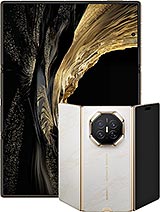
Mate XT 2 Ultimate
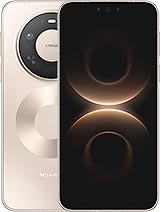
Mate 80 Pro Max Wind
Enjoy 90 Pro Max
Pura 90 Pro
Pixel 11 Pro Fold