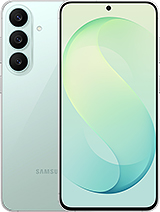
Huawei Mate 90 Air review
The Mate 90 Air suits someone who wants a large, stylus-supporting slab for productivity and doesn't mind or benefits from HarmonyOS—primarily China-focused buyers or specialists in Huawei's ecosystem. For anyone else, the closed app environment and missing charge-speed details create enough friction that you should cross-shop iPad Mini or Galaxy Tab models first.
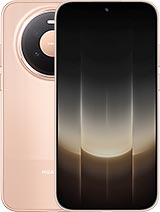
This review is based on Huawei’s published specifications and public benchmark data for the Huawei Mate 90 Air, and the rating is spec-based. GoSolo does not physically test devices; where we estimate real-world behaviour such as battery life or charge time, we say so. How we rate phones.
Overview
The Mate 90 Air is Huawei's answer to a compact folding tablet: a 7-inch slab with a sharp OLED screen, solid performance, and a sensible camera setup that doesn't pretend to be more than it is. It's built for people who want a bigger canvas without the fold mechanism, though the form factor and stylus support will matter far more to buyers than the incremental spec bumps.
Design & Build
At 165 × 81.4 mm and 6.6 mm thick, the Mate 90 Air is a brick: slim on paper, but at 208 grams it's a noticeable heft for extended holding. The form factor is a straight response to folding tablets—no moving parts, just a large flat screen you can grip and use. IP68/IP69 rating and stylus support are genuine additions that matter for someone sketching or working outdoors, not just marketing. Kunlun Glass looks solid on spec, though its resistance to scratches versus standard Gorilla Glass in real-world use remains to be seen. The dual nano-SIM design locks you into Huawei's ecosystem; there is no eSIM flexibility here.
Display
A 7-inch LTPO OLED screen at 1320 × 2760 is the core of this device's appeal. The 439 ppi density is not retina-sharp by modern standards—noticeably grainier than a typical flagship phone's 450+ ppi—but legible for reading and video. 120Hz refresh and 2160Hz PWM dimming are competent for smooth scrolling and flicker-free viewing at low brightness. Peak brightness of 4000 nits is a headline figure, though typical outdoor use likely sits well below that; HDR Vivid support suggests Huawei is pushing content contrast, which works well for video but can look unnatural in photos. The 90.8% screen-to-body ratio is decent, though a 7-inch device this size inherently means chunky bezels compared to smaller phones.
Performance
The Kirin 9020 (7 nm) positions this as a solid performer, not a gaming flagship. Its octa-core design with a 2.5 GHz top speed and Maleoon 920 GPU is capable of handling multitasking, media playback, and app switching without hitches. For 2026, this is a capable mid-to-upper chipset, offering enough headroom for HarmonyOS's demands without over-engineering for a productivity slab. Battery life will matter more than raw MHz here, and without explicit performance benchmarks yet available, real-world usage on the 6500 mAh cell will be the true test. Gaming performance is not the draw—this is for work and content consumption.
Software
HarmonyOS 7.0 is the sticking point. Huawei's homegrown OS has matured, and app support within China is extensive, but outside China it remains a puzzle. No Google Play Store means you are confined to Huawei's AppGallery and sideloading, which is a friction point for anyone relying on mainstream banking, social media, or productivity apps from the West. For markets where HarmonyOS has local app partnerships—Southeast Asia, parts of Europe—the experience is passable. For others, it is a dealbreaker. Users outside China should ask hard questions about app availability before committing.
Camera
The rear stack is pragmatic: 50MP f/1.8 main (1/1.3 inch sensor, OIS) handles most daylight shots with detail and low-light recovery. The 12MP 3x telephoto (f/2.4, OIS) gives reach without the ultra-aggressive crops of longer zooms, and an 8MP ultrawide covers landscape duty. This is not a computational photography showcase—no 48-megapixel sensor binning tricks or AI upscaling listed—but it is honest. Laser AF and a color spectrum sensor suggest Huawei is tuning white balance carefully. For a slab-tablet, this is a capable rear camera, not a flagship's secondary stage. The 10.7MP front camera is fine for video calls and selfies; nobody buys a 7-inch device for self-portraits.
Battery & Charging
The 6500 mAh battery is respectable for a 7-inch LTPO OLED screen running 120Hz, but no charging wattage is listed in the specifications—a notable omission for a 2026 device. At that capacity and screen size, all-day use on moderate use is likely, though continuous video playback or gaming will push you toward an evening charge. The lack of published charging speed makes it hard to judge whether Huawei has kept pace with rivals' 100W+ standards or lagged with something in the 60-80W range. This is information you need before buying; ask at retail.
Value & Verdict
At roughly 690 EUR, the Mate 90 Air slots into the premium tablet category, competing with iPad mini and Samsung Galaxy Tab pricing rather than flagship phones. For that money, you get a stylus-ready slab with a good screen and solid performance, but the HarmonyOS restriction and undisclosed charging speed are red flags that need clearing. This is not a device for someone wanting a bigger phone—it is for someone who actively wants a portable canvas for work, sketching, or media on a slab form factor. If you are in China or a region with strong HarmonyOS app support, the value proposition is clearer. If you are elsewhere and need mainstream apps, look at an iPad Mini or wait for more information on the charging and software story.
Verdict
The Mate 90 Air suits someone who wants a large, stylus-supporting slab for productivity and doesn't mind or benefits from HarmonyOS—primarily China-focused buyers or specialists in Huawei's ecosystem. For anyone else, the closed app environment and missing charge-speed details create enough friction that you should cross-shop iPad Mini or Galaxy Tab models first.
- 7-inch LTPO OLED display with 4000-nit peak brightness and 120Hz refresh feels responsive for scrolling and reading; 439 ppi keeps text clean enough
- Kirin 9020 delivers solid performance for apps and media consumption; not a gaming powerhouse but handles daily work without stumbling
- Stylus support and IP68 rating make this genuinely useful for sketching and outdoor use, a rarity at this price point
- 50MP main camera with f/1.8 aperture and OIS, plus a usable 3x telephoto, covers everyday scenes without gimmickry
- No charging spec disclosed (unusual for a 2026 release); unclear how long 6500 mAh lasts on a 7-inch screen and whether the charger keeps pace with rivals
- 208g is on the heavy side for a slab; daily one-handed use will tire your arm, and it doesn't fold to pocket size
- HarmonyOS 7.0 means no Google Play Store access in most markets; app choice outside China will frustrate many buyers
Huawei Mate 90 Air Key Specifications
The essentials at a glance. See the full spec sheet.
| Released | 2026, November 23 |
|---|---|
| Display | 7.0 inches, 121.9 cm2 (~90.8% screen-to-body ratio), LTPO OLED, 1B colors, 120Hz, 2160Hz PWM, HDR Vivid, 4000 nits (peak) |
| Resolution | 1320 x 2760 pixels, 19:9 ratio (~439 ppi density) |
| Chipset | Kirin 9020 (7 nm) |
| RAM & storage | 256GB 12GB RAM, 512GB 12GB RAM |
| Main camera | 50 MP, f/1.8, 24mm (wide), 1/1.3", PDAF, OIS 12 MP, f/2.4, 69mm (telephoto), PDAF, OIS, 3x optical zoom 8 MP, f/2.2, 16mm (ultrawide) |
| Selfie camera | 10.7 MP, f/2.2, (wide) |
| Battery | 6500 mAh |
| Software | HarmonyOS 7.0 |
| Dimensions | 165 x 81.4 x 6.6 mm (6.50 x 3.20 x 0.26 in) |
| Weight | 208 g (7.34 oz) |
| Durability | IP68/IP69 dust tight and water resistant (high pressure water jets; immersible up to 2m for 30 min) Stylus support |
| Network | GSM / HSPA / LTE / 5G |
| NFC | Yes |
| USB | USB Type-C 2.0, OTG |
Huawei Mate 90 Air FAQ
Common questions, answered from the spec sheet.
Does the Mate 90 Air support 5G?
Yes. The Mate 90 Air supports 5G networks.
What chipset does the Mate 90 Air use?
The Mate 90 Air runs on the Kirin 9020 (7 nm).
What display does the Mate 90 Air have?
A 7.0 inches, 121.9 cm2 (~90.8% screen-to-body ratio) LTPO OLED, 1B colors, 120Hz, 2160Hz PWM, HDR Vivid, 4000 nits (peak), 1320 x 2760 pixels, 19:9 ratio (~439 ppi density).
How big is the Mate 90 Air battery?
The Mate 90 Air has a 6500 mAh battery.
Does the Mate 90 Air have NFC?
Yes, the Mate 90 Air has NFC.
Is the Mate 90 Air water resistant?
The Mate 90 Air carries a IP68/IP69 dust tight and water resistant (high pressure water jets; immersible up to 2m for 30 min) Stylus support rating.
Does the Mate 90 Air support a microSD card?
No, the Mate 90 Air does not support expandable storage.
Alternatives to consider
If the Mate 90 Air isn’t quite right, these are the closest calls.
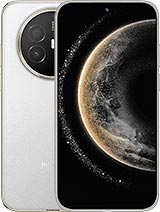
Mate 70 Air
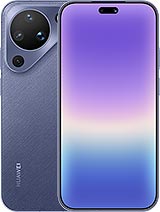
Pura 90
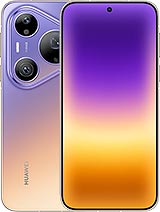
Pura 90s Pro Max
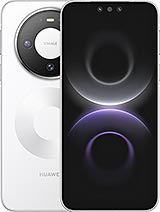
Mate 80
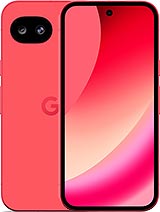
Pixel 10a