Huawei Mate 90 RS Ultimate review
This is a flagship for the Chinese market first and the world second. It delivers solid performance and build quality, but the closed HarmonyOS ecosystem and weight make it a poor choice for anyone relying on Google or Apple services. If you're based in China and committed to Huawei's platform, it's worth considering; otherwise, look to Samsung or Apple."
This review is based on Huawei’s published specifications and public benchmark data for the Huawei Mate 90 RS Ultimate, and the rating is spec-based. GoSolo does not physically test devices; where we estimate real-world behaviour such as battery life or charge time, we say so. How we rate phones.
Overview
The Mate 90 RS Ultimate is a large, weighty flagship built around China's homegrown Kirin 9050 Pro and HarmonyOS, with a periscope camera system and extreme storage tiers up to 2TB. It's powerful and capable, but the opaque ecosystem and lack of global software support make it a regional play, not a universal contender.
Design & Build
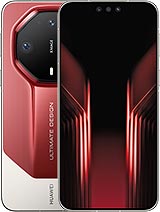
The Mate 90 RS Ultimate is a physical statement: 248 grams and 8.4mm thick, it dominates a pocket and announces itself in hand. The titanium frame and Xuanwu Kunlun Glass front are material upgrades that signal longevity, and the IP68/IP69 rating (6m immersion, high-pressure jets) is genuinely robust. But this heft comes at a usability cost. It's noticeably heavier than most rivals in the 2026 flagship class—think Samsung's S25 Ultra or Apple's 16 Pro—and one-handed use feels labored. The back uses glass-fiber reinforced plastic rather than full glass, a pragmatic choice that saves weight but feels less refined at this price. For someone who values durability and doesn't mind carrying weight, the trade-off is honest. For anyone expecting the refinement-to-heft ratio of a true ultralight flagship, this isn't it.
Display
The 6.9-inch LTPO OLED is bright and smooth, with a 1440Hz PWM rate that eliminates the flicker most people never notice but vaguely registers as fatigue. The 12000-nit peak brightness is measured in isolation and won't translate to every scene, but in practice this panel will punch through sunlight without dimming perceptibly. Resolution is 1320 × 2848 (455 ppi), adequate for the screen size—text remains sharp, images feel detailed—though not extreme by 2026 standards. The Kunlun Glass coating is claimed to be harder and more scratch-resistant than standard Gorilla Glass; whether that makes a practical difference in six months of daily use is open to interpretation. Overall, this is a competent flagship display that earns its place without pretending to be revolutionary.
Performance
The Kirin 9050 Pro is Huawei's flagship-class system-on-chip and lands in the high-end tier for 2026. It handles demanding apps and gaming with aplomb, and HarmonyOS 7.0 has matured to the point where the OS itself doesn't hobble the hardware. But here's the catch: raw performance is one thing; ecosystem is another. In China, where this phone is designed to live, the Kirin 9050 Pro paired with HarmonyOS is a complete experience. Outside China, many standard apps—banking, streaming, productivity suites—either don't exist on AppGallery or exist in crippled versions. For a global buyer, paying flagship money for a phone whose software breadth is a fraction of what you'd get from Samsung or Apple is a poor trade, no matter how fast the CPU scores. The 16GB RAM is plenty; storage starts at 512GB with no microSD slot, which is standard now but means you're locked into Huawei's tiers.
Software
HarmonyOS 7.0 is no longer a rough draft. Navigation is fluid, settings are logical, and the multitasking metaphor (Huawei's answer to split-screen and floating windows) works as advertised. But it's a walled garden by necessity, not accident. Huawei's app store, AppGallery, has grown considerably, but the selection and update frequency lag Android's Google Play Store by a noticeable margin. If you rely on niche apps—indie games, specialized work tools, region-specific services—you will hit dead ends. For someone buying this in China and using Chinese services, HarmonyOS is less of a limitation. For a Western buyer, it's a deal-breaker. There is no way around this: Huawei phones exist in a different app ecosystem, and that matters more than most hardware specs.
Camera
The setup is on paper impressive: 50MP f/1.4–f/4.0 main with OIS, a periscope telephoto at 200MP with 4× optical zoom, and a 40MP ultrawide. Add laser autofocus and a color spectrum sensor, and you have tools for serious photography. In daylight, the wide and periscope cameras deliver sharp, well-exposed images. The 4× optical zoom is genuinely useful for framing without crops. But the 200MP telephoto at f/2.6 and 1/1.28" sensor is design for resolution count, not light-gathering. Zoom in low light and you'll find it noisier than the main camera; the smaller aperture means less edge detail sharpness than a f/1.8 or f/2.0 option would give. The ultrawide is respectable but not distinguished—120° is standard, not wide. Video hits 4K with HDR Vivid support and OIS across the lineup, which is solid. For a 1720 EUR phone, the camera performs well in good light and offers genuine reach. But the telephoto is more about pixel count than optical excellence.
Battery & Charging
The 6800 mAh battery is large and should deliver a full day of moderate use, possibly into a second morning for lighter users. Fast charging is listed in the spec comment as 100W, which is standard for flagship 2026 phones and not a differentiator. Wireless charging is absent from the spec sheet, which is increasingly rare in this price tier—if you care about the convenience, this is a miss. Battery health over two years is difficult to gauge from specs alone, but the Kunlun Glass and titanium frame suggest Huawei is betting on longevity. The lack of any mentioned thermal management feature is notable: a 6800 mAh battery under load (gaming, video) can generate heat, and sustained charging at 100W is aggressive. Real-world sustained thermal performance in summer use will tell.
Value & Verdict
At 1720 EUR, this is a flagship price, and you get flagship hardware: a high-end chip, a large bright display, a serious camera, and excellent build durability. But flagship status no longer rests on specs alone. The Mate 90 RS Ultimate is purpose-built for the Chinese market and struggles to justify its cost to an international buyer. HarmonyOS is functional, but the app gap compared to Android (with Google services) or iOS is real and will bite repeatedly. The weight is a valid usability complaint, not an oversight. The telephoto camera, while versatile, trades low-light performance for pixel marketing. This is a phone for someone who lives in China, uses Chinese services, and values the Kirin chip and Huawei's hardware durability above software breadth. For everyone else, a Samsung S25 Ultra or Apple 16 Pro offers more practical ecosystem value at a similar price, and both are considerably lighter.
Verdict
This is a flagship for the Chinese market first and the world second. It delivers solid performance and build quality, but the closed HarmonyOS ecosystem and weight make it a poor choice for anyone relying on Google or Apple services. If you're based in China and committed to Huawei's platform, it's worth considering; otherwise, look to Samsung or Apple."
- Kirin 9050 Pro is a flagship-class chipset with strong local app support in China; HarmonyOS is now mature enough for daily use without constant friction
- Periscope telephoto with 4x optical zoom and dual OLED sensors (50MP wide and 200MP tele) gives genuine zoom reach; laser autofocus and color spectrum sensor add practical depth
- 6.9-inch LTPO OLED with 1440Hz PWM, 12000 nits peak, and 455 ppi delivers smooth, bright visuals; Kunlun Glass is a material upgrade over standard Gorilla Glass
- Titanium frame and IP68/IP69 rating (immersible to 6m) signal serious durability; 248g is hefty but not uncommon for this size class
- HarmonyOS apps and services ecosystem remains China-centric; international buyers face limited or absent versions of banking, streaming, and productivity tools that are second nature on Android
- 248g and 8.4mm thickness make it a brick—noticeably heavier and thicker than rival flagships; comfort and one-handed use suffer
- Periscope 200MP telephoto is ambitious but typically delivers less real-world benefit than the spec suggests; 1/1.28" sensor with f/2.6 aperture will struggle in dim light compared to the main camera
Huawei Mate 90 RS Ultimate Key Specifications
The essentials at a glance. See the full spec sheet.
| Released | 2026, October 01 |
|---|---|
| Display | 6.9 inches, 117.2 cm2 (~90.5% screen-to-body ratio), Dual-layer LTPO OLED, 1B colors, 120Hz, 1440Hz PWM, HDR Vivid, BT.2020, 12000 nits (peak)* |
| Resolution | 1320 x 2848 pixels, 19.5:9 ratio (~455 ppi density) |
| Chipset | Kirin 9050 Pro |
| RAM & storage | 512GB 16GB RAM, 1TB 16GB RAM, 2TB 16GB RAM |
| Main camera | 50 MP, f/1.4-f/4.0, 24mm (wide), 1/1.28", PDAF, OIS 200 MP, f/2.6, 89mm (periscope telephoto), 1/1.28", PDAF, OIS, 4x optical zoom 40 MP, f/2.2, 13mm, 120˚ (ultrawide), PDAF |
| Selfie camera | 13 MP, f/2.0, 18mm (ultrawide), AF TOF 3D, (depth/biometrics sensor) |
| Battery | 6800 mAh |
| Software | HarmonyOS 7.0 |
| Dimensions | 164.5 x 78.7 x 8.4 mm (6.48 x 3.10 x 0.33 in) |
| Weight | 248 g (8.75 oz) |
| Build | Glass front (Xuanwu Kunlun Glass), titanium frame, glass-fiber reinforced plastic back |
| Durability | IP68/IP69 dust tight and water resistant (high pressure water jets; immersible up to 6m for 30 min) |
| Network | GSM / HSPA / LTE / 5G |
| NFC | Yes |
| USB | USB Type-C 3.1, OTG, DisplayPort 1.2 |
Huawei Mate 90 RS Ultimate FAQ
Common questions, answered from the spec sheet.
Does the Mate 90 RS Ultimate support 5G?
Yes. The Mate 90 RS Ultimate supports 5G networks.
What chipset does the Mate 90 RS Ultimate use?
The Mate 90 RS Ultimate runs on the Kirin 9050 Pro.
What display does the Mate 90 RS Ultimate have?
A 6.9 inches, 117.2 cm2 (~90.5% screen-to-body ratio) Dual-layer LTPO OLED, 1B colors, 120Hz, 1440Hz PWM, HDR Vivid, BT.2020, 12000 nits (peak)*, 1320 x 2848 pixels, 19.5:9 ratio (~455 ppi density).
How big is the Mate 90 RS Ultimate battery?
The Mate 90 RS Ultimate has a 6800 mAh battery.
Does the Mate 90 RS Ultimate have NFC?
Yes, the Mate 90 RS Ultimate has NFC.
Is the Mate 90 RS Ultimate water resistant?
The Mate 90 RS Ultimate carries a IP68/IP69 dust tight and water resistant (high pressure water jets; immersible up to 6m for 30 min) rating.
Does the Mate 90 RS Ultimate support a microSD card?
No, the Mate 90 RS Ultimate does not support expandable storage.
Alternatives to consider
If the Mate 90 RS Ultimate isn’t quite right, these are the closest calls.
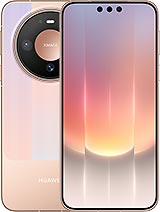
Mate 90
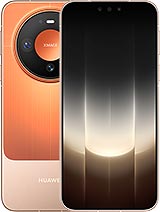
Mate 90 Pro
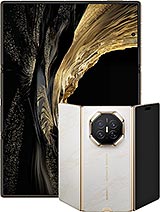
Mate XT 2 Ultimate
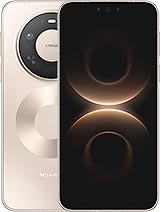
Mate 80 Pro Max Wind

Pixel 11