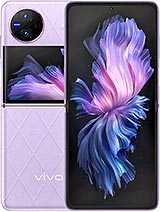
Huawei Mate X3 review
The Mate X3 suits people in Huawei-friendly regions who prioritize a large foldable screen for work and media over Google ecosystem integration. Anyone outside those markets, or who needs waterproof reliability on the inner fold, should look to competing folding phones or traditional flagships.
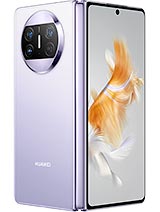
This review is based on Huawei’s published specifications and public benchmark data for the Huawei Mate X3, and the rating is spec-based. GoSolo does not physically test devices; where we estimate real-world behaviour such as battery life or charge time, we say so. How we rate phones.
Overview
The Mate X3 is a foldable designed for people who need a tablet-sized screen and can live with Huawei's ecosystem instead of Google Play. It delivers fast performance, solid cameras, and 120Hz OLED screens, but the lack of water protection on the inner fold and regional OS fragmentation make it a niche choice even for China.
Design & Build
At 239 grams folded and 11.1mm thick, the Mate X3 is heavier than a standard phone but lighter than expected for a device with two screens. The unfolded profile—156.9 x 141.5 x 5.3mm—is flat and squarish, more like a small tablet than a folded envelope. Build quality leans premium: glass or eco leather back, aluminum frame, and IPX8 water resistance to 1.5m for 30 minutes. The critical catch is that the IPX8 rating applies only to the folded device and cover display; the inner foldable OLED screen has no stated dust or water protection, which is a vulnerability for something at this price. Stylus support on both screens is a genuine plus for productivity, though it is not sold by default.
Display
The main draw here is size and smoothness. Unfolded, the 7.85-inch inner OLED screen runs 2224 x 2496 pixels at 426 ppi—sharp enough for text and photos, with 120Hz refresh keeping scrolling buttery. The 6.4-inch cover display mirrors that 120Hz OLED treatment, so there is no jarring drop in feel when the phone is folded. At 88.9 percent screen-to-body ratio unfolded, bezels are thin and the display area is usable end-to-end. One missing piece: sunlight readability is not specified, and large OLED screens often struggle outdoors, so real-world brightness could be a pain point in bright conditions. Kunlun Glass on the cover display is good; the lack of similar protection on the inner fold is not.
Performance
The Snapdragon 8+ Gen 1 is a chip from early 2023 at a time when it is now mid-2026, which means it is old news by flagship standards. That said, it still handles games like Genshin Impact at high settings and heavy multitasking without lag. With 12GB RAM across all storage tiers, the phone does not bottleneck. AnTuTu scores 993k, which is solid for the platform but behind what current-generation flagships achieve. For everyday use, work, and even demanding apps, this is fast enough; for future-proofing or running the absolute latest games at max settings, it falls short of what you are paying for.
Software
This is the elephant in the room. The global version ships with EMUI 13.1, while the China model runs HarmonyOS 3.1. Neither has Google Play Services, which means no built-in access to Gmail, Google Maps, the Play Store, or the broader Google ecosystem that most Android users rely on. Third-party app stores and sideloading work, but they add friction and security risk. If you live in Huawei's strongholds—China, parts of Southeast Asia, or specific European markets—this is less of a problem; elsewhere, it is a dealbreaker unless you are willing to live on the edges of the Android world.
Camera
The main sensor is a 50MP f/1.8 wide with OIS and phase-detect autofocus, which is reliable for daylight and handles low light better than a smaller sensor would. The 5x periscope telephoto at 125mm is the real star: it lets you frame distant subjects without digital zoom, which matters for travel and telephoto work. The 13MP ultrawide rounds things out for landscapes and groups. Front cameras are modest at 8MP on both cover and inner displays, adequate for video calls and selfies but nothing special. Video tops out at 4K 60fps, standard for 2023, with gyro-EIS smoothing handheld motion. For a folding phone, the camera setup is competitive; the 5x zoom is a genuine convenience over digital crops.
Battery & Charging
The global version comes with a 4800 mAh battery, which is tight for a device with two large screens and a folded form factor. In real-world terms, you are looking at roughly 6 to 7 hours of screen-on time with mixed tasks, or a full day if you avoid heavy gaming or video streaming. The China-only model bumps this to 5060 mAh, a meaningful upgrade that the rest of the world does not get. Charging is fast at 66W wired, reaching full in about 30 to 40 minutes, and 50W wireless charging is available if you have the right pad. Reverse wireless is 7.5W, fine for topping up earbuds. The combination of modest battery capacity and power-hungry screens means this is not a phone you charge once and forget for two days.
Value & Verdict
At 1500 EUR, the Mate X3 is priced at flagship level but positioned for a specific buyer: someone who values a large foldable screen for productivity, works within or accepts Huawei's ecosystem, and is willing to trade Google integration for a novel form factor. The lack of water protection on the inner screen and the software limitations are real friction points. By mid-2026, the Snapdragon 8+ Gen 1 is visibly dated, and you are paying a premium for form over raw performance. If you need a traditional flagship phone, faster charging, or seamless Google services, look elsewhere. If you want a folding tablet in your pocket and can live with the trade-offs, the Mate X3 delivers on that promise, though the unprotected inner screen and software walls limit its appeal outside Asia and Huawei's core markets.
Verdict
The Mate X3 suits people in Huawei-friendly regions who prioritize a large foldable screen for work and media over Google ecosystem integration. Anyone outside those markets, or who needs waterproof reliability on the inner fold, should look to competing folding phones or traditional flagships.
- 7.85-inch unfolded OLED screen at 426 ppi is sharp and genuinely useful for reading, video, and work tasks; 120Hz makes scrolling smooth on both cover and inner displays
- 50MP main camera with OIS, 5x periscope telephoto, and ultrawide cover most real-world framing needs without heavy reliance on cropping
- Snapdragon 8+ Gen 1 and 12GB RAM handle demanding games, video editing, and multitasking without stuttering; AnTuTu score of 993k shows solid early-2023 performance
- Stylus support on both displays opens the door for note-taking and sketching on a large canvas
- No water or dust protection on the inner foldable screen itself—only the cover display has Kunlun Glass—which is a real risk for a 1500 EUR device that folds open
- HarmonyOS in China and EMUI in Europe mean no Google Play Store, Gmail, Maps, or ecosystem integration that most Android users expect; workarounds exist but they are clunky
- 4800 mAh battery (global version) is tight for a folded form factor; expect a full day only if you avoid gaming or heavy video, and the lack of a larger capacity than flagship phones despite the extra bulk is a trade-off worth noting
Huawei Mate X3 Key Specifications
The essentials at a glance. See the full spec sheet.
| Released | 2023, March 23 |
|---|---|
| Display | 7.85 inches, 197.5 cm2 (~88.9% screen-to-body ratio), Foldable OLED, 1B colors, 120Hz |
| Resolution | 2224 x 2496 pixels (~426 ppi density) |
| Chipset | Qualcomm SM8475 Snapdragon 8+ Gen 1 4G (4 nm) |
| RAM & storage | 256GB 12GB RAM, 512GB 12GB RAM, 1TB 12GB RAM |
| Main camera | 50 MP, f/1.8, 23mm (wide), PDAF, OIS 12 MP, f/3.4, 125mm (periscope telephoto), PDAF, OIS, 5x optical zoom 13 MP, f/2.2, 13mm (ultrawide), AF |
| Selfie camera | 8 MP, f/2.4, (wide) Cover camera: 8 MP, f/2.4, (wide) |
| Battery | 5060 mAh |
| Charging | 66W wired50W wireless7.5W reverse wireless |
| Software | HarmonyOS 3.1 (China), EMUI 13.1 (Europe), no Google Play Services |
| Dimensions | Unfolded: 156.9 x 141.5 x 5.3 mmFolded: 156.9 x 72.4 x 11.1 mm |
| Weight | 239 g or 241 g (8.43 oz) |
| Build | Glass front, glass back or eco leather back, aluminum frame |
| Durability | IPX8 dust/water resistant (up to 1.5m for 30 min) Stylus support (both displays) |
| Network | GSM / CDMA / HSPA / EVDO / LTE / 5G |
| NFC | Yes |
| USB | USB Type-C 3.1, DisplayPort 1.2, OTG |
Huawei Mate X3 FAQ
Common questions, answered from the spec sheet.
Does the Mate X3 support 5G?
Yes. The Mate X3 supports 5G networks.
What chipset does the Mate X3 use?
The Mate X3 runs on the Qualcomm SM8475 Snapdragon 8+ Gen 1 4G (4 nm).
What display does the Mate X3 have?
A 7.85 inches, 197.5 cm2 (~88.9% screen-to-body ratio) Foldable OLED, 1B colors, 120Hz, 2224 x 2496 pixels (~426 ppi density).
How big is the Mate X3 battery?
The Mate X3 has a 5060 mAh battery. Charging is rated at 66W wired50W wireless7.5W reverse wireless.
Does the Mate X3 have NFC?
Yes, the Mate X3 has NFC.
Is the Mate X3 water resistant?
The Mate X3 carries a IPX8 dust/water resistant (up to 1.5m for 30 min) Stylus support (both displays) rating.
Does the Mate X3 support a microSD card?
Yes, the Mate X3 supports expandable storage (Nano Memory (uses shared SIM slot)).
Does the Mate X3 have a headphone jack?
No, the Mate X3 does not have a 3.5mm headphone jack.
Alternatives to consider
If the Mate X3 isn’t quite right, these are the closest calls.
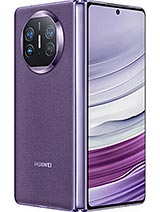
Mate X5
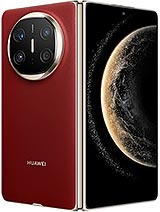
Mate X6
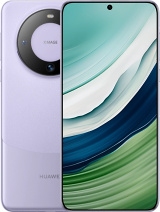
Mate 60
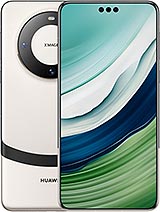
Mate 60 Pro

Ace 2 Pro