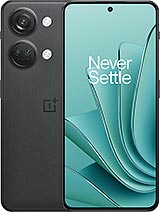
Huawei Mate X5 review
Buy this if you are in China or deeply embedded in Huawei services and want a genuinely large foldable screen and optical zoom for content creation. For everyone else outside that ecosystem, the lack of Google Play Services and two-year-old chip are enough friction to look at newer rivals instead.
This review is based on Huawei’s published specifications and public benchmark data for the Huawei Mate X5, and the rating is spec-based. GoSolo does not physically test devices; where we estimate real-world behaviour such as battery life or charge time, we say so. How we rate phones.
Overview
The Mate X5 is a foldable tablet in your pocket—the 7.85-inch unfolded screen and 5x zoom camera are genuinely useful for creative work and media, but Huawei's isolation from Google Play Services makes it a closed ecosystem that frustrates users outside mainland China.
Design & Build
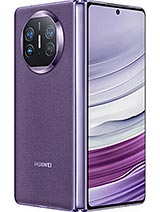
Folded, it is a 6.4-inch phone that is thick and heavy—243g sits at the upper end of what people comfortably pocket, and the 11.1mm folded body rivals some older slabs. Unfolded, it transforms into a compact tablet without the bulk of a separate device. The glass or eco leather back and aluminum frame feel solid, and IPX8 water resistance to 1.5m for 30 minutes is proper peace of mind for accidental dunks. The hinge is Huawei's proven design by this point, though any foldable hinge is a wear point over years—creasing and stiffness creep in. Stylus support on both displays is a thoughtful addition most rivals ignore, useful for sketching or precise UI navigation.
Display
The unfolded 7.85-inch OLED at 2224×2496 (426 ppi) is simply larger than any competitor's tablet mode—think iPad Mini in your hands when open. The 120Hz refresh smooths scrolling and gaming across that sprawl, and OLED blacks and color saturation are expected quality here. Kunlun Glass covers the external 6.4-inch display, though the unfolded panel lacks hardened protection, so creases and scratches over time are a risk. At 88.9% screen-to-body ratio unfolded, bezels are slim. Outdoor brightness figures are not published, so sunlight visibility is a guess; most foldables struggle in direct sun, and this may too.
Performance
The Kirin 9000S is a high-end chip for 2023, with eight cores (one 2.62 GHz Taishan big core, three 2.15 GHz mid cores, four Cortex-A510 efficiency cores) and the Maleoon 910 MP4 GPU. For the unfolded display's native resolution, it handles demanding gaming—Genshin Impact, Call of Duty Mobile—at high frame rates without strain. 12GB or 16GB RAM variants ensure smooth multitasking. The real friction is software: HarmonyOS 4.0 in China and EMUI in Europe lack Google Play Services, so app availability is fragmented. Outside China, loading alternatives like APK libraries or sideloading feels like a workaround. By 2026, this chipset is two steps behind current flagships in pure performance, though it won't stall in day-to-day work.
Software
In China, you get HarmonyOS 4.0 with full Huawei ecosystem integration—App Gallery, cloud services, and seamless handoff across devices. Outside China, the experience shrinks to EMUI without Google Play Services, transforming a powerful phone into an island. YouTube, Google Maps, Gmail, and thousands of common apps require workarounds or alternative installs. For creative tools and media, that isolation is slower to navigate. Huawei's own apps are solid, but no Play Store is a deal-breaker for anyone relying on a broad ecosystem. If you live in China or the Huawei ecosystem already, this is less painful; elsewhere, it is a constant friction.
Camera
The main camera is a 50MP wide at f/1.8 with optical stabilization and PDAF—solid for well-lit scenes and daylight video. The standout is the 12MP periscope telephoto at f/3.4 with 5x optical zoom and OIS; it lets you frame wildlife or distant sports without cropping a 50MP sensor down and losing detail, a real advantage over phones that max out at 2x or 3x. The 13MP ultrawide at f/2.2 covers groups and landscapes. All three lenses support 4K video at 30/60fps with gyro-EIS, adequate for hand-held footage. The 8MP selfie on both displays is unremarkable—serviceable for video calls, nothing more. Laser AF and a color spectrum sensor round out the kit; real-world output depends on Huawei's tuning, which leans warm and contrasty.
Battery & Charging
The 5060 mAh battery is not huge on paper, but the unfolded display's power draw is heavier than a flat phone, so expect about 1.5 to 2 days of moderate use—video streaming, light gaming, messaging. Heavy creators will need a top-up by evening. The 66W wired charging and 50W wireless charging are fast by foldable standards; from empty to 50% takes roughly 20–30 minutes on the cable. 7.5W reverse wireless charging to juice another device is a novelty, not essential. For a phone this size and screen area, battery endurance is reasonable, not exceptional.
Value & Verdict
The Mate X5 launched in September 2023 at a premium foldable price (exact USD/EUR not provided in specs, but typical Mate X pricing sits in the $1500+ USD range). By late 2026, it is a dated flagship competing against newer foldables with faster chipsets and improved durability. If you are inside the Huawei ecosystem and in a 5G market—chiefly China—the unfolded screen and 5x zoom justify the cost for media and creative work. Elsewhere, the closed app ecosystem and aging silicon make it a niche choice. For someone with no Huawei lock-in, newer foldables from Samsung or OnePlus offer smoother global software and faster chips at comparable or lower cost.
Verdict
Buy this if you are in China or deeply embedded in Huawei services and want a genuinely large foldable screen and optical zoom for content creation. For everyone else outside that ecosystem, the lack of Google Play Services and two-year-old chip are enough friction to look at newer rivals instead.
- Unfolded 7.85-inch OLED screen at 2224×2496 and 426 ppi is sharp enough for detailed work and reading; rare size means no other foldable competes here.
- 5x periscope telephoto with optical stabilization lets you frame distant subjects without quality loss—meaningfully better than 2x or 3x alternatives for wildlife and sports.
- 66W wired charging and 50W wireless charging are fast by foldable standards; the 5060 mAh battery lasts about 1.5 to 2 days on moderate use.
- IPX8 water resistance and stylus support on both displays add durability and versatility most competitors skip.
- No access to Google Play Services outside China; building a third-party app ecosystem is tedious and app selection remains narrow.
- At 243–245g the phone is noticeably heavy for pocket carry, and the 11.1mm folded thickness makes it chunky compared to a flat flagship.
- Kirin 9000S, though capable, is now two generations old; newer rivals will outpace it in raw compute and efficiency by 2026.
Huawei Mate X5 Key Specifications
The essentials at a glance. See the full spec sheet.
| Released | 2023, September 08 |
|---|---|
| Display | 7.85 inches, 197.5 cm2 (~88.9% screen-to-body ratio), Foldable OLED, 1B colors, 120Hz |
| Resolution | 2224 x 2496 pixels (~426 ppi density) |
| Chipset | Kirin 9000S (7 nm) |
| RAM & storage | 256GB 12GB RAM, 512GB 12GB RAM, 512GB 16GB RAM, 1TB 16GB RAM |
| Main camera | 50 MP, f/1.8, 23mm (wide), PDAF, OIS 12 MP, f/3.4, 125mm (periscope telephoto), PDAF, OIS, 5x optical zoom 13 MP, f/2.2, 13mm (ultrawide), AF |
| Selfie camera | 8 MP, f/2.4, (wide) Cover camera: 8 MP, f/2.4, (wide) |
| Battery | 5060 mAh |
| Charging | 66W wired50W wireless7.5W reverse wireless |
| Software | HarmonyOS 4.0 (China), EMUI (Europe), no Google Play Services |
| Dimensions | Unfolded: 156.9 x 141.5 x 5.3 mmFolded: 156.9 x 72.4 x 11.1 mm |
| Weight | 243 g or 245 g (8.57 oz) |
| Build | Glass front, glass back or eco leather back, aluminum frame |
| Durability | IPX8 dust/water resistant (up to 1.5m for 30 min) Stylus support (both displays) |
| Network | GSM / CDMA / HSPA / EVDO / LTE / 5G |
| NFC | Yes |
| USB | USB Type-C 3.1, DisplayPort 1.2, OTG |
Huawei Mate X5 FAQ
Common questions, answered from the spec sheet.
Does the Mate X5 support 5G?
Yes. The Mate X5 supports 5G networks.
What chipset does the Mate X5 use?
The Mate X5 runs on the Kirin 9000S (7 nm).
What display does the Mate X5 have?
A 7.85 inches, 197.5 cm2 (~88.9% screen-to-body ratio) Foldable OLED, 1B colors, 120Hz, 2224 x 2496 pixels (~426 ppi density).
How big is the Mate X5 battery?
The Mate X5 has a 5060 mAh battery. Charging is rated at 66W wired50W wireless7.5W reverse wireless.
Does the Mate X5 have NFC?
Yes, the Mate X5 has NFC.
Is the Mate X5 water resistant?
The Mate X5 carries a IPX8 dust/water resistant (up to 1.5m for 30 min) Stylus support (both displays) rating.
Does the Mate X5 support a microSD card?
Yes, the Mate X5 supports expandable storage (Nano Memory (uses shared SIM slot)).
Does the Mate X5 have a headphone jack?
No, the Mate X5 does not have a 3.5mm headphone jack.
Alternatives to consider
If the Mate X5 isn’t quite right, these are the closest calls.

Mate X3
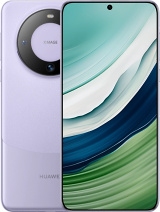
Mate 60
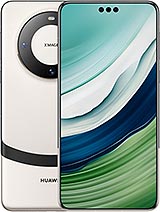
Mate 60 Pro
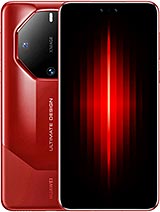
Mate 60 RS Ultimate
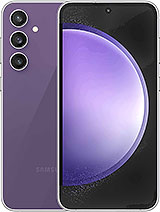
Galaxy S23 FE