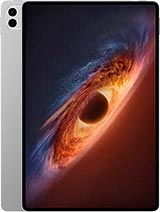
Huawei Mate X8 review
The Mate X8 makes sense for buyers already committed to Huawei's ecosystem or based in markets where HarmonyOS is mainstream. For everyone else—particularly in Europe and other Western regions—the software limitations and lack of Google services make it a harder sell than rivals, regardless of its durability and periscope lens.
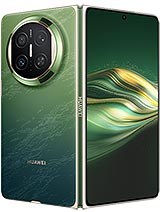
This review is based on Huawei’s published specifications and public benchmark data for the Huawei Mate X8, and the rating is spec-based. GoSolo does not physically test devices; where we estimate real-world behaviour such as battery life or charge time, we say so. How we rate phones.
Overview
The Mate X8 is Huawei's latest foldable, marrying a nearly frameless inner screen and periscope zoom with solid durability and HarmonyOS maturity. It's a compelling option for anyone already in the Huawei ecosystem or willing to live without Google services, but the price and China-first positioning limit its appeal in most global markets.
Design & Build
At 237 grams and 9 mm thick when folded, the Mate X8 is a balanced fold—lighter than some rivals, denser than others. The aluminum frame and glass front feel solid, but the real draw here is the IP58/IP59 rating and 2m water immersion rating, which puts it ahead of most foldables. That aerospace-grade aluminum frame matters if you use the fold daily; it resists creasing and handles drops better than the plastic you'll find on some competitors. The nylon fiber or silicone eco-leather back is a practical choice, though it won't feel as luxe as full glass or ceramic. Five color options give some personality, but nothing revolutionary in a 2026 lineup.
Display
The inner 8.2-inch OLED at 412 ppi is sharp and uncluttered, with an impressive 90.5% screen-to-body ratio that minimizes the black bars common to foldables. The 120Hz LTPO refresh and 8000 nits peak brightness handle everything from gaming to outdoor visibility without flinching. HDR Vivid and the LTPO tech mean you're getting the same color and motion fidelity you'd expect from a premium slab phone. The real sore spot is the cover display: 6.54 inches at 1132 x 2444 is squeezed. For a device at this price, rivals offer 6.8-inch outer screens that feel less cramped for daily use. The 12000 nits peak on the cover screen is a nice spec, but it doesn't change the fact that you'll spend a lot of time wrestling with the narrower aspect ratio if you use the folded form as your main interface.
Performance
The Kirin 9050 Pro is a high-end chip for 2026, with a 5 nm process and a 9-core layout that handles multitasking, gaming, and content creation without strain. The Maleoon 955 GPU pairs well for graphics workloads. You're not getting breakthrough speeds here, but you're getting stability and consistent frame rates. The 12GB or 16GB RAM options (depending on storage tier) are enough for heavy HarmonyOS users, though 12GB feels like the minimum for a fold at this price. The lack of microSD means your storage choice is final—pick the 512GB or 1TB if you work with video or large apps. UFS 4.x drives are snappy, so app load times and file transfers won't frustrate you. For this segment and year, the performance is reliable and responsive; nothing to complain about, nothing exceptional.
Software
HarmonyOS 7.0 is Huawei's answer to Android isolation, and it works within that bubble. The OS is smooth and the multitasking on a large inner screen is genuinely useful—split-screen apps and floating windows take better advantage of the real estate than many competitors manage. But here's the wall: Huawei Mobile Services (HMS) replaces Google Play, and most Western apps simply aren't available. If you're in China or already use HMS alternatives, this is a non-issue; for anyone else, it's a dealbreaker. You can sideload and use workarounds, but that's not what a 1790 EUR device should require. The ecosystem is mature in Huawei's strongholds but severely limited globally. No Gmail, no Google Maps (without hacks), no Spotify integration out of the box. That's not a software problem; it's a business reality.
Camera
Three rear lenses give you range: the 50MP f/1.5-f/4.0 wide (1/1.56" sensor) handles everyday shots with decent light collection and OIS, the 50MP periscope telephoto at 3.5x optical zoom is the standout (many folds lack true zoom), and the 40MP ultrawide at 120 degrees covers landscapes. The laser autofocus and color spectrum sensor are sophisticated tools, but actual output depends on tuning. HarmonyOS camera processing tends toward punchy colors rather than neutral, which suits social media but may not please detail-focused shooters. The 8MP ultrawide selfie cameras on both inner and cover screens are basic but functional for video calls and content. Video maxes out at 4K with HDR Vivid support, which is standard for this tier. The periscope is the real win here—it's a thoughtful inclusion that most foldables skip, and it works. Everything else is competent without being remarkable.
Battery & Charging
The 6200 mAh battery is appropriately sized for the larger form factor and should deliver a full day of moderate to heavy use, though the exact runtime depends on your display brightness and app mix. The spec sheet mentions 66W and 50W charging (likely for different regions), which is respectable but not class-leading; some rivals hit 100W+ now. Wireless charging specs aren't listed, which likely means there isn't any—a minor disappointment at this price point. For a foldable, the battery capacity is sensible, and the charging speeds won't leave you stranded for long. You're looking at about 30-40 minutes to full charge on wired power, depending on the actual charger speed you get in your region.
Value & Verdict
At roughly 1790 EUR, the Mate X8 is priced in the deep end. That's roughly the same as Samsung Galaxy Z Fold 7 or Google Pixel 9 Pro Fold money in markets where they're available. The differentiator is Huawei's durability specs (IP rating, water resistance) and the periscope zoom, which are genuine advantages. The drawback is massive: HarmonyOS and HMS lock you into a China-centric ecosystem. If you live in or regularly travel to China, work within Huawei's app network, or simply don't need Google services, this is a solid, durable foldable. If you need a phone that works seamlessly across Western apps, cloud services, and global networks, this is not the fold for you, no matter how good the hardware is. The inner screen and durability are strong cards, but they don't overcome the software and ecosystem wall.
Verdict
The Mate X8 makes sense for buyers already committed to Huawei's ecosystem or based in markets where HarmonyOS is mainstream. For everyone else—particularly in Europe and other Western regions—the software limitations and lack of Google services make it a harder sell than rivals, regardless of its durability and periscope lens.
- Inner screen is genuinely immersive at 8.2 inches with 412 ppi density and 90.5% screen-to-body ratio, leaving minimal bezels for a foldable
- Periscope 3.5x telephoto with OIS is a real advantage over most foldables, letting you frame distant subjects without crops
- IP58/IP59 and aerospace-grade aluminum frame make it one of the more durable foldables; water and dust resistance is rare in this category
- 6200 mAh battery scales sensibly to the larger form; real-world endurance should cover a full day
- No global 5G or international app support outside China; HarmonyOS 7.0 and Huawei Mobile Services lock you out of the Google ecosystem and most Western apps
- At 1790 EUR, it costs roughly as much as Samsung's or Google's latest flagship folds, yet delivers significantly fewer software options and global features
- Cover display specs (1132 x 2444 at 6.54 inches) lag rivals; the folded experience feels cramped compared to outer screens on competitive folds
Huawei Mate X8 Key Specifications
The essentials at a glance. See the full spec sheet.
| Released | 2026, November 24 |
|---|---|
| Display | 8.2 inches, 215.7 cm2 (~90.5% screen-to-body ratio), Foldable LTPO OLED, 1B colors, 120Hz, 1440Hz PWM, HDR Vivid, 8000 nits (local HDR peak) |
| Resolution | 2340 x 2424 pixels, 1:1 ratio (~412 ppi density) |
| Chipset | Kirin 9050 Pro (5 nm) |
| RAM & storage | 256GB 12GB RAM, 512GB 12GB RAM, 512GB 16GB RAM, 1TB 16GB RAM |
| Main camera | 50 MP, f/1.5-f/4.0, 23mm (wide), 1/1.56", 1.0µm, PDAF, OIS 50 MP, f/2.2, 81mm (periscope telephoto), PDAF, OIS, 3.5x optical zoom 40 MP, f/2.2, 13mm, 120˚ (ultrawide), PDAF |
| Selfie camera | 8 MP, f/2.4, (ultrawide) Cover camera: 8 MP, f/2.4, (ultrawide) |
| Battery | 6200 mAh |
| Software | HarmonyOS 7.0 |
| Dimensions | Unfolded: 156.9 x 152 x 4.2 mmFolded: 156.9 x 77.3 x 9 mm |
| Weight | 237 g (8.36 oz) |
| Build | Glass front, nylon fiber or silicone polymer back (eco leather), aluminum frame |
| Durability | IP58/IP59 dust protected and water resistant (high pressure water jets; immersible up to 2m for 30 min) Aerospace-grade aluminum |
| Network | GSM / HSPA / LTE / 5G |
| NFC | Yes |
| USB | USB Type-C 3.1, OTG, DisplayPort 1.2 |
Huawei Mate X8 FAQ
Common questions, answered from the spec sheet.
Does the Mate X8 support 5G?
Yes. The Mate X8 supports 5G networks.
What chipset does the Mate X8 use?
The Mate X8 runs on the Kirin 9050 Pro (5 nm).
What display does the Mate X8 have?
A 8.2 inches, 215.7 cm2 (~90.5% screen-to-body ratio) Foldable LTPO OLED, 1B colors, 120Hz, 1440Hz PWM, HDR Vivid, 8000 nits (local HDR peak), 2340 x 2424 pixels, 1:1 ratio (~412 ppi density).
How big is the Mate X8 battery?
The Mate X8 has a 6200 mAh battery.
Does the Mate X8 have NFC?
Yes, the Mate X8 has NFC.
Is the Mate X8 water resistant?
The Mate X8 carries a IP58/IP59 dust protected and water resistant (high pressure water jets; immersible up to 2m for 30 min) Aerospace-grade aluminum rating.
Does the Mate X8 support a microSD card?
No, the Mate X8 does not support expandable storage.
Alternatives to consider
If the Mate X8 isn’t quite right, these are the closest calls.
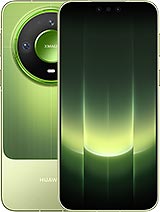
Mate 90 Pro Max
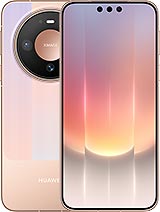
Mate 90
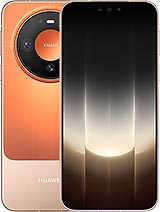
Mate 90 Pro
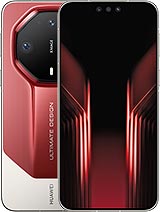
Mate 90 RS Ultimate
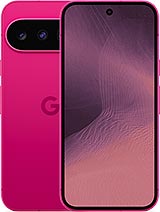
Pixel 11