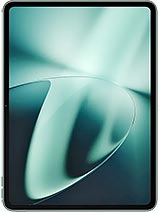
Huawei MatePad Air review
Good for productivity-focused users who want a light, note-taking tablet with a sharp display and don't mind older silicon. Skip it if you game, stream video heavily, or expect flagship performance for the price—rivals offer more horsepower and faster charging at the same cost.
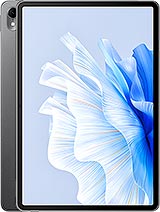
This review is based on Huawei’s published specifications and public benchmark data for the Huawei MatePad Air, and the rating is spec-based. GoSolo does not physically test devices; where we estimate real-world behaviour such as battery life or charge time, we say so. How we rate phones.
Overview
The MatePad Air is a slim, capable 11.5-inch tablet that handles everyday work and media well, but its Snapdragon 888 chipset is ageing and 40W charging is slow for a device at this price in 2023. It's a solid pick for note-takers and casual users, though rivals now offer faster processors and charge speeds.
Design & build
At 508 grams and 6.4mm thick, this feels like a serious portable machine. The weight distribution is even enough that one-handed reading doesn't exhaust you quickly, and the magnesium or aluminium frame (the spec doesn't confirm material) feels solid without flex. The nano-SIM slot on cellular models adds flexibility, but the real draw is the magnetic stylus mount—it clips cleanly without dangling. For a tablet pitched at professionals and students, the industrial aesthetic works. There's nothing fancy, but nothing feels cheap either.
Display
The 11.5-inch, 2800×1840 IPS LCD is the device's strongest card. At 291 ppi, text stays sharp for document work and reading, and the 144Hz refresh rate smooths scrolling noticeably when flipping through websites or PDFs. The 3:2 aspect ratio is practical for split-screen multitasking. The PaperMatte variant's anti-glare coating is a thoughtful touch—many tablets glare indoors and outdoors, so the option to buy that version sidesteps the usual compromise. That said, it's still IPS: blacks won't rival OLED tablets, and the screen-to-body ratio of 83.9% means you're living with bezels that competitors have shrunk.
Performance
The Snapdragon 888 is a 2021 flagship chip, and by mid-2023 it shows its age. Everyday browsing, email, document editing, and video calls run without stutter. Light creative work—note-taking with the stylus, basic photo editing in Snapseed—handles fine. But newer demanding games on high settings will throttle, and you'll feel the gap if you switch from a current flagship tablet. For a device launching in 2023, shipping with a two-year-old processor is a cost-cutting decision that undercuts the €500 price point. Most users won't notice in day-to-day use, but power users and gamers will.
Software
HarmonyOS 3.1 is Huawei's in-house OS, and its tablet experience is mature. The split-screen multitasking is intuitive, and the stylus integration is polished. The ecosystem works smoothly if you're already in Huawei hardware, but the app selection is narrower than Android or iPadOS outside China. Google services are absent, which matters for Gmail, Google Drive, and Play Store—though sideloading and third-party app stores exist. For buyers in regions with full Google support, this is a friction point; for others, HarmonyOS delivers a cohesive tablet experience without bloat.
Camera
The 13MP rear camera with PDAF and f/1.8 handles daylight document scanning and casual shots adequately. It won't wow you, and low light falters as with most tablet cameras. The 8MP ultrawide selfie (105°) frames wider group video calls better than typical tablets, which is practical if you use this for work calls. Neither camera is a reason to buy or avoid the device—they're present and functional, not strengths.
Battery & charging
The 8300mAh battery runs a full day of mixed use—browsing, video, light work—comfortably, about 10 to 12 hours before you need juice. Heavy video streaming or gaming may clip that to 8 or 9 hours. The weak point is charging: 40W tops out around 60 to 75 minutes to full, which is respectable in isolation but falls behind rivals now hitting 100W or faster. For a €500 tablet, this feels like a shortcut. There's no wireless charging, which is standard at this tier.
Value & verdict-context
The MatePad Air targets note-takers, students, and media consumers who value portability and a smooth display over raw power. At €500, it lands in a crowded mid-to-premium tablet space where the competition—both Android and iPad—now offer either faster chips or quicker charging or both for the same money. The age of the Snapdragon 888 is the real liability: it was flagship in 2021, but tablets from 2023 onwards expect current-gen performance. HarmonyOS reliability is solid, the display is genuinely good, and the stylus experience is seamless. But if your budget allows, looking at 2023 and 2024 flagship tablets from other makers gives you better value. This suits someone already in the Huawei ecosystem or someone who prioritizes portability and stylus support enough to overlook the processor gap. Everyone else should cross-shop current flagships.
Verdict
Good for productivity-focused users who want a light, note-taking tablet with a sharp display and don't mind older silicon. Skip it if you game, stream video heavily, or expect flagship performance for the price—rivals offer more horsepower and faster charging at the same cost.
- Large 11.5-inch display with 144Hz refresh and 291 ppi sharpness makes scrolling and reading smooth; matte PaperMatte variant cuts glare for outdoor use
- Magnetic stylus support and HarmonyOS integration suit productivity and note-taking without a bulky case
- Slim 6.4mm profile and 508g weight keep it portable for a tablet this size
- Stereo quad-speaker setup and Wi-Fi 6 deliver solid audio and connectivity for streaming
- Snapdragon 888 from 2021 feels dated by mid-2023; demanding games and heavy multitasking apps lag compared to current flagship tablets
- 40W charging is slow—expect 60–75 minutes to full, while rivals at this price now push 100W or more
- No 5G on LTE-only model leaves you slower on the road; IPS LCD won't match the black levels and contrast of OLED rivals
Huawei MatePad Air Key Specifications
The essentials at a glance. See the full spec sheet.
| Released | 2023, May 18 |
|---|---|
| Display | 11.5 inches, 391.6 cm2 (~83.9% screen-to-body ratio), IPS LCD, 144Hz |
| Resolution | 2800 x 1840 pixels, 3:2 ratio (~291 ppi density) |
| Chipset | Qualcomm SM8350 Snapdragon 888 4G (5 nm) |
| RAM & storage | 128GB 8GB RAM, 256GB 8GB RAM, 256GB 12GB RAM, 512GB 12GB RAM |
| Main camera | 13 MP, f/1.8, PDAF |
| Selfie camera | 8 MP, f/2.0, 105˚ (ultrawide) |
| Battery | 8300 mAh |
| Charging | 40W wired10W reverse wired |
| Software | HarmonyOS 3.1 |
| Dimensions | 261.9 x 178.2 x 6.4 mm (10.31 x 7.02 x 0.25 in) |
| Weight | 508 g (1.12 lb) |
| Durability | Stylus support (magnetic) |
| Network | GSM / HSPA / LTE |
| NFC | No |
| USB | USB Type-C 3.2, OTG, magnetic accessory connector |
Huawei MatePad Air FAQ
Common questions, answered from the spec sheet.
Does the MatePad Air support 5G?
No. The MatePad Air tops out at GSM / HSPA / LTE, without 5G.
What chipset does the MatePad Air use?
The MatePad Air runs on the Qualcomm SM8350 Snapdragon 888 4G (5 nm).
What display does the MatePad Air have?
A 11.5 inches, 391.6 cm2 (~83.9% screen-to-body ratio) IPS LCD, 144Hz, 2800 x 1840 pixels, 3:2 ratio (~291 ppi density).
How big is the MatePad Air battery?
The MatePad Air has a 8300 mAh battery. Charging is rated at 40W wired10W reverse wired.
Does the MatePad Air have NFC?
No, the MatePad Air does not list NFC support.
Is the MatePad Air water resistant?
The MatePad Air carries a Stylus support (magnetic) rating.
Does the MatePad Air support a microSD card?
No, the MatePad Air does not support expandable storage.
Does the MatePad Air have a headphone jack?
No, the MatePad Air does not have a 3.5mm headphone jack.
Alternatives to consider
If the MatePad Air isn’t quite right, these are the closest calls.
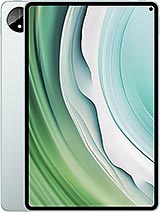
MatePad Pro 11 2024
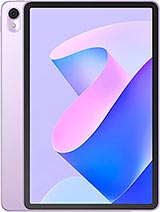
MatePad 11 2023
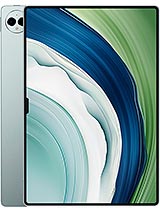
MatePad Pro 13.2
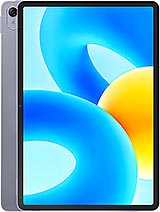
MatePad 11.5
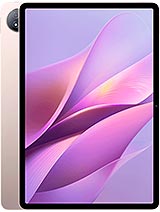
Pad Air