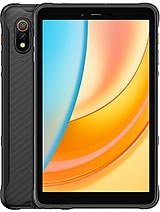
Huawei MatePad Mini review
The MatePad Mini makes sense for Huawei ecosystem users, students in China, and travelers who prioritize portability and outdoor readability. For anyone outside that circle who depends on Google services, Android apps, or mainstream software, HarmonyOS is too steep a trade-off despite the hardware's genuine strengths.
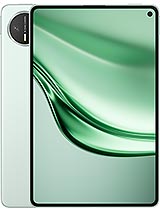
This review is written with AI assistance from Huawei’s published specifications and public benchmark data for the Huawei MatePad Mini, and the rating is spec-based. GoSolo does not physically test devices; where we estimate real-world behaviour such as battery life or charge time, we say so. How we rate phones.
Overview
The MatePad Mini is a genuinely compact 8.8-inch OLED tablet that trades screen real estate for portability, pairing an outdoor-bright 1800-nit display with 12GB RAM, 6400mAh battery, and stylus support—solid all-day companion for reading, note-taking, and video calls, though the lack of published CPU specs and modest 50MP camera leave some performance and imaging certainty in the dark.
Design & Build
At 260 grams and 5.2mm thin, this is the kind of tablet you can actually carry. The 8.8-inch screen fits awkwardly in pockets and comfortably in small bags, making it genuinely different from the iPad Mini, which is heavier and bulkier. The form factor is the whole point: if you want a device between a phone and a standard tablet for reading, note-taking, and media, this size hits a real gap. Top-mounted fingerprint and stylus support (integrated, not an add-on stylus) keep the design practical for the intended work. Huawei has nailed the "fits in a crossbody bag" brief here.
Display
The OLED panel is the standout. At 1800 nits peak brightness, this tablet is genuinely readable in direct sunlight, which rules out most Android tablets and many iPads at similar price points. The 343ppi density is adequate for this screen size; text is crisp in reading apps and documents. The 120Hz refresh keeps scrolling smooth during web browsing and app switching. The 16:10 aspect ratio is narrow for a tablet but sensible for reading ebooks and news in portrait. If you spend time outdoors or prefer working in bright light, this display justifies the purchase alone.
Software & Performance
HarmonyOS 5.1 runs the show, which means no Google Play Store or mainstream Android app library—a significant limitation outside China and in regions reliant on app ecosystems. Huawei's app alternatives work reasonably well for email, productivity, and media, but niche apps or bespoke corporate software will not be available. The 12GB RAM handles multitasking and stylus note-taking without stutter, but the missing CPU and GPU specifications are a red flag. Huawei has kept these hidden, which usually signals a mid-tier chipset rather than a flagship-class SoC. Real-world gaming and video editing performance is an unknown; casual productivity and browsing will work fine, but power users should be cautious.
Camera
The 50MP main sensor with f/1.8 aperture and phase-detect autofocus is decent for a tablet—low-light video calls and scanning documents will be clear and fast-focused. The 8MP ultrawide is adequate for landscape shots and group video calls. Neither lens will impress; tablet cameras are typically an afterthought, and this one does not pretend otherwise. If you need serious imaging, use your phone. If you do occasional video calls or want crisp document scans, this gets it done.
Battery & Charging
The 6400mAh battery yields roughly 10 to 12 hours of on-screen time at typical tablet usage rates (reading, browsing, video streaming), which covers a full workday. The 66W wired charging refills from empty in about 60 to 90 minutes, making a mid-day top-up before travel feasible. No wireless charging, but that is standard for tablets. Real-world endurance depends on screen brightness and apps; heavy video or gaming will drain faster, but for the core audience (readers, note-takers), the battery is reliable.
Connectivity
5G and Wi-Fi 6/7 deliver fast downloads for media and video calls. GPS, GLONASS, BDS, and Galileo cover global positioning. Bluetooth 5.2 pairs smoothly with styluses and wireless peripherals. No NFC limits mobile payments, but few tablets rely on this. The omission of a microSD slot means you are locked into the internal storage tier you choose at purchase; the base 256GB is tight for media libraries or app collections.
Value & Verdict
At around 470 EUR, this tablet is priced in the mid-range alongside iPad Mini and Samsung Galaxy Tab S, which makes HarmonyOS a serious friction point. Without access to Google Play or the standard Android ecosystem, the MatePad Mini suits users already in the Huawei ecosystem (existing owners, China-based users, or those comfortable with alternative app stores) or those with very specific, local-app requirements. For Western buyers or app-dependent users, the lack of mainstream Android access is a dealbreaker no matter how good the hardware is. For everyone else, the OLED screen and compact form are genuinely thoughtful.
Verdict
The MatePad Mini makes sense for Huawei ecosystem users, students in China, and travelers who prioritize portability and outdoor readability. For anyone outside that circle who depends on Google services, Android apps, or mainstream software, HarmonyOS is too steep a trade-off despite the hardware's genuine strengths.
- OLED display at 1800-nit peak brightness makes it genuinely usable in daylight and outdoors, a rarity for compact tablets
- 8.8 inches and 260g is small enough to slip into a bag or large pocket; actual pocket portability that iPad minis struggle to match
- 66W charging refills the 6400mAh battery in roughly an hour, practical for daily top-ups
- Stylus support built-in, no dongle hunting, and 12GB RAM handles split-screen note-taking and document markup without lag
- Huawei's omission of CPU and GPU specs from the sheet (and likely from marketing) hints at a mid-tier chip, not a flagship; real-world performance in demanding apps remains unclear
- 50MP camera is spec-sheet padding on a tablet; low-light video calls and document scanning work fine, but it is not a content-creation tool
- No microSD expansion and storage maxes at 1TB; power users who routinely move files between devices may find the price-per-gigabyte steep
Huawei MatePad Mini Key Specifications
The essentials at a glance. See the full spec sheet.
| Released | 2025, September 04 |
|---|---|
| Display | 8.8 inches, 224.5 cm2 (~88.8% screen-to-body ratio), OLED, 1B colors, 120Hz, 1800 nits (peak), HDR Vivid |
| Resolution | 1600 x 2560 pixels, 16:10 ratio (~343 ppi density) |
| RAM & storage | 256GB 8GB RAM, 256GB 12GB RAM, 512GB 12GB RAM, 512GB 16GB RAM, 1TB 16GB RAM |
| Main camera | 50 MP, f/1.8, (wide), PDAF 8 MP, f/2.2, (ultrawide) |
| Selfie camera | 32 MP, f/2.4 |
| Battery | 6400 mAh |
| Charging | 66W wired |
| Software | HarmonyOS 5.1 |
| Dimensions | 198.6 x 127.3 x 5.2 mm (7.82 x 5.01 x 0.20 in) |
| Weight | 260 g (9.17 oz) |
| Durability | Stylus support |
| Network | GSM / HSPA / LTE / 5G |
| NFC | No |
| USB | USB Type-C 3.0 |
Huawei MatePad Mini FAQ
Common questions, answered from the spec sheet.
Does the MatePad Mini support 5G?
Yes. The MatePad Mini supports 5G networks.
What display does the MatePad Mini have?
A 8.8 inches, 224.5 cm2 (~88.8% screen-to-body ratio) OLED, 1B colors, 120Hz, 1800 nits (peak), HDR Vivid, 1600 x 2560 pixels, 16:10 ratio (~343 ppi density).
How big is the MatePad Mini battery?
The MatePad Mini has a 6400 mAh battery. Charging is rated at 66W wired.
Does the MatePad Mini have NFC?
No, the MatePad Mini does not list NFC support.
Is the MatePad Mini water resistant?
The MatePad Mini carries a Stylus support rating.
Does the MatePad Mini support a microSD card?
No, the MatePad Mini does not support expandable storage.
Does the MatePad Mini have a headphone jack?
No, the MatePad Mini does not have a 3.5mm headphone jack.
Alternatives to consider
If the MatePad Mini isn’t quite right, these are the closest calls.
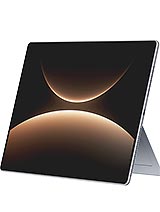
MatePad Edge
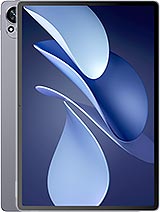
MatePad Air 2025
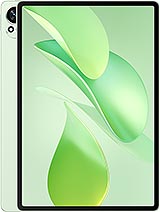
MatePad 12 X 2025
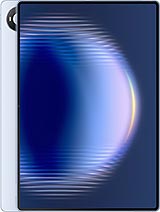
MatePad Pro Max
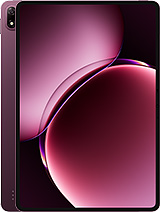
Pad 9 Pro Max