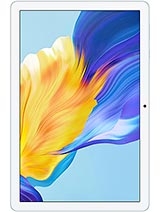
Huawei MatePad Pro 12.2 review
This tablet suits Huawei ecosystem users and professionals who work within HarmonyOS or web apps and value a portable, bright display for document work on the move. Anyone else should first reconcile whether the app gaps and HarmonyOS friction are worth the trade-off for a thin, bright screen and solid battery."
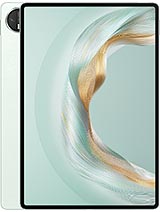
This review is based on Huawei’s published specifications and public benchmark data for the Huawei MatePad Pro 12.2, and the rating is spec-based. GoSolo does not physically test devices; where we estimate real-world behaviour such as battery life or charge time, we say so. How we rate phones.
Overview
The MatePad Pro 12.2 is a portable creative workstation with a bright 144Hz OLED display and solid battery life, built around Huawei's HarmonyOS rather than Android. It excels for document work and media on the go, but the ecosystem limitations and modest camera system mean it sits in a tight niche—good for professionals already locked into Huawei, but risky for those betting on broad app availability.
Design & build
At 5.5mm thick and 508g, this tablet is among the thinnest and lightest in its class, made for daily carry in a bag or large pocket. The form factor matters for professionals who edit on the move—it sits between a phone and a laptop without the weight commitment. That thinness comes with a structural risk; the tablet will flex if you're rough with it, so a case is practical insurance. The 3:2 screen ratio is intentional and sensible for document work, narrower than the square tablets that dominate the market.
Display
The 144Hz double-layer OLED is the hardware centerpiece. At 2800×1840 pixels and 275ppi, text is sharp enough for reading and editing, and the 2000-nit peak brightness means working in sunlight is feasible without squinting. 144Hz is overkill for a tablet—you won't notice it the way you might on a phone—but it does keep scrolling through long documents or web pages visibly smoother than 120Hz panels. The OLED blacks stay true because there's no backlight bleed, an advantage for creative work where color accuracy matters. For a device at this price, it's a major reason to look at this tablet.
Performance
The Kirin T92A is respectable but not cutting-edge; its 1.06 million AnTuTu score sits below current flagship chips but handles multitasking and productivity apps without lag. The 12GB base RAM is enough for most workflows, though the 16GB tier is worth considering if you routinely run multiple heavy apps (document editors, Photoshop-class tools, video conferencing) in parallel. Real-world performance is solid—file transfers don't stall, apps don't need to reload often, and export times on video or large image files are reasonable, not instant. For a tablet that costs around 850 EUR, you're not paying flagship prices, and the chip reflects that.
Software
HarmonyOS 4.3 (upgradeable to 5.0) is Huawei's answer to Android, built after the US ban cut off access to Google services. It's stable, responsive, and works well for editing, browsing, and media, but the app gap is real. Google Play doesn't exist here, and relying on the Huawei AppGallery or sideloading means some apps you expect (certain creative tools, niche productivity software, some services) simply aren't available or require workarounds. If you're already in the Huawei ecosystem or comfortable with web-based alternatives, this is less of a problem. For newcomers, it's a barrier.
Camera
The 50MP main camera and 8MP ultrawide are functional for scanning documents and capturing reference photos, but neither is a reason to buy this tablet. Video maxes out at 4K 30fps, and there's no optical stabilization. The system gets the job done if you're shooting stills for reference or archival, but compared to rivals with 48MP or 13MP ultrawide options, this feels like a checkbox feature rather than something Huawei invested in. The 8MP front camera is fine for video calls.
Battery & charging
The 10100mAh cell delivers about 12 to 14 hours of screen-on time in mixed use—document work, a few video calls, and light video playback. Heavy video playback or creative rendering will cut that to 10 to 12 hours. Real-world endurance for a full workday is realistic, especially if you're not editing video continuously. Charging speed isn't listed in the spec sheet; prior Huawei MatePad models charged at 65-80W, which is competent but not aggressive by 2025 standards—rivals now push 100-120W. Fast charge times matter for portable workflows, and this tablet doesn't lead there.
Value & verdict-context
At around 850 EUR, this tablet occupies a odd spot. It's pitched as a creative workstation, but the app ecosystem and camera make it less of an all-rounder than iPad Pro or high-end Samsung models at similar prices. For Huawei ecosystem believers—those already using Huawei phones and familiar with HarmonyOS—it's a logical step. The display and battery justify the cost for that audience. For everyone else, the HarmonyOS friction and missing apps are a real question mark that pricing doesn't resolve. If you're an existing Huawei user or willing to work around app limits, the build quality, OLED brightness, and all-day battery deliver genuine value. If you expect app parity with iOS or Android tablets, look elsewhere.
Verdict
This tablet suits Huawei ecosystem users and professionals who work within HarmonyOS or web apps and value a portable, bright display for document work on the move. Anyone else should first reconcile whether the app gaps and HarmonyOS friction are worth the trade-off for a thin, bright screen and solid battery."
- 144Hz OLED display with 2000 nits peak brightness—noticeably smoother scrolling than 120Hz rivals and genuinely usable in sunlight
- Wafer-thin at 5.5mm and 508g, genuinely pocketable for a 12.2-inch tablet if you move a lot
- 12 or 16GB RAM and up to 1TB storage handle large projects without needing cloud dependency
- 10100mAh battery delivers a realistic full day of mixed document work, editing, and video calls without charging
- HarmonyOS app ecosystem is still a significant gap—Google Play absence means missing apps that are standard elsewhere; workarounds exist but are friction
- No charging speed listed in specs; if it matches prior Huawei tablets (typically 65-80W), it lags rivals pushing 100-120W
- Camera system is functional but unmotivated—50MP main and 8MP ultrawide are adequate for occasional stills or document scanning, not a selling point
Huawei MatePad Pro 12.2 Key Specifications
The essentials at a glance. See the full spec sheet.
| Released | 2025, May 15 |
|---|---|
| Display | 12.2 inches, 440.7 cm2 (~89.0% screen-to-body ratio), Double-layer OLED, 1B colors, 144Hz, 2000 nits (peak), HDR Vivid |
| Resolution | 2800 x 1840 pixels, 3:2 ratio (~275 ppi density) |
| Chipset | Kirin T92A (7 nm) |
| RAM & storage | 256GB 12GB RAM, 512GB 12GB RAM, 1TB 16GB RAM |
| Main camera | 50 MP, f/1.8, (wide), PDAF 8 MP, f/2.2, (ultrawide) |
| Selfie camera | 8 MP, f/2.0 |
| Battery | 10100 mAh |
| Software | HarmonyOS 4.3, up to 5.0 |
| Dimensions | 271.3 x 182.5 x 5.5 mm (10.68 x 7.19 x 0.22 in) |
| Weight | 508 g (1.12 lb) |
| Durability | Stylus support |
| Network | No cellular connectivity |
| NFC | No |
| USB | USB Type-C 3.1, OTG |
Huawei MatePad Pro 12.2 FAQ
Common questions, answered from the spec sheet.
Does the MatePad Pro 12.2 support 5G?
No. The MatePad Pro 12.2 tops out at No cellular connectivity, without 5G.
What chipset does the MatePad Pro 12.2 use?
The MatePad Pro 12.2 runs on the Kirin T92A (7 nm).
What display does the MatePad Pro 12.2 have?
A 12.2 inches, 440.7 cm2 (~89.0% screen-to-body ratio) Double-layer OLED, 1B colors, 144Hz, 2000 nits (peak), HDR Vivid, 2800 x 1840 pixels, 3:2 ratio (~275 ppi density).
How big is the MatePad Pro 12.2 battery?
The MatePad Pro 12.2 has a 10100 mAh battery.
Does the MatePad Pro 12.2 have NFC?
No, the MatePad Pro 12.2 does not list NFC support.
Is the MatePad Pro 12.2 water resistant?
The MatePad Pro 12.2 carries a Stylus support rating.
Does the MatePad Pro 12.2 support a microSD card?
No, the MatePad Pro 12.2 does not support expandable storage.
Alternatives to consider
If the MatePad Pro 12.2 isn’t quite right, these are the closest calls.
MatePad Pro 12.2 2025

MatePad Pro 12.2 (2024)
MatePad Pro 11 2024
MatePad Pro 13.2
Pad 6 Max 14