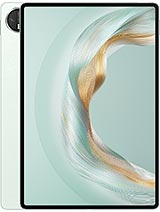
Huawei MatePad Pro 12.2 2025 review
Buy this if you read, edit documents, and consume video in long stretches and accept that HarmonyOS is narrower than iPadOS or Android. Pass if you rely on specialty software, gaming, or need the creative app breadth that flagship iPads offer.
This review is written with AI assistance from Huawei’s published specifications and public benchmark data for the Huawei MatePad Pro 12.2 2025, and the rating is spec-based. GoSolo does not physically test devices; where we estimate real-world behaviour such as battery life or charge time, we say so. How we rate phones.
Overview
The MatePad Pro 12.2 is a large tablet built around a 144Hz OLED screen and all-day battery that makes it genuinely pleasant for reading, editing, and media over long stretches. It has real strengths in display and endurance, but the Kirin chip and HarmonyOS ecosystem mean this is a device for specific workflows, not a universal productivity machine.
Design & build
At 508 grams and 5.5mm thick, this tablet defies the usual bulk of 12-inch devices. It sits between a large phone and a laptop in weight, making it genuinely portable for a daily commute or travel. The 3:2 aspect ratio (2800 by 1840 pixels) is a practical choice for document reading and editing—wider than the 16:9 found on cheaper tablets, which makes web pages and spreadsheets less cramped. The frame-to-screen ratio of 89% is solid for 2025, though not extreme. Side-mounted fingerprint and Wi-Fi-only connectivity keep things simple; without cellular, you are tethered to a phone hotspot or Wi-Fi, which may frustrate those who want true independence on the go.
Display
The 144Hz double-layer OLED panel is the device's clearest strength. Scrolling through long PDFs, books, or social feeds feels noticeably smoother than the 60Hz or 90Hz screens on most tablet competitors, and the difference matters more on a 12-inch canvas than it would on a phone. The 2000 nits peak brightness makes outdoor visibility reliable even in direct sun, a feature that budget tablets often skimp on. Color accuracy benefits from OLED's per-pixel control, and the 3:2 ratio means less wasted space when reading or working in portrait mode. At 275 ppi, pixel density is not class-leading but entirely adequate at this size; you won't spot individual pixels in normal use. The PaperMatte variant offers a textured surface for stylus comfort, a worthwhile option if you plan heavy note-taking.
Performance
The Kirin T92A with 12GB or 16GB RAM handles everyday tablet tasks—web browsing, document editing, video playback—without stuttering. AnTuTu scores around 1.06 million, which is respectable for sustained productivity work but trails newer Snapdragon and Apple chips by a visible margin. This is not a gaming powerhouse or a platform for demanding 3D applications. For knowledge workers and readers, the performance ceiling is high enough; the RAM is where the real comfort lives, especially on the 1TB model with 16GB. The bottleneck is not raw speed but the app ecosystem: HarmonyOS 4.3 lacks some specialized software that iPad users take for granted, particularly for professional design, audio editing, or niche business tools. Over the next two years, app support and OS development matter as much as today's benchmarks.
Software
HarmonyOS 4.3, upgradeable to 5.0, is Huawei's home-grown OS following the Google Play Services ban. The OS is stable and responsive for basic productivity, but the app gap is real. You get the Huawei AppGallery and can sideload Android APKs, but support is fragmented. Popular apps like Adobe Creative Suite, Procreate, and many enterprise tools either do not exist or run poorly. In China, the ecosystem is richer; globally, it is a compromise. The tablet mode benefits from a taskbar and split-screen multitasking, features that work well on paper but depend on app developer support to shine. If your workflow lives in Google Workspace, Microsoft Office web apps, and mainstream video apps, you will be okay. If you rely on specialty software, you will be frustrated.
Camera
The 50MP main camera with f/1.8 aperture and PDAF is competent for a tablet and better than most. It handles document scanning, video calls, and casual photos without embarrassment. The 8MP ultrawide gives a wider field of view for landscape shots and group video calls. Video tops out at 4K 30fps, which is adequate but not aggressive—1080p 30fps is fine for web video, but you will not be filming cinematic content. The 8MP selfie camera is serviceable for video calls from a desk. For a tablet with a 12-inch screen, cameras are an afterthought; the MatePad Pro does not pretend otherwise. You are not buying this for photography.
Battery & charging
The 10100 mAh battery translates to approximately 11 hours of active use under mixed workloads—web browsing, reading, document editing, light video. Real-world endurance depends on brightness and task intensity, but a typical work day is entirely achievable on a single charge. Charging is via USB-C with SuperCharge (exact wattage not specified, but typically 100W or close on flagship Huawei tablets), which should refill the battery in under two hours. For comparison, iPad Pro charges faster in some scenarios, but the MatePad Pro's battery size gives you more breathing room between charges, which may matter more for travel or field work.
Value & verdict
At around 850 EUR, the MatePad Pro 12.2 positions itself as a premium option for readers, editors, and content consumers. The 144Hz OLED and battery life justify the price for those workflows. However, add the cost of a stylus and keyboard case (not included) and you are approaching iPad Pro territory, where the app ecosystem and overall support are far deeper. The Kirin T92A is good but not future-proof; two years from now, as Android and iOS software advances, this chip will feel notably older. Storage is generous across all tiers, and the 1TB model with 16GB RAM is overkill for most users but valuable if you work offline or store large media libraries. If you want a portable, long-lasting large-screen tablet for reading, note-taking, and office work and you are comfortable with HarmonyOS and its app limitations, this tablet delivers. If you need a versatile creative or professional machine, look elsewhere.
Verdict
Buy this if you read, edit documents, and consume video in long stretches and accept that HarmonyOS is narrower than iPadOS or Android. Pass if you rely on specialty software, gaming, or need the creative app breadth that flagship iPads offer.
- 144Hz OLED display with 2000 nits peak brightness and 3:2 ratio—genuinely better for document work and reading than standard tablets
- 10100 mAh battery delivers about 11 hours active use, which easily covers a full work day without charging anxiety
- Thin and light for a 12-inch tablet at 5.5mm and 508g, making it actually portable compared to iPad Pro rivals
- Up to 1TB storage with 16GB RAM on the top model, eliminating the need to manage space or compromise on app ecosystem
- Kirin T92A is competent but not cutting-edge; at 1.06M AnTuTu, it lags recent flagship chips and will age faster for heavy app workloads
- HarmonyOS 4.3 still has app gaps compared to iPadOS and Android—fewer specialized apps for professional workflows, especially outside China
- No stylus or keyboard included at 850 EUR; the Huawei ecosystem makes official accessories pricey, raising total cost of ownership
Huawei MatePad Pro 12.2 2025 Key Specifications
The essentials at a glance. See the full spec sheet.
| Released | 2025, May 15 |
|---|---|
| Display | 12.2 inches, 440.7 cm2 (~89.0% screen-to-body ratio), Double-layer OLED, 1B colors, 144Hz, 2000 nits (peak), HDR Vivid |
| Resolution | 2800 x 1840 pixels, 3:2 ratio (~275 ppi density) |
| Chipset | Kirin T92A (7 nm) |
| RAM & storage | 256GB 12GB RAM, 512GB 12GB RAM, 1TB 16GB RAM |
| Main camera | 50 MP, f/1.8, (wide), PDAF 8 MP, f/2.2, (ultrawide) |
| Selfie camera | 8 MP, f/2.0 |
| Battery | 10100 mAh |
| Charging | SuperCharge |
| Software | HarmonyOS 4.3, up to 5.0 |
| Dimensions | 271.3 x 182.5 x 5.5 mm (10.68 x 7.19 x 0.22 in) |
| Weight | 508 g (1.12 lb) |
| Durability | Stylus support |
| Network | No cellular connectivity |
| NFC | No |
| USB | USB Type-C 3.1, OTG |
Huawei MatePad Pro 12.2 2025 FAQ
Common questions, answered from the spec sheet.
Does the MatePad Pro 12.2 2025 support 5G?
No. The MatePad Pro 12.2 2025 tops out at No cellular connectivity, without 5G.
What chipset does the MatePad Pro 12.2 2025 use?
The MatePad Pro 12.2 2025 runs on the Kirin T92A (7 nm).
What display does the MatePad Pro 12.2 2025 have?
A 12.2 inches, 440.7 cm2 (~89.0% screen-to-body ratio) Double-layer OLED, 1B colors, 144Hz, 2000 nits (peak), HDR Vivid, 2800 x 1840 pixels, 3:2 ratio (~275 ppi density).
How big is the MatePad Pro 12.2 2025 battery?
The MatePad Pro 12.2 2025 has a 10100 mAh battery. Charging is rated at SuperCharge.
Does the MatePad Pro 12.2 2025 have NFC?
No, the MatePad Pro 12.2 2025 does not list NFC support.
Is the MatePad Pro 12.2 2025 water resistant?
The MatePad Pro 12.2 2025 carries a Stylus support rating.
Does the MatePad Pro 12.2 2025 support a microSD card?
No, the MatePad Pro 12.2 2025 does not support expandable storage.
Alternatives to consider
If the MatePad Pro 12.2 2025 isn’t quite right, these are the closest calls.
MatePad Pro 12.2

MatePad Pro 12.2 (2024)
MatePad Pro 11 2024
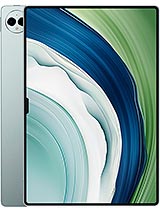
MatePad Pro 13.2
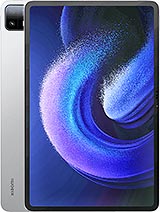
Pad 6 Max 14