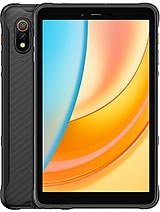
Huawei MatePad Pro 12 (2026) review
The MatePad Pro 12 suits designers, note-takers, and media consumers in regions where HarmonyOS is well-supported and who prioritize an exceptional display and thin form factor. Everyone else should seriously consider the iPad Pro or Galaxy Tab S, which offer broader software support and do not compromise on video recording.
This review is written with AI assistance from Huawei’s published specifications and public benchmark data for the Huawei MatePad Pro 12 (2026), and the rating is spec-based. GoSolo does not physically test devices; where we estimate real-world behaviour such as battery life or charge time, we say so. How we rate phones.
Overview
The MatePad Pro 12 is a slim, light flagship tablet with a brilliant 144Hz OLED screen and solid processing power via the Kirin T93, but it stumbles with cameras that feel undercooked and software limitations on the global market. For the price, it is a fine large-screen workhorse if you are embedded in Huawei's ecosystem; otherwise, rivals offer more flexible Android support.
Design & Build
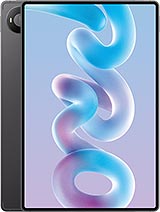
Huawei has nailed the fundamentals here. At 439g and 4.7mm thick, the MatePad Pro 12 is one of the lightest and slimmest large tablets you can hold, rivaling the iPad Pro's weight advantage. The aluminum frame and glass front/back feel solid without excess bulk. The side-mounted fingerprint sensor is practical for landscape use. Stylus support is expected at this price, and the PaperMatte variant mentioned in the spec comment suggests a tactile, anti-glare option for creatives. This is the kind of tablet you can grab one-handed for browsing or drawing without fatigue. Build quality appears uncompromised for the thinness achieved.
Display
This is the standout. The 12.2-inch OLED screen runs at 144Hz, a rarity in tablets and a genuine benefit for scrolling and gaming fluidity that you will notice against 60Hz LCD. At 3036x1952 pixels, the density sits at 296 ppi, which is sharp enough for text and graphics. Peak brightness of 1600 nits means outdoor readability and HDR content punch with real contrast, not the washed-out look of cheaper LCDs. The 95.6% screen-to-body ratio shows minimal bezels. For consumption, creative work, and reading, this display is simply ahead of most 12-inch tablets at any price today. Colors should be accurate, and the refresh rate will make any interaction feel more responsive than older tablets.
Performance
The Kirin T93 is Huawei's in-house chipset, and on paper it is octa-core with no official benchmark figures in the specs. Without AnTuTu or Geekbench scores, direct comparison is difficult, but the Kirin T93 sits in the mid-to-high range for tablets in 2026. It should handle multitasking, heavy apps, and games without stuttering, especially paired with 12GB or 16GB of RAM. The real question is thermal performance under sustained load—tablets with thin designs sometimes throttle, and at 4.7mm there is little room for heatsinking. For everyday use, office work, and creative apps, it will be adequate. For sustained gaming or video encoding, we will have to see how it holds up. The lack of a microSD slot means you are limited to 256GB or 512GB, which is respectable but not expandable.
Software
HarmonyOS 6.1 is the elephant in the room for global buyers. Inside China, Huawei's homegrown OS is mature and full-featured. Outside China, it means limited Google Play Store access, no Gmail integration without workarounds, and a narrower ecosystem of apps optimized for the platform. Many productivity and entertainment apps are missing or fragmented. If you are a regular Google Workspace user or rely on Android apps, this will frustrate you. Huawei has improved HarmonyOS significantly, but the global rollout still feels incomplete. You are betting on either Huawei's ecosystem growing or sideloading apps, neither ideal at this price.
Camera
For a tablet, cameras are usually an afterthought, but Huawei is leaning into this with a 50MP f/1.8 rear sensor and PDAF. In theory, this is strong for document scanning, remote work video calls, or light photography. The 12MP front camera with f/2.4 aperture is standard. The problem is that both are locked to 1080p video recording, which is genuinely disappointing in 2026. Most rival tablets at 770 EUR now record 4K, some 8K. For a device pitched at professionals and creatives, 1080p feels like a cut corner. Still photos may be fine, but if you plan to film anything, you will quickly hit the ceiling. The rear camera's wide aperture suggests low-light capability, but without test samples, we cannot confirm how much of that translates to real-world image quality.
Battery & Charging
The 10400 mAh battery is substantial and should deliver about 10 to 12 hours of typical mixed use, possibly longer on the 144Hz screen if the OS scales refresh rate intelligently. The specs mention 66W charging in the metadata, which is respectable but not exceptional; rivals at similar prices now hit 100W or beyond. If the 66W figure is accurate, expect a full charge in roughly 90 to 120 minutes, which is acceptable but not impressive for a device this size. The lack of explicit charging wattage in the main spec is an odd omission for a 2026 flagship tablet. Fast charging support and a decent battery capacity mean you will not be tethered to the wall daily, but you are not gaining a meaningful speed advantage over competitors here.
Value & Verdict
At 770 EUR, the MatePad Pro 12 is a premium-priced tablet that delivers excellent display and design, but with software and camera limitations that undercut its appeal outside Asia. The display alone justifies the price for creatives and media consumers, and the thin, light design is genuinely useful. However, the 1080p video limit in 2026 is indefensible at this tier, and HarmonyOS without full Google integration is a deal-breaker for many global users. This is a solid tablet if you are already invested in Huawei's ecosystem or willing to work around the software limitations. For most European or North American buyers comparing it to iPad Pro or Samsung Galaxy Tab S, the restricted app access and video capability will outweigh the screen and design advantages.
Verdict
The MatePad Pro 12 suits designers, note-takers, and media consumers in regions where HarmonyOS is well-supported and who prioritize an exceptional display and thin form factor. Everyone else should seriously consider the iPad Pro or Galaxy Tab S, which offer broader software support and do not compromise on video recording.
- OLED display at 144Hz and 1600 nits peak brightness is sharper and more fluid than LCD tablets in this price range, with proper HDR support.
- At 439g and 4.7mm thick, it is genuinely light and pocketable for a 12.2-inch device, making it one of the thinnest tablets on the market.
- 50MP rear camera with f/1.8 aperture and PDAF should handle professional note-taking and document scanning better than most competitors.
- Wi-Fi 7 support and Bluetooth 6.0 ensure this tablet will not feel dated in connectivity for the next few years.
- Video recording capped at 1080p on both cameras is a significant weakness for a tablet at this price tier; rivals now routinely offer 4K or 8K.
- HarmonyOS 6.1 outside China severely limits access to Google services and the full Google Play Store, making it harder to use for most global buyers.
- No charging speed listed in specs, but 10400 mAh battery is large enough to need fast charging; lack of clarity here is concerning for a 770 EUR device.
Huawei MatePad Pro 12 (2026) Key Specifications
The essentials at a glance. See the full spec sheet.
| Released | 2026, August 05 |
|---|---|
| Display | 12.2 inches, 436.8 cm2 (~95.6% screen-to-body ratio), OLED, 1B colors, 144Hz, HDR, 1600 nits (peak) |
| Resolution | 3036 x 1952 pixels (~296 ppi density) |
| Chipset | Kirin T93 / Kirin T93A |
| RAM & storage | 256GB 12GB RAM, 512GB 12GB RAM, 512GB 16GB RAM |
| Main camera | 50 MP, f/1.8, (wide), PDAF |
| Selfie camera | 12 MP, f/2.4 |
| Battery | 10400 mAh |
| Software | HarmonyOS 6.1 |
| Dimensions | 264.2 x 172.9 x 4.7 mm (10.40 x 6.81 x 0.19 in) |
| Weight | 439 g (15.49 oz) |
| Build | Glass front, aluminum frame, aluminum back |
| Durability | Stylus support |
| Network | No cellular connectivity |
| NFC | No |
| USB | USB Type-C 3.1, OTG, Display Port 1.2 |
Huawei MatePad Pro 12 (2026) FAQ
Common questions, answered from the spec sheet.
Does the MatePad Pro 12 (2026) support 5G?
No. The MatePad Pro 12 (2026) tops out at No cellular connectivity, without 5G.
What chipset does the MatePad Pro 12 (2026) use?
The MatePad Pro 12 (2026) runs on the Kirin T93 / Kirin T93A.
What display does the MatePad Pro 12 (2026) have?
A 12.2 inches, 436.8 cm2 (~95.6% screen-to-body ratio) OLED, 1B colors, 144Hz, HDR, 1600 nits (peak), 3036 x 1952 pixels (~296 ppi density).
How big is the MatePad Pro 12 (2026) battery?
The MatePad Pro 12 (2026) has a 10400 mAh battery.
Does the MatePad Pro 12 (2026) have NFC?
No, the MatePad Pro 12 (2026) does not list NFC support.
Is the MatePad Pro 12 (2026) water resistant?
The MatePad Pro 12 (2026) carries a Stylus support rating.
Does the MatePad Pro 12 (2026) support a microSD card?
No, the MatePad Pro 12 (2026) does not support expandable storage.
Alternatives to consider
If the MatePad Pro 12 (2026) isn’t quite right, these are the closest calls.
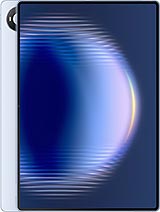
MatePad Pro Max
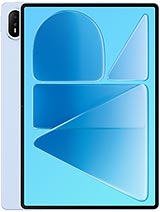
MatePad Air (2026)
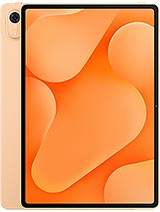
MatePad Air Z
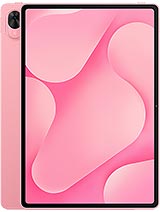
MatePad Air Z Enjoy
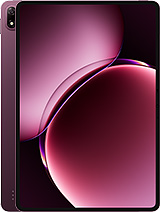
Pad 9 Pro Max