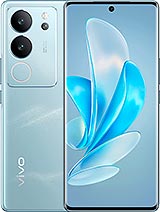
Huawei nova 11 review
The nova 11 suits budget-conscious buyers in LTE-dominant markets who prioritize a sharp OLED screen and snappy charging over 5G speed or ecosystem breadth. If you depend on Google Play or need 5G coverage, or if ultrawide and zoom capability matter, this phone will frustrate you.
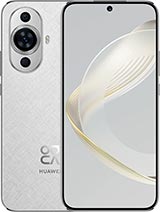
This review is based on Huawei’s published specifications and public benchmark data for the Huawei nova 11, and the rating is spec-based. GoSolo does not physically test devices; where we estimate real-world behaviour such as battery life or charge time, we say so. How we rate phones.
Overview
The nova 11 is a sleek upper-mid-range phone with a sharp 120Hz OLED screen, quick 66W charging, and a strong main camera—but it's tethered to 4G only and lacks optical zoom or expansion. For its 2023 price point, it's a solid all-rounder if you're not chasing 5G or zooming far.
Design & build
At 168g and 6.9mm thick, the nova 11 is slim and light for a 6.7-incher—pocketable and comfortable to hold for long periods. The Kunlun Glass offers decent scratch resistance, though no word on impact durability. The industrial design is clean and minimal with minimal bezels (91.4 screen-to-body ratio), which feels contemporary for April 2023. It is not a rugged device; this is a refined everyday carry that prioritizes thinness over armor.
Display
The 6.7-inch OLED panel at 1084 x 2412 (391 ppi) is one of the nova 11's strongest suits. The 120Hz refresh delivers smooth scrolling through apps and games, and the 20:9 aspect ratio keeps things tall and narrow without feeling cramped. OLED blacks are deep and HDR10 content pops in supported apps. At this price in 2023, an OLED screen was not standard on competitors; most rivals at this tier were still on IPS or AMOLED with 90Hz. The pixel density is sharp enough for comfortable text reading and media consumption at typical arm's length.
Performance
The Snapdragon 778G paired with Adreno 642L handles the job without stumbling. Day-to-day apps—messaging, social media, web browsing—run with no lag, and the 8GB RAM helps multitasking stay responsive. Mobile games like PUBG and Genshin Impact are playable at high settings without constant frame drops, though demanding titles at maximum graphics may throttle or drop frames during prolonged sessions. For its upper-midrange standing, this is predictable and adequate; it was never meant to trade blows with flagship chips, and it does not pretend to.
Software
HarmonyOS 3.0 is Huawei's homegrown alternative to Android, built in response to US export restrictions. It runs on its own app ecosystem (AppGallery) rather than Google Play, which is the critical catch for most users outside mainland China. If you live in a region with mature Google Play access or rely on Google services, compatibility issues and missing apps (or outdated versions) can be frustrating. Within its own environment, HarmonyOS is fluid and customizable, but the ecosystem limitation is real and not solvable by the user.
Camera
The 50MP f/1.9 main sensor with PDAF is the standout. In daylight, it captures sharp detail and accurate color; the wide aperture and color spectrum sensor handle low-light scenes without excessive noise, and autofocus snaps in fast. The 60MP selfie camera at 100° ultrawide is generous for group shots and video calls. Where the system falters is range: the 8MP ultrawide at 112° is cramped and low-res compared to typical ultra-wide optics on rivals, and there is no optical zoom or telephoto. For everyday snapshots and content creation, the main camera is solid; for zoom or architectural work, you will feel the lack of reach. Video tops out at 4K with gyro-EIS stabilization, which is standard for this class.
Battery & charging
The 4500 mAh battery paired with 66W charging is a practical pairing. Real-world screen-on time sits around 5–6 hours with moderate use (mixed messaging, browsing, video); heavy gaming or streaming drains it faster. The 66W charger reaches 100% in about 31 minutes, so a 10-minute desk-side top-up gets you through the afternoon. This speed was competitive in 2023, though some rivals were already at 100W. No wireless charging is included, which is typical for the price.
Value & verdict-context
At around 310 EUR, the nova 11 occupied an awkward middle ground in 2023. It undercut flagship prices but lacked 5G, optical zoom, and full app ecosystem access outside China—compromises that felt stale even then. Within the region-specific global south market, where LTE networks remain mature and fast charging matters more than 5G speed, the OLED screen and processing power offer genuine appeal. If you can live with the HarmonyOS app ecosystem and 4G-only connectivity, it is a smooth, well-built phone with a bright display and zippy charging. For users in markets with strong 5G rollout or tight Google integration requirements, look elsewhere.
Verdict
The nova 11 suits budget-conscious buyers in LTE-dominant markets who prioritize a sharp OLED screen and snappy charging over 5G speed or ecosystem breadth. If you depend on Google Play or need 5G coverage, or if ultrawide and zoom capability matter, this phone will frustrate you.
- 6.7-inch OLED at 120Hz with 391 ppi is smooth and sharp for scrolling and reading; this was a highlight for the price when it launched in 2023
- 66W charging fills the 4500 mAh battery in about 31 minutes, so realistic 5–6 hours of daily use with quick top-ups during breaks
- 50MP f/1.9 main sensor with PDAF and color spectrum sensor handles daylight and low-light scenes with decent detail and no lag autofocus
- Snapdragon 778G handles mid-range gaming (PUBG Mobile, Genshin Impact at high settings) and everyday tasks without strain
- 4G-only network, no 5G—by 2023 this was already becoming standard on competitors at this price, and it means slower downloads and streaming in 5G coverage areas
- 8MP ultrawide is narrow and low-res for a 2023 flagship-adjacent phone; lacks optical zoom for any real reach on distant subjects
- No microSD card slot and no meaningful upgrade path if you exhaust the internal storage tier you choose at purchase
Huawei nova 11 Key Specifications
The essentials at a glance. See the full spec sheet.
| Released | 2023, April 17 |
|---|---|
| Display | 6.7 inches, 110.5 cm2 (~91.4% screen-to-body ratio), OLED, 1B colors, HDR10, 120Hz |
| Resolution | 1084 x 2412 pixels, 20:9 ratio (~391 ppi density) |
| Chipset | Qualcomm SM7325 Snapdragon 778G 4G (6 nm) |
| RAM & storage | 128GB 8GB RAM, 256GB 8GB RAM, 512GB 8GB RAM |
| Main camera | 50 MP, f/1.9, (wide), PDAF 8 MP, f/2.2, 112˚ (ultrawide) |
| Selfie camera | 60 MP, f/2.4, 100˚ (ultrawide) |
| Battery | 4500 mAh |
| Charging | 66W wired, 100% in 31 minReverse wired |
| Software | HarmonyOS 3.0 |
| Dimensions | 161.3 x 75 x 6.9 mm (6.35 x 2.95 x 0.27 in) |
| Weight | 168 g (5.93 oz) |
| Network | GSM / CDMA / HSPA / CDMA2000 / LTE |
| NFC | Yes |
| USB | USB Type-C 2.0, OTG |
Huawei nova 11 FAQ
Common questions, answered from the spec sheet.
Does the nova 11 support 5G?
No. The nova 11 tops out at GSM / CDMA / HSPA / CDMA2000 / LTE, without 5G.
What chipset does the nova 11 use?
The nova 11 runs on the Qualcomm SM7325 Snapdragon 778G 4G (6 nm).
What display does the nova 11 have?
A 6.7 inches, 110.5 cm2 (~91.4% screen-to-body ratio) OLED, 1B colors, HDR10, 120Hz, 1084 x 2412 pixels, 20:9 ratio (~391 ppi density).
How big is the nova 11 battery?
The nova 11 has a 4500 mAh battery. Charging is rated at 66W wired, 100% in 31 minReverse wired.
Does the nova 11 have NFC?
Yes, the nova 11 has NFC.
Does the nova 11 support a microSD card?
No, the nova 11 does not support expandable storage.
Does the nova 11 have a headphone jack?
No, the nova 11 does not have a 3.5mm headphone jack.
Alternatives to consider
If the nova 11 isn’t quite right, these are the closest calls.
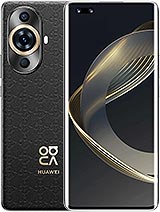
nova 11 Pro
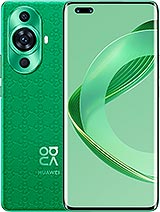
nova 11 Ultra
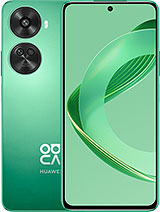
nova 11 SE
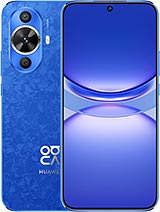
nova 12 Lite
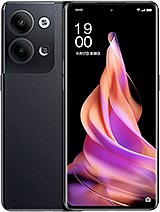
Reno9 A