Huawei nova 11 Pro review
Suits someone in an ecosystem favourable to HarmonyOS (largely China and parts of Asia) who values fast charging and a smooth display over all-day stamina and future-proof connectivity. For global buyers weighing a midrange phone in 2024–2026, the absence of 5G and weak battery capacity point elsewhere.
This review is based on Huawei’s published specifications and public benchmark data for the Huawei nova 11 Pro, and the rating is spec-based. GoSolo does not physically test devices; where we estimate real-world behaviour such as battery life or charge time, we say so. How we rate phones.
Overview
The nova 11 Pro is a 2023 midrange phone that leans on smooth OLED display and blistering 100W charging but undercuts itself with an ageing Snapdragon 778G, no 5G, and a 4500mAh battery that struggles past a day. It's a competent all-rounder if you don't need network speed or long runtime.
Design & Build
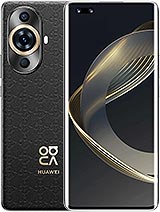
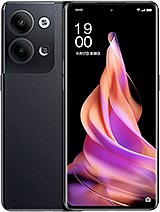
At 188–193 grams and 7.9mm thin, the nova 11 Pro sits in that sweet spot where it feels light and slim without feeling fragile. The glass-and-glass or glass-and-eco-leather build is standard for this tier, offering a professional finish without breaking durability expectations. It sits squarely in the hand and doesn't feel bloated, which matters for a 6.78-inch phone. The option between full glass and eco leather back gives some texture choice if you care about that.
Display
The 6.78-inch OLED panel with 120Hz refresh and 1200×2652 resolution is the phone's strongest card. Blacks are deep, whites clean, and the 429 ppi density keeps text sharp. The 91% screen-to-body ratio minimises bezels without feeling cheap. Kunlun Glass is Huawei's own protection and handles scratch resistance adequately, though peak brightness figures are missing from the spec sheet—a gap that matters outdoors, but OLED panels at this price generally get the job done in sunlight if not quite matching LCD's raw peak nits.
Performance
The Snapdragon 778G with 8GB RAM is a solid midrange chip from 2021 that still handles everyday tasks, messaging, streaming, and light gaming without stuttering. Apps open briskly and multitasking doesn't stall. The Adreno 642L GPU manages 1080p gaming at stable frame rates, but forget high-refresh 3D titles or console-grade graphics; the AnTuTu score of around 519,000 (v9) reflects a midrange performer, not a flagship. By 2023, it was competent but not cutting-edge, and in 2026 it feels dated for a phone still being sold.
Software
HarmonyOS 3.0 is Huawei's own OS, built as a hedge against US sanctions that limit Android. It runs smoothly on this hardware and offers good integration with Huawei's ecosystem if you're in that world. For global buyers, the app situation is mixed—Google Play is absent, so you rely on Huawei's AppGallery or sideloading, which matters if you want all the apps you're used to. This OS limitation is a silent dealbreaker for many outside China and parts of Asia.
Camera
The 50MP main camera with f/1.9 aperture and laser autofocus shoots sharp stills in good light and handles video stabilisation through gyro-EIS. The f/1.9 is wide enough for low-light performance, and the colour spectrum sensor adds some smarts to white balance. The 8MP ultrawide at 112 degrees is narrow by 2026 standards (many flagships hit 120° now) but adequate for group shots and landscapes. There's no optical zoom, only the ultrawide for width, so distant subjects stay distant. Selfie cameras are ample (60MP ultrawide, 8MP tele), though that's overkill for most video calls.
Battery & Charging
Here's the catch: a 4500mAh battery in a 6.78-inch OLED phone is tight. Expect 5–6 hours of heavy screen-on use, forcing a charge by evening for heavy users. The saving grace is 100W wired charging, which hits 50% in 15 minutes and is among the fastest in its class—useful if you're never far from a socket. There's no wireless charging and no fast reverse wired charging to your accessories, so you're locked to the cable. For a phone touted as a daily driver, the battery capacity undershoots modern expectations at this size and price.
Value & Verdict Context
At around 500 EUR in 2023, the nova 11 Pro threads a needle: it offers an excellent OLED display and charging speed, but stumbles where it matters most for longevity. No 5G is a glaring omission by mid-2023, when rivals in this price band widely offered it. The Snapdragon 778G was already a generation behind by launch, and time hasn't been kind. The small battery forces a daily charge habit, which grinds against the 100W charging promise—fast top-ups don't compensate for real stamina. HarmonyOS is smooth but app fragmentation is real outside China. If you can live without 5G, don't need a full Android experience, and have access to a charger daily, the display and charging speed earn its keep. But the battery shortfall and network-generation gap make it feel like a compromise at this price point in 2023 and a poor value proposition now.
Verdict
Suits someone in an ecosystem favourable to HarmonyOS (largely China and parts of Asia) who values fast charging and a smooth display over all-day stamina and future-proof connectivity. For global buyers weighing a midrange phone in 2024–2026, the absence of 5G and weak battery capacity point elsewhere.
- 6.78-inch OLED display with 120Hz refresh and solid colour reproduction (91% screen-to-body ratio leaves minimal bezels)
- 100W wired charging delivers 50% in 15 minutes, among the fastest in its price class at launch
- 50MP main camera with f/1.9 aperture and laser autofocus performs steadily in bright light and handles video stabilisation well
- Light weight and thin profile (188–193g, 7.9mm) make it comfortable to pocket and use one-handed
- No 5G support; LTE-only in an era when mid-range rivals widely offer 5G at similar prices
- 4500mAh battery typically yields 5–6 hours of heavy use, forcing daily charging despite the fast 100W top-up
- Snapdragon 778G by 2023 standards is ageing midrange; it handles apps and streaming but lags in demanding games and future-proofing
Huawei nova 11 Pro Key Specifications
The essentials at a glance. See the full spec sheet.
| Released | 2023, April 17 |
|---|---|
| Display | 6.78 inches, 111.4 cm2 (~91.1% screen-to-body ratio), OLED, 1B colors, HDR10, 120Hz |
| Resolution | 1200 x 2652 pixels (~429 ppi density) |
| Chipset | Qualcomm SM7325 Snapdragon 778G 4G (6 nm) |
| RAM & storage | 256GB 8GB RAM, 512GB 8GB RAM |
| Main camera | 50 MP, f/1.9, (wide), PDAF 8 MP, f/2.2, 112˚ (ultrawide), AF |
| Selfie camera | 8 MP, f/2.2, 52mm (telephoto), AF, 2x optical zoom 60 MP, f/2.4, 17mm, 100˚ (ultrawide), AF |
| Battery | 4500 mAh |
| Charging | 100W wired, 50% in 15 minReverse wired |
| Software | HarmonyOS 3.0 |
| Dimensions | 164.3 x 74.4 x 7.9 mm (6.47 x 2.93 x 0.31 in) |
| Weight | 188 g or 193 g (6.63 oz) |
| Build | Glass front, glass back or eco leather back |
| Network | GSM / CDMA / HSPA / CDMA2000 / LTE |
| NFC | Yes |
| USB | USB Type-C 2.0, OTG |
Huawei nova 11 Pro FAQ
Common questions, answered from the spec sheet.
Does the nova 11 Pro support 5G?
No. The nova 11 Pro tops out at GSM / CDMA / HSPA / CDMA2000 / LTE, without 5G.
What chipset does the nova 11 Pro use?
The nova 11 Pro runs on the Qualcomm SM7325 Snapdragon 778G 4G (6 nm).
What display does the nova 11 Pro have?
A 6.78 inches, 111.4 cm2 (~91.1% screen-to-body ratio) OLED, 1B colors, HDR10, 120Hz, 1200 x 2652 pixels (~429 ppi density).
How big is the nova 11 Pro battery?
The nova 11 Pro has a 4500 mAh battery. Charging is rated at 100W wired, 50% in 15 minReverse wired.
Does the nova 11 Pro have NFC?
Yes, the nova 11 Pro has NFC.
Does the nova 11 Pro support a microSD card?
No, the nova 11 Pro does not support expandable storage.
Does the nova 11 Pro have a headphone jack?
No, the nova 11 Pro does not have a 3.5mm headphone jack.
Alternatives to consider
If the nova 11 Pro isn’t quite right, these are the closest calls.
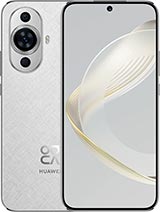
nova 11
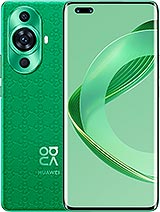
nova 11 Ultra

nova 13 Pro
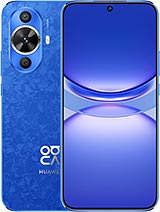
nova 12 Lite
Reno9 A