Huawei nova 11 SE review
This phone suits LTE-only buyers and light users who value an OLED screen and quick charging over gaming prowess or video features. If you game regularly, need 4K video, or live in a 5G-rich market, the cheaper chipset and 1080p ceiling will frustrate within months."
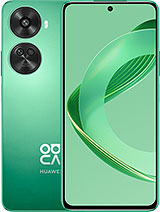
This review is based on Huawei’s published specifications and public benchmark data for the Huawei nova 11 SE, and the rating is spec-based. GoSolo does not physically test devices; where we estimate real-world behaviour such as battery life or charge time, we say so. How we rate phones.
Overview
The nova 11 SE trades raw speed for an OLED screen and fast 66W charging at a budget price, landing squarely between entry and midrange. For LTE-only regions and buyers who skip demanding games, it's a sensible pick; everyone else should consider whether the Snapdragon 680 feels too slow once the screen's smoothness wears off.
Design & build
At 186 grams and 7.4 mm thick, the nova 11 SE sits between nimble and substantial—lighter than most 6.67-inch phones, but noticeably heavier than compact flagships. The curved sides and flat frame give it a modern silhouette, though at this price Huawei tends to skimp on material feel; plastic rather than glass likely dominates. Dual Nano-SIM and side-mounted fingerprint are practical touches, and the 87.6% screen-to-body ratio means bezels stay reasonable rather than oversized. No headphone jack or expandable storage are standard omissions at this tier, not real losses.
Display
The 6.67-inch OLED panel is the phone's strongest calling card. At 1080 x 2400 pixels (395 ppi), sharpness sits just below flagship density but above the blur threshold for everyday viewing—text reads clearly, and video doesn't look grainy. The 90Hz refresh lifts scrolling and swiping into visibly smoother territory than 60Hz LCD rivals, and OLED's infinite contrast makes blacks genuine blacks, not just dark grays. Brightness and color aren't flagged as exceptional in the spec sheet, so outdoor legibility in direct sun and HDR punch likely lag behind pricier phones, but for indoor use and casual browsing this screen punches well above its budget class.
Performance
The Snapdragon 680 is mainstream midrange: competent for apps, messages, calls, and light video, but it has hard limits. Heavy games like Genshin Impact or PUBG will run at low settings or stutter; anything demanding 3D rendering struggles. Everyday lag shouldn't happen with 8GB RAM and HarmonyOS, but sustained heavy use (streaming, photo editing, lots of background apps) will eventually feel sluggish. This is the phone's main compromise: the screen and camera tempt you to do more, but the silicon holds you back. If you mostly browse, stream video, and check social apps, you'll be fine; power users and gamers should look elsewhere.
Software
HarmonyOS 4.0 is Huawei's in-house OS, built to sidestep Google's restrictions. It's stable and works well for daily tasks, but the app ecosystem is thinner than Android's, and some regional versions lack Google Play integration entirely. Buyers in China or other markets with HarmonyOS adoption will feel at home; those elsewhere may face friction installing apps they're used to. The OS is clean at launch, though storage bloat over time is a Huawei habit. No headphone jack is standard; audio goes through the speaker or Bluetooth.
Camera
The 108MP f/1.9 main sensor with PDAF is the phone's second-best feature. It captures detailed daylight photos and handles indoor low-light noticeably better than typical 50MP budget sensors in this generation. The 1/1.67" size is generous for midrange, and the wide aperture lets in more light without pushing ISO into noise hell. The 8MP ultrawide (112°) is useful for landscapes and group shots, though details soften at the edges as expected. The 2MP macro is cosmetic; ignore it. Video maxes out at 1080p@30fps, which feels dated next to 4K-capable rivals at the same price in late 2023—it's a real miss. The 32MP front camera is overspecced; output is decent but not exceptional.
Battery & charging
The 4500 mAh battery delivers about one day on light-to-moderate use (4–6 hours screen-on time). Heavier users (8+ hours daily) will need a midday top-up or evening charge. The real perk is the 66W wired charging: 32 minutes to full is fast enough to matter in a busy day, faster than most LTE-only competitors and not far behind pricier 5G phones. The 5W reverse wired charging (powering other devices) is gimmicky. No wireless charging, which is fine at this price.
Value & verdict
At around €260 and LTE-only, the nova 11 SE skips the 5G tax and focuses on screen and camera instead. In markets where 5G is sparse or unnecessary, that's a smart trade. The OLED display alone differentiates it from most plastic-screen rivals, and 66W charging is genuinely convenient. The Snapdragon 680 and 1080p video are the honest tradeoffs—you're not getting a speed demon or video powerhouse. For casual buyers in LTE-dominant regions who care more about image quality and smooth scrolling than gaming or 4K video, this phone makes sense. Anyone who games regularly, shoots video seriously, or needs consistent speed should spend more or look at older flagships instead.
Verdict
This phone suits LTE-only buyers and light users who value an OLED screen and quick charging over gaming prowess or video features. If you game regularly, need 4K video, or live in a 5G-rich market, the cheaper chipset and 1080p ceiling will frustrate within months."
- 6.67-inch OLED panel with 90Hz refresh—a genuine jump in smoothness and image quality over typical LCD budget phones at this price
- 66W charging fills a 4500 mAh battery in 32 minutes, faster than most LTE-only rivals and useful for rushed mornings
- 108MP main camera with f/1.9 aperture and PDAF handles daylight and indoor shots noticeably better than standard 50MP sensors in this tier
- Dual SIM, NFC, and HarmonyOS 4.0 make it practical for work or regional switching without clunky workarounds
- Snapdragon 680 limits gaming and heavy multitasking—even mid-tier 3D games demand lower settings or stutter
- 1080p-only video capture looks thin next to rivals offering 4K, especially at this price point in late 2023
- No microSD expansion leaves you bound to 256GB or 512GB, with no safety net once system bloat eats space
Huawei nova 11 SE Key Specifications
The essentials at a glance. See the full spec sheet.
| Released | 2023, October 31 |
|---|---|
| Display | 6.67 inches, 107.4 cm2 (~87.6% screen-to-body ratio), OLED, 1B colors, 90Hz |
| Resolution | 1080 x 2400 pixels, 20:9 ratio (~395 ppi density) |
| Chipset | Qualcomm Snapdragon 680 4G (6 nm) |
| RAM & storage | 256GB 8GB RAM, 512GB 8GB RAM |
| Main camera | 108 MP, f/1.9, (wide), 1/1.67", 0.64µm, PDAF 8 MP, f/2.2, 112˚ (ultrawide) 2 MP (macro) |
| Selfie camera | 32 MP, f/2.5, (wide) |
| Battery | 4500 mAh |
| Charging | 66W wired, 100% in 32 min5W reverse wired |
| Software | HarmonyOS 4.0 |
| Dimensions | 162.4 x 75.5 x 7.4 mm (6.39 x 2.97 x 0.29 in) |
| Weight | 186 g (6.56 oz) |
| Network | GSM / CDMA / HSPA / CDMA2000 / LTE |
| NFC | Yes |
| USB | USB Type-C 2.0 |
Huawei nova 11 SE FAQ
Common questions, answered from the spec sheet.
Does the nova 11 SE support 5G?
No. The nova 11 SE tops out at GSM / CDMA / HSPA / CDMA2000 / LTE, without 5G.
What chipset does the nova 11 SE use?
The nova 11 SE runs on the Qualcomm Snapdragon 680 4G (6 nm).
What display does the nova 11 SE have?
A 6.67 inches, 107.4 cm2 (~87.6% screen-to-body ratio) OLED, 1B colors, 90Hz, 1080 x 2400 pixels, 20:9 ratio (~395 ppi density).
How big is the nova 11 SE battery?
The nova 11 SE has a 4500 mAh battery. Charging is rated at 66W wired, 100% in 32 min5W reverse wired.
Does the nova 11 SE have NFC?
Yes, the nova 11 SE has NFC.
Does the nova 11 SE support a microSD card?
No, the nova 11 SE does not support expandable storage.
Does the nova 11 SE have a headphone jack?
No, the nova 11 SE does not have a 3.5mm headphone jack.
Alternatives to consider
If the nova 11 SE isn’t quite right, these are the closest calls.
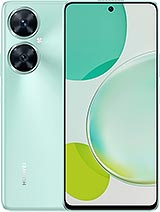
nova 11i
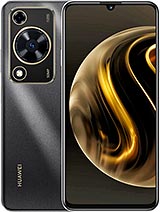
nova Y72
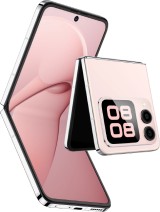
nova Flip
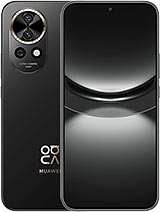
nova 12
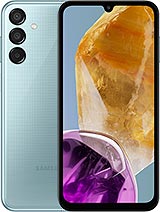
Galaxy M15 5G