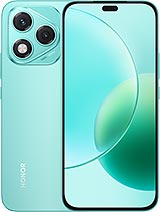
Huawei nova 12 review
The nova 12 suits someone who wants a large, smooth display and fast charging for everyday video and messaging without needing gaming prowess or a deep app ecosystem. Skip it if you rely on Google Play apps, play demanding games, or shoot a lot of ultrawide photos.
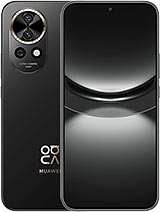
This review is based on Huawei’s published specifications and public benchmark data for the Huawei nova 12, and the rating is spec-based. GoSolo does not physically test devices; where we estimate real-world behaviour such as battery life or charge time, we say so. How we rate phones.
Overview
The nova 12 is a large, smooth-scrolling midrange phone built around a 120Hz OLED screen and rapid 100W charging. It's a practical choice for everyday use and video, but the Kirin 830 chipset and modest ultrawide hold it back from being a complete package.
Design & build
At 191 grams and 7mm thick, the nova 12 is lighter and slimmer than most 6.7-inch rivals, making it genuinely pocketable despite the large screen. The narrow bezels and high 88.9 percent screen-to-body ratio mean the phone feels less unwieldy than its dimensions suggest. Build materials are not specified, but the overall package is tidy and practical rather than flashy. The weight and thinness do matter for something you carry all day; you notice the difference against heavier 6.7-inchers that tip toward 210 grams.
Display
The 6.7-inch OLED panel with 120Hz refresh and 395 ppi density is the phone's strongest card. Scrolling through social feeds, email lists, or web pages feels noticeably smoother than 60Hz LCDs at the same price, and the brightness and color separation on OLED hold up well in sunlight. The 1084 x 2412 resolution is sharp enough for text and photos at normal viewing distance; no one will squint at this screen. At €380, a 120Hz OLED is still uncommon, and most direct rivals are still leaning on 60Hz LCD or IPS panels. That alone justifies a serious look, though the screen is not particularly wide in the narrower bezels sense—you are paying for smoothness and color, not extra real estate.
Performance
The Kirin 830 is a mid-range processor from two generations back, and it shows. Day-to-day tasks—messaging, maps, video playback, light browsing—run without noticeable lag, and the 8GB RAM cushions ordinary app switching. But open a demanding game or a heavy creative app, and you will hit frame drops and load stutters that rival chipsets at this price no longer tolerate. For most people, this is fine; for anyone who plays modern mobile games or edits video, a newer Snapdragon or Exynos would be a better investment. HarmonyOS 4.0 is competent but lacks the depth and third-party support of standard Android, and the absence of Google Play Store on the global version is a real friction point for anyone relying on apps beyond Huawei's ecosystem.
Camera
The 50MP main sensor with f/1.9 aperture and laser autofocus captures good detail in mixed indoor and outdoor light, handling typical scenes with solid color and focus. The real-world output is competitive with other midrange 50MP cameras; the f/1.9 aperture does help in dim settings. Where the camera stumbles is the ultrawide: the 8MP module with no autofocus struggles with fine detail and fails at close-range focus, making it feel like an afterthought rather than a true second lens. For landscapes and group shots at a distance it works, but switching to it often means accepting softer results. The 60MP front camera with a generous 100-degree view is a genuine strength for group selfies and video calls, and the extra pixels let you crop without visible degradation. Selfie and video quality are better than the spec alone suggests, thanks to the wide angle and sensor size.
Battery & charging
The 4600 mAh battery paired with a 120Hz OLED and mid-range chipset yields about one day of typical mixed use—say 15 to 18 hours from morning to evening with light social media, messages, and calls. Heavy video streaming or gaming pulls that down to 12 to 14 hours. The real story is the 100W charger: it refills the battery in roughly 20 to 30 minutes, so a 10-minute pit stop at midday brings you from depleted to usable for several more hours. That convenience alone is worth mention, especially in markets where wall outlets are not always at hand. The 5W reverse charging is a gimmick; you will not be topping up another phone in any practical scenario.
Software & ecosystem
HarmonyOS 4.0 is responsive and visually competent, but the global version lacks access to Google Play Store. Instead you are confined to Huawei's app store, which is thinner than Android's and updates lag for many standard tools—banking, social media, and productivity apps may require workarounds or sideloading. For users in China or already bought into Huawei services, this is natural; for buyers in India, Africa, or Southeast Asia used to unrestricted Play Store access, it is a significant limitation. If you need apps beyond the basics, check Huawei's store first before committing.
Value & verdict
At around €380 (or the regional equivalent), the nova 12 occupies an odd middle ground. It excels at the two things that matter most for daily life: a smooth, attractive screen and rapid charging. Those two features justify the price for someone who watches video, browses, and values a fast top-up. However, the aging Kirin 830, the weak ultrawide, and the HarmonyOS app limitation mean it is not a complete package. Buyers who prioritize gaming, app variety, or camera versatility would be better served by a phone with a newer processor or standard Android access. The nova 12 is strongest for someone willing to accept modest performance and a narrower app garden in exchange for a beautiful, quick-charging display. It is not a bad phone; it is a specialist phone that plays to specific strengths.
Verdict
The nova 12 suits someone who wants a large, smooth display and fast charging for everyday video and messaging without needing gaming prowess or a deep app ecosystem. Skip it if you rely on Google Play apps, play demanding games, or shoot a lot of ultrawide photos.
- 120Hz OLED display at 6.7 inches with tight 395 ppi pixel density—scrolling feels fluid and text stays sharp, a genuine step up from the LCD screens most rivals at this price still use
- 100W wired charging fills the 4600 mAh battery in under 30 minutes, so a 10-minute top-up in the morning buys you several more hours without fuss
- 60MP front camera with a wide 100-degree field of view frames group selfies and video calls better than the cramped 80-degree standard, and keeps enough detail for cropping without obvious loss
- Laser autofocus and color spectrum sensor on the rear give the 50MP main camera reliable focus in dim light and more balanced color in mixed indoor and outdoor scenes
- The Kirin 830 is an older, mid-range chip that stutters in demanding apps and games; rivals at this price now use newer silicon with better sustained performance
- The 112-degree ultrawide uses only 8MP and has no autofocus, so landscapes lack fine detail and close-focus shots are soft compared to what the main sensor delivers
- HarmonyOS isolation means no Google Play Store on the global version—you are locked into Huawei's app ecosystem, which is thinner and slower to update than Android for many everyday tools
Huawei nova 12 Key Specifications
The essentials at a glance. See the full spec sheet.
| Released | 2023, December 26 |
|---|---|
| Display | 6.7 inches, 108.3 cm2 (~88.9% screen-to-body ratio), OLED, 1B colors, HDR, 120Hz |
| Resolution | 1084 x 2412 pixels, 20:9 ratio (~395 ppi density) |
| Chipset | Kirin 830 (7 nm)* the chipset is not officially confirmed |
| RAM & storage | 256GB 8GB RAM, 512GB 8GB RAM |
| Main camera | 50 MP, f/1.9, (wide), PDAF 8 MP, f/2.2, 112˚ (ultrawide), AF |
| Selfie camera | 60 MP, f/2.4, 17mm, 100˚ (ultrawide) |
| Battery | 4600 mAh |
| Charging | 100W wired5W reverse wired |
| Software | HarmonyOS 4.0 |
| Dimensions | 161.5 x 75.4 x 7 mm (6.36 x 2.97 x 0.28 in) |
| Weight | 191 g (6.74 oz) |
| Network | GSM / CDMA / HSPA / CDMA2000 / LTE / 5G |
| NFC | Yes |
| USB | USB Type-C 2.0, OTG |
Huawei nova 12 FAQ
Common questions, answered from the spec sheet.
Does the nova 12 support 5G?
Yes. The nova 12 supports 5G networks.
What chipset does the nova 12 use?
The nova 12 runs on the Kirin 830 (7 nm)* the chipset is not officially confirmed.
What display does the nova 12 have?
A 6.7 inches, 108.3 cm2 (~88.9% screen-to-body ratio) OLED, 1B colors, HDR, 120Hz, 1084 x 2412 pixels, 20:9 ratio (~395 ppi density).
How big is the nova 12 battery?
The nova 12 has a 4600 mAh battery. Charging is rated at 100W wired5W reverse wired.
Does the nova 12 have NFC?
Yes, the nova 12 has NFC.
Does the nova 12 support a microSD card?
No, the nova 12 does not support expandable storage.
Does the nova 12 have a headphone jack?
No, the nova 12 does not have a 3.5mm headphone jack.
Alternatives to consider
If the nova 12 isn’t quite right, these are the closest calls.
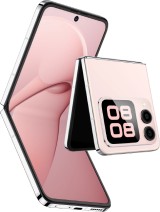
nova Flip
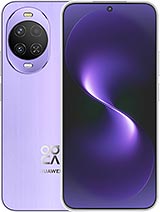
Nova 15
nova Flip S
nova 14 Lite
Galaxy F17 5G