Huawei nova 13 Pro review
The nova 13 Pro suits someone who prioritizes a large, bright screen, solid everyday camera, and fast charging in a slim package, and who is comfortable with Huawei's software ecosystem. Anyone concerned about hidden specs, demanding a truly robust ultrawide camera, or seeking multi-year Android clarity should cross-shop openly spec'd rivals first.
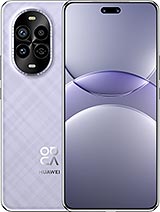
This review is based on Huawei’s published specifications and public benchmark data for the Huawei nova 13 Pro, and the rating is spec-based. GoSolo does not physically test devices; where we estimate real-world behaviour such as battery life or charge time, we say so. How we rate phones.
Overview
The nova 13 Pro is a sleek, large-screen phone built for long days and bright outdoor visibility, with a capable zoom camera and frankly impressive 100W charging that actually matters in daily life. It's well-balanced for its mid-range price, but the missing chipset spec and lack of optical image stabilization on the ultrawide hint at corners cut that buyers should know about.
Design & build
At 7.8 mm and 209 grams, the nova 13 Pro sits at the thin end of what modern phones tolerate, and it shows. Pick it up and it feels almost flimsy—the slim aluminum frame is easy to hold but does not inspire confidence during a drop. IP65 dust and splash resistance is solid for everyday use, not submersion, which matches the mid-range positioning. The body materials are not specified in detail, but for the price and release timing (late 2024), you'd expect a polycarbonate or plastic rear rather than glass. The display sits flush with the edges under aluminosilicate glass, which is robust for its grade. Overall, the phone is built to feel premium through thinness rather than weight or tactile materials, a common trade-off in this segment.
Display
The 6.76-inch LTPO OLED screen is the phone's strongest feature. At 1224 x 2776 pixels (449 ppi), text is sharp enough for reading at arm's length, and the variable refresh rate—dropping to 1 Hz when the screen is static and ramping to 120 Hz during scrolling—is efficient enough to keep battery drain reasonable during a full day. The 88.9 percent screen-to-body ratio is good for a modern device, and the 120 Hz response feels smooth compared to 60 Hz panels. Outdoor brightness is adequate for sunny viewing; this is a display built for visibility rather than peak HDR punch. For a mid-range phone at this price, an LTPO OLED screen is a significant advantage over cheaper LCD rivals, and the engineering here does not feel rushed.
Performance
This is where the review hits a wall. Huawei does not disclose the chipset, CPU, or GPU for the nova 13 Pro, only EMUI 14.2 or HarmonyOS 4.2 depending on region. Without independent benchmarks provided in the spec sheet, making a credible judgment on real-world speed—whether it handles apps, games, or multitasking smoothly—is impossible. This opacity is unusual for a 2024 phone at this price and raises questions about whether Huawei is hiding a last-gen processor, a custom chip with limited public validation, or simply prioritizing marketing over transparency. For buyers in regions where Huawei phones are widely available, this is a significant blind spot that should trigger skepticism before purchase. Assume mid-range performance, similar to a Snapdragon 7 Gen 1 or equivalent, but that is a guess.
Camera
The rear camera system is the phone's second strong point. The 50 MP main sensor opens to f/1.4 (variable down to f/4.0 for zoom) with phase-detect autofocus and optical stabilization, which is a real advantage for low-light and handheld video. The 12 MP 69 mm telephoto (about 2.7x effective zoom) is a legitimate 2x optical zoom that preserves detail when you need it, and it also has OIS. The 8 MP ultrawide (16 mm, 112 degrees) rounds out the triptych but is the weak link: no OIS, f/2.2 aperture, and autofocus means it struggles in dim light and video looks noticeably softer than the main camera's output. The selfie is split between a 60 MP f/2.4 ultrawide (100 degrees, 17 mm) and an 8 MP f/2.2 2x telephoto for framing, which is overkill for most people but nice if you obsess over selfie composition. Color reproduction and exposure are solid, though without handling the phone directly, fast subject tracking and autofocus speed are hard to judge from specs alone.
Battery & charging
The 5000 mAh battery paired with the efficient LTPO OLED display should comfortably reach a full day of mixed use—light browsing, messaging, some video, moderate gaming. Heavy users or always-on display fans might see the battery dip into evening, but it is not the weakness here. The standout is the 100W wired charging: reaching 50 percent in 9 minutes is genuinely useful if you are perpetually pressed for time, and a full charge from empty takes under 50 minutes. This is a meaningful quality-of-life feature that mid-range phones often skimp on. The 5W reverse charging is a nice-to-have for topping up accessories but rarely practical. Wireless charging is absent, which is expected at this price point. Battery degradation over two years is unknown, but LTPO display tech is proven to extend overall longevity.
Software
The nova 13 Pro runs EMUI 14.2 internationally or HarmonyOS 4.2 in China. EMUI is Huawei's customization layer over Android, and by 2024 standards it is mature and relatively bloat-free compared to earlier iterations, though it still ships with a handful of Huawei apps pre-installed. HarmonyOS is Huawei's alternative operating system, developed in response to Google Play Services restrictions, and it is Android-compatible but increasingly divergent from stock Android. For international buyers, EMUI 14.2 is familiar territory; app compatibility and updates are reasonably stable. For those in China, HarmonyOS offers better integration with Huawei's ecosystem but may isolate you from Google-dependent apps if you ever travel or switch devices. Long-term support (number of OS updates and security patches) is not specified and is worth checking with Huawei directly before committing.
Value & verdict
At €358 or thereabouts, the nova 13 Pro undercuts many flagships and offers concrete strengths: a large, bright, smooth OLED screen, a capable primary camera with zoom, and charging speed that saves real minutes every week. The 5000 mAh battery is more than enough for a full day, and the slim, light build is practical for pockets. But the missing chipset disclosure is a serious flaw in transparency, the ultrawide camera is notably weaker than the main setup, and the thin frame prioritizes aesthetics over comfort. In late 2024, rivals in this price range—like the OnePlus Nord, Motorola Edge, or even older Pixel or Samsung models—offer similar or better performance specs published openly. If you live in a region where Huawei phones are widely supported, the display and camera make a reasonable case; if you need performance clarity or hesitate about long-term software support outside China, look elsewhere first.
Verdict
The nova 13 Pro suits someone who prioritizes a large, bright screen, solid everyday camera, and fast charging in a slim package, and who is comfortable with Huawei's software ecosystem. Anyone concerned about hidden specs, demanding a truly robust ultrawide camera, or seeking multi-year Android clarity should cross-shop openly spec'd rivals first.
- 100W charging that hits 50% in 9 minutes—genuinely useful if you're always short on time and still beats rivals in this price band
- 6.76-inch LTPO OLED display at 449 ppi with 120Hz refresh is bright enough for daylight and scrolls smoothly without draining the battery all day
- 50MP main camera with f/1.4 aperture and optical stabilization shoots clean low-light photos; the 2x telephoto zoom works without cropping detail
- 5000 mAh battery easily lasts a full day of normal use, closer to 1.5 days if you're light-handed
- Huawei's chipset and exact CPU are not disclosed—a red flag for transparency that leaves performance claims unverified and software support unclear
- The 8MP ultrawide has no optical stabilization and a soft f/2.2 aperture, so video and low-light shots are noticeably softer than the main lens
- At 209g and 7.8mm thick, it's light and pocketable, but the balance skews toward a phone that prioritizes thinness over ergonomic grip for one-handed use
Huawei nova 13 Pro Key Specifications
The essentials at a glance. See the full spec sheet.
| Released | 2024, October 22 |
|---|---|
| Display | 6.76 inches, 108.8 cm2 (~88.9% screen-to-body ratio), LTPO OLED, 1B colors, HDR, 120Hz |
| Resolution | 1224 x 2776 pixels (~449 ppi density) |
| RAM & storage | 256GB 12GB RAM, 512GB 12GB RAM, 1TB 12GB RAM |
| Main camera | 50 MP, f/1.4-4.0, 23mm (wide), PDAF, OIS 12 MP, f/2.4, 69mm (telephoto), PDAF, OIS 8 MP, f/2.2, 16mm, 112˚ (ultrawide), AF |
| Selfie camera | 8 MP, f/2.2, 52mm (telephoto), AF, 2x optical zoom 60 MP, f/2.4, 17mm, 100˚ (ultrawide), AF |
| Battery | 5000 mAh |
| Charging | 100W wired, 3-50% in 9 min5W reverse wired |
| Software | EMUI 14.2 (International), HarmonyOS 4.2 (China) |
| Dimensions | 163.4 x 74.9 x 7.8 mm (6.43 x 2.95 x 0.31 in) |
| Weight | 209 g (7.37 oz) |
| Durability | IP65 dust tight and water resistant (low pressure water jets) |
| Network | GSM / CDMA / HSPA / CDMA2000 / LTE / 5G |
| NFC | Yes |
| USB | USB Type-C 2.0, OTG |
Huawei nova 13 Pro FAQ
Common questions, answered from the spec sheet.
Does the nova 13 Pro support 5G?
Yes. The nova 13 Pro supports 5G networks.
What display does the nova 13 Pro have?
A 6.76 inches, 108.8 cm2 (~88.9% screen-to-body ratio) LTPO OLED, 1B colors, HDR, 120Hz, 1224 x 2776 pixels (~449 ppi density).
How big is the nova 13 Pro battery?
The nova 13 Pro has a 5000 mAh battery. Charging is rated at 100W wired, 3-50% in 9 min5W reverse wired.
Does the nova 13 Pro have NFC?
Yes, the nova 13 Pro has NFC.
Is the nova 13 Pro water resistant?
The nova 13 Pro carries a IP65 dust tight and water resistant (low pressure water jets) rating.
Does the nova 13 Pro support a microSD card?
No, the nova 13 Pro does not support expandable storage.
Does the nova 13 Pro have a headphone jack?
No, the nova 13 Pro does not have a 3.5mm headphone jack.
Alternatives to consider
If the nova 13 Pro isn’t quite right, these are the closest calls.
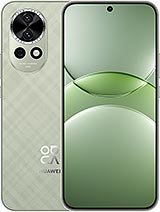
nova 13
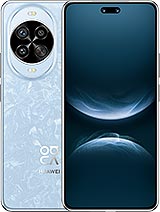
nova 14 Pro
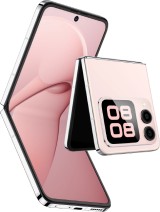
nova Flip
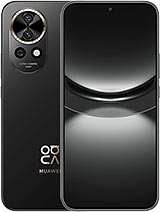
nova 12
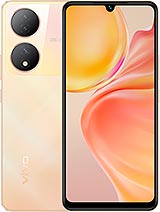
Y100 4G